Plant of heaven
Ailanthus excelsa · Accepted scientific name
Scientific literature: Very Sparse (14 studies) · ★☆☆☆☆
Plant of heaven, scientifically known as Ailantheus excelsa, is a majestic deciduous tree revered in traditional medicine. Often called the Tree of Heaven, it is celebrated for its potent therapeutic properties, particularly in treating skin diseases, inflammation, and digestive ailments, making it a vital resource in holistic healing practices.
- Family
- Simaroubaceae
- Native range
- Africa
- Parts used
- Root
- Common names
- Plant Of Heaven · Indian Tree-Of-Heaven · 3 more
- Scientific synonyms
- Ailanthus Wightii · Pongelion Excelsum
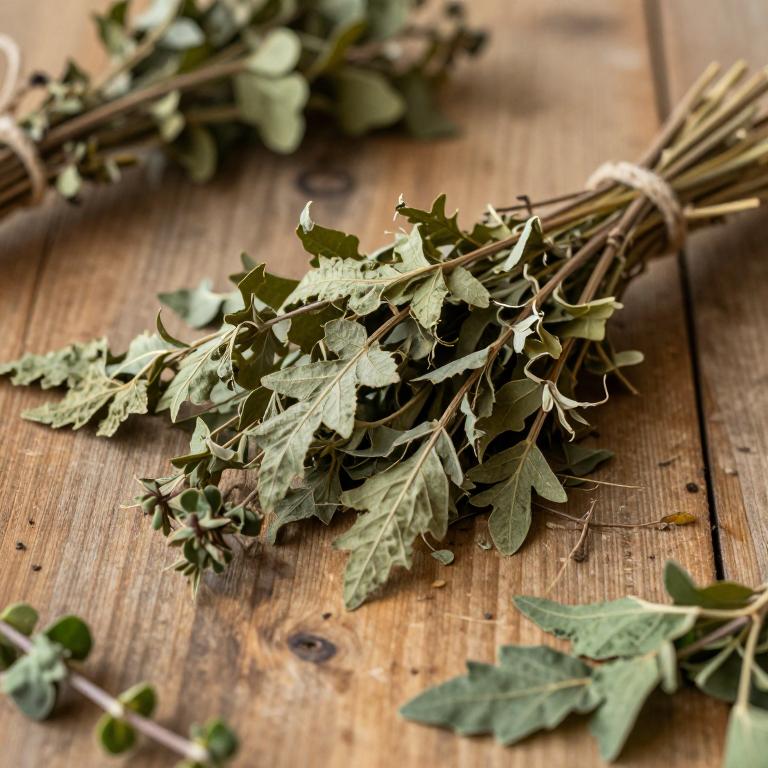
Names and Synonyms
Common Names
- Plant of heaven
- Indian tree-of-heaven
- High Ailanthus
- Indian tree of heaven
- ardusi
Scientific Names
Accepted name
Ailanthus excelsaSynonyms
- Ailanthus wightii
- Pongelion excelsum
Sources: Wikidata, Catalogue of Life
Taxonomical Classification
This plant, known scientifically as Ailanthus excelsa, belongs to the kingdom Plantae and the phylum Streptophyta. Within the class Equisetopsida and subclass Magnoliidae, it is classified under the order Sapindales. Finally, it is a member of the family Simaroubaceae and falls under the genus Ailanthus.
| Rank | Classification |
|---|---|
| Kingdom | Plantae |
| Phylum | Streptophyta |
| Class | Equisetopsida |
| Subclass | Magnoliidae |
| Order | Sapindales |
| Family | Simaroubaceae |
| Genus | Ailanthus |
Sources: The World Checklist of Vascular Plants (WCVP)
Distribution
This plant exhibits a diverse geographical distribution spanning across several major regions. In Northeast Tropical Africa, its presence is noted in both Sudan and South Sudan. Moving toward the southern portion of the continent, it can also be found in Botswana. Within the Indian Subcontinent, the species is widely distributed throughout India and Bangladesh. Additionally, its range extends specifically to the region of Assam.
| Region | Area |
|---|---|
| Northeast Tropical Africa | Sudan-South Sudan |
| Southern Africa | Botswana |
| Indian Subcontinent | Assam |
| Indian Subcontinent | Bangladesh |
| Indian Subcontinent | India |
| Indian Subcontinent | Sri Lanka |
| Indian Subcontinent | West Himalaya |
| Indo-China | Andaman Is. |
Sources: The World Checklist of Vascular Plants (WCVP)
Botanical Identification
Life history
The life history of Ailanthus excelsa is characterized by its status as a perennial species, allowing it to establish a long-term presence within its ecological niche through multiple growing seasons. As a deciduous plant, it undergoes a distinct seasonal cycle where it sheds its foliage annually, typically in response to climatic changes or dry periods, which helps regulate water loss and prepares the organism for dormant phases. This combination of a perennial lifecycle and deciduous nature enables the plant to persist over many years while adapting its physiological activity to the fluctuations of its environment.
- Deciduousness :
- deciduous
- Lifecycle :
- perennial
Morphology
The morphology of Ailanthus excelsa is characterized by its robust growth form as a woody tree, reaching an average plant height of approximately 20 m. As a terrestrial species, it does not exhibit aquatic or epiphytic tendencies, maintaining an independent existence rather than acting as a parasite. The plant is strictly self-supporting in its structure, lacking the climbing or vining habits found in lianas or facultative climbers, and it establishes itself firmly as a large, standalone woody organism.
- Aquatic :
- terrestrial
- Climber :
- self-supporting
- Epiphyte :
- terrestrial
- Growth form :
- tree
- Parasite :
- independent
- Plant height mean:
- 20 m
- Woodiness :
- woody
Physiology
The physiology of Ailanthus excelsa is characterized by a C3 photosynthetic pathway, which involves the direct fixation of atmospheric carbon dioxide through the enzyme Rubisco during the Calvin cycle. As a non-nitrogen-fixing species, it lacks the symbiotic relationship with diazotrophic bacteria required to convert atmospheric nitrogen into ammonia, meaning it relies entirely on the uptake of available nitrates and ammonium ions from the soil to meet its nitrogenous nutritional requirements.
- Nitrogen fixer :
- no
- Photosynthetic pathway :
- C3
Reproduction
The reproduction of Ailanthus excelsa is characterized by specific reproductive strategies and seed morphological traits. The plant exhibits a reproductive mechanism where self-fertilization is absent, necessitating cross-pollination for successful sexual reproduction. Its seeds are disseminated via an anemochorous dispersal syndrome, relying on wind currents to transport them away from the parent plant. Regarding the physical properties of its seeds, they exhibit a specific mass range, with a minimum seed mass of 0.07273 g and a maximum seed mass of 0.1053 g. On average, the seed mass of this species is approximately 0.089015 g.
- Dispersal syndrome :
- anemochorous
- Seed mass max:
- 0.1053 g
- Seed mass mean:
- 0.089015 g
- Seed mass min:
- 0.07273 g
- Self fertilization :
- absent
Sources: Global Inventory of Floras and Traits (GIFT)
Plant Parts
Ailanthus excelsa has 1 reported plant parts identified across 1 scientific publications and several other databases that are studied for medicinal purposes. The most consistently reported plant part include root.
| Plant part | Supporting sources | Consensus |
|---|---|---|
| Root | 1 supporting sources | ★☆☆☆☆ |
Root
- Lloydia
Chemicals
Ailanthus excelsa has 7 reported phytochemicals identified across 1 scientific publications and several other databases. The most consistently reported chemicals include Aechl-1, CHLOROFORM, Flavonoids, PETROLEUM ETHER, Sterols.
| Chemical | Supporting sources | Consensus |
|---|---|---|
| Aechl-1 | 1 supporting sources | ★☆☆☆☆ |
| CHLOROFORM | 1 supporting sources | ★☆☆☆☆ |
| Flavonoids | 1 supporting sources | ★☆☆☆☆ |
| PETROLEUM ETHER | 1 supporting sources | ★☆☆☆☆ |
| Sterols | 1 supporting sources | ★☆☆☆☆ |
| Triterpenes | 1 supporting sources | ★☆☆☆☆ |
| methanol | 1 supporting sources | ★☆☆☆☆ |
Aechl-1
- PloS one
CHLOROFORM
- Journal of natural medicines
Flavonoids
- African journal of traditional, complementary, and alternative medicines : AJTCAM
PETROLEUM ETHER
- Journal of natural medicines
Sterols
- Journal of natural medicines
Triterpenes
- Journal of natural medicines
methanol
- Journal of natural medicines
Activities
Ailanthus excelsa has 3 reported activities identified across 1 scientific publications and several other databases. The most consistently reported activities include Abortifacient, Gastroprotective, Teratogenic.
| Activity | Supporting sources | Consensus |
|---|---|---|
| Abortifacient | 1 supporting sources | ★☆☆☆☆ |
| Gastroprotective | 1 supporting sources | ★☆☆☆☆ |
| Teratogenic | 1 supporting sources | ★☆☆☆☆ |
Abortifacient
- Phytotherapy research : PTR
Gastroprotective
- Journal of natural medicines
Teratogenic
- Phytotherapy research : PTR
Conditions
Ailanthus excelsa has 2 reported investigations on conditions identified across 1 scientific publications and several other databases. The most consistently reported conditions include cancer, gastric ulcer.
| Condition | Supporting sources | Consensus |
|---|---|---|
| Cancer | 1 supporting sources | ★☆☆☆☆ |
| Gastric ulcer | 1 supporting sources | ★☆☆☆☆ |
Cancer
- PloS one
Gastric ulcer
- Journal of natural medicines