Fragrant Agrimony
Agrimonia procera · Accepted scientific name
Scientific literature: Very Sparse (28 studies) · ★☆☆☆☆
Fragrant Agrimony, scientifically known as Agrimonia procera, is a highly valued medicinal herb renowned for its aromatic properties and therapeutic potential. Traditionally utilized in holistic healing, this plant offers significant antioxidant and anti-inflammatory benefits, making it a vital resource in herbal medicine for promoting overall wellness and vitality.
- Family
- Rosaceae
- Native range
- Europe
- Parts used
- Root
- Common names
- Fragrant Agrimony · Scented Agrimony
- Scientific synonyms
- Agrimonia Glandulosa · Agrimonia Odorata Var. Procera · 9 more
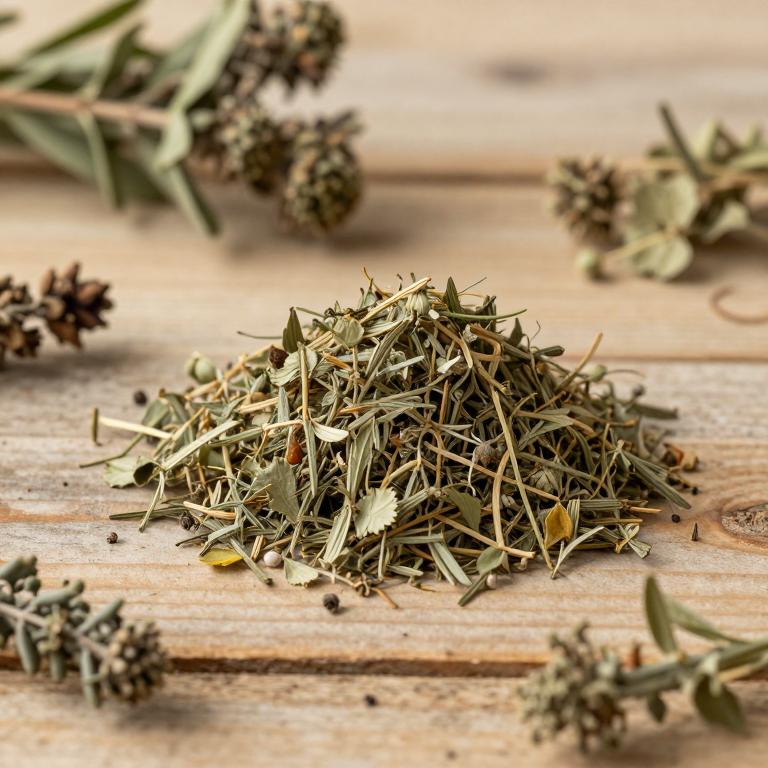
Names and Synonyms
Common Names
- Fragrant Agrimony
- scented agrimony
Scientific Names
Accepted name
Agrimonia proceraSynonyms
- Agrimonia glandulosa
- Agrimonia odorata var. procera
- Agrimonia procera f. glandulosa
- Agrimonia odorata var. suaveolens
- Agrimonia odorata var. glandulosa
- Agrimonia leroyi
- Agrimonia eupatoria subsp. procera
- Agrimonia eupatoria var. procera
- Agrimonia acutifolia
- Agrimonia robusta
- Agrimonia robusta
Regional and Traditional Names
Spanish:
- agrimonia
German:
- Großer Odermennig
- Wohlriechender Odermennig
- großer Odermennig
French:
- aigremoine odorante
- aigremoine odorante
- Aigremoine rampante
- Aigremoine élevée
Sources: Wikidata, Catalogue of Life
Taxonomical Classification
This plant belongs to the kingdom Plantae and is classified under the phylum Streptophyta and class Equisetopsida. Within the subclass Magnoliidae, it is positioned in the order Rosales and the family Rosaceae. Its specific taxonomic identification is completed by its placement in the genus Agrimonia.
| Rank | Classification |
|---|---|
| Kingdom | Plantae |
| Phylum | Streptophyta |
| Class | Equisetopsida |
| Subclass | Magnoliidae |
| Order | Rosales |
| Family | Rosaceae |
| Genus | Agrimonia |
Sources: The World Checklist of Vascular Plants (WCVP)
Distribution
This plant exhibits a specific geographical distribution across several regions within Northern Europe. It can be found growing in the coastal and inland areas of Denmark. Additionally, the species is documented throughout Great Britain and Ireland. Its presence also extends further north into the territories of Norway. Finally, the range of this medicinal plant includes the country of Sweden.
| Region | Area |
|---|---|
| Northern Europe | Denmark |
| Northern Europe | Great Britain |
| Northern Europe | Ireland |
| Northern Europe | Norway |
| Northern Europe | Sweden |
| Middle Europe | Austria |
| Middle Europe | Belgium |
| Middle Europe | Czechia-Slovakia |
| Middle Europe | Germany |
| Middle Europe | Hungary |
Sources: The World Checklist of Vascular Plants (WCVP)
Botanical Identification
Ecology
The ecology of Agrimonia procera is characterized by its preference for forest habitats, where it thrives within the complex structural layers of these ecosystems. This species exhibits a significant vertical distribution across varied landscapes, occupying an elevational range that spans from a minimum of 155 m AMSL to a maximum of 2134 m AMSL. This wide altitudinal gradient suggests that the plant is capable of adapting to a diverse array of environmental conditions, ranging from lowland tropical or subtropical forest settings to more temperate, montane forest environments at higher altitudes.
- Elevational range max:
- 2134 m AMSL
- Elevational range min:
- 155 m AMSL
- Habitat :
- forest
Life history
The life history of Agrimonia procera is characterized by its status as a perennial plant, allowing it to persist through multiple growing seasons. As a hemicryptophyte, its perennating buds are located at or just below the soil surface, a strategy that protects its vital structures from environmental fluctuations. This species exhibits a deciduous nature, shedding its foliage periodically as part of its seasonal cycle. This combination of a perennial lifecycle, a hemicryptophytic life form, and deciduousness defines its biological strategy for survival and regeneration within its natural habitat.
- Deciduousness :
- deciduous
- Life form :
- hemicryptophyte
- Lifecycle :
- perennial
Morphology
The morphology of Agriemonia procera is characterized by its growth form as a non-woody herb and forb. It functions as a self-supporting plant and is categorized as an independent organism, neither acting as a parasite nor an epiphyte, as it maintains a terrestrial habit. In terms of stature, the plant exhibits significant variability in height, with measurements ranging from a minimum of 0.3 m to a maximum of 1.8 m, maintaining an average height of approximately 0.95 m.
- Aquatic :
- terrestrial
- Climber :
- self-supporting
- Epiphyte :
- terrestrial
- Growth form :
- herb
- Growth form :
- forb
- Parasite :
- independent
- Plant height max:
- 1.8 m
- Plant height mean:
- 0.95 m
- Plant height min:
- 0.3 m
- Woodiness :
- non-woody
Physiology
The physiology of Agriemonia procera is characterized by a C3 photosynthetic pathway, which dictates its carbon fixation processes and metabolic efficiency. The plant exhibits a non-carnivorous nutritional strategy, relying entirely on its root system and soil nutrients rather than the capture of prey. Morphologically, its foliage is substantial, with a mean leaf size of approximately 124.16 cm². This leaf structure is further defined by a mean Specific Leaf Area (SLA) of 195.23 cm²/g, reflecting a specific balance between leaf thickness and surface area that influences its resource acquisition and light interception capabilities.
- Carnivory :
- non-carnivorous
- Leaf size mean:
- 124.16057 cm²
- Photosynthetic pathway :
- C3
- Specific Leaf Area (SLA) mean:
- 195.23 cm²/g
Reproduction
The reproduction of Agriemonia procera is characterized by a specialized sexual reproductive cycle that relies on biotic interactions. The flowering period typically commences in June and concludes in August, during which the plant utilizes a biotic pollination syndrome, specifically driven by insect vectors. This pollination process is successful due to the absence of self-fertilization, necessitating cross-pollination to ensure genetic diversity. Following successful fertilization, the plant produces fruits classified as achenes. These fruits are indehiscent, meaning they do not split open at maturity to release seeds. The resulting seeds are notably small, with a mean mass of approximately 0.01986 g. For dispersal, the plant employs a zoochorous strategy, specifically through epizoochory, where seeds or fruits are transported externally by animals. Furthermore, the species does not engage in asexual reproduction, relying entirely on its sexual cycle for propagation.
- Dehiscence :
- indehiscent
- Dispersal syndrome :
- zoochorous
- Dispersal syndrome :
- epizoochorous
- Flowering time :
- Jun
- Flowering time :
- Aug
- Fruit type :
- achene
- Pollination syndrome :
- insect
- Pollination syndrome :
- biotic
- Reproduction asexual :
- absent
- Seed mass mean:
- 0.01986 g
- Self fertilization :
- absent
Sources: Global Inventory of Floras and Traits (GIFT)
Plant Parts
Agrimonia procera has 1 reported plant parts identified across 1 scientific publications and several other databases that are studied for medicinal purposes. The most consistently reported plant part include root.
| Plant part | Supporting sources | Consensus |
|---|---|---|
| Root | 1 supporting sources | ★☆☆☆☆ |
Root
- Chemistry & biodiversity
Chemicals
Agrimonia procera has 14 reported phytochemicals identified across 1 scientific publications and several other databases. The most consistently reported chemicals include Agrimoniin, Ellagitannins, FAT, Flavonoids, Isovitexin.
| Chemical | Supporting sources | Consensus |
|---|---|---|
| Agrimoniin | 2 supporting sources | ★☆☆☆☆ |
| Ellagitannins | 1 supporting sources | ★☆☆☆☆ |
| FAT | 1 supporting sources | ★☆☆☆☆ |
| Flavonoids | 1 supporting sources | ★☆☆☆☆ |
| Isovitexin | 1 supporting sources | ★☆☆☆☆ |
| Procyanidins | 1 supporting sources | ★☆☆☆☆ |
| Tannins | 1 supporting sources | ★☆☆☆☆ |
| Vitexin | 1 supporting sources | ★☆☆☆☆ |
| apigenin | 1 supporting sources | ★☆☆☆☆ |
| catechins | 1 supporting sources | ★☆☆☆☆ |
Agrimoniin
- Journal of pharmaceutical and biomedical analysis
- Molecules (Basel, Switzerland)
Ellagitannins
- Molecules (Basel, Switzerland)
FAT
- Molecules (Basel, Switzerland)
Flavonoids
- Molecules (Basel, Switzerland)
Isovitexin
- Journal of pharmaceutical and biomedical analysis
Procyanidins
- Chemistry & biodiversity
Tannins
- Molecules (Basel, Switzerland)
Vitexin
- Journal of pharmaceutical and biomedical analysis
apigenin
- Molecules (Basel, Switzerland)
catechins
- Chemistry & biodiversity
Conditions
Agrimonia procera has 2 reported investigations on conditions identified across 1 scientific publications and several other databases. The most consistently reported conditions include LDL-cholesterol, triglycerides.
| Condition | Supporting sources | Consensus |
|---|---|---|
| Ldl-cholesterol | 1 supporting sources | ★☆☆☆☆ |
| Triglycerides | 1 supporting sources | ★☆☆☆☆ |
Ldl-cholesterol
- Molecules (Basel, Switzerland)
Triglycerides
- Molecules (Basel, Switzerland)
Preparations
Agrimonia procera has 1 reported preparations identified across 1 scientific publications and several other databases. The most consistently reported preparations include 40% aqueous ethanol.
| Preparation | Supporting sources | Consensus |
|---|---|---|
| 40% aqueous ethanol | 1 supporting sources | ★☆☆☆☆ |
40% aqueous ethanol
- Chemistry & biodiversity