Segera
Aglaia elliptica · Accepted scientific name
Scientific literature: Very Sparse (6 studies) · ★☆☆☆☆
Segera, scientifically known as Aglaia elliptica, is a remarkable medicinal plant native to tropical rainforests. Renowned for its diverse therapeutic properties, it is traditionally utilized to treat various ailments. This study explores its botanical characteristics, phytochemical composition, and significant pharmacological potential in modern herbal medicine and natural healing.
- Family
- Meliaceae
- Native range
- Asia-Tropical
- Parts used
- Leaf · Stem
- Common names
- Segera
- Scientific synonyms
- Hearnia Elliptica
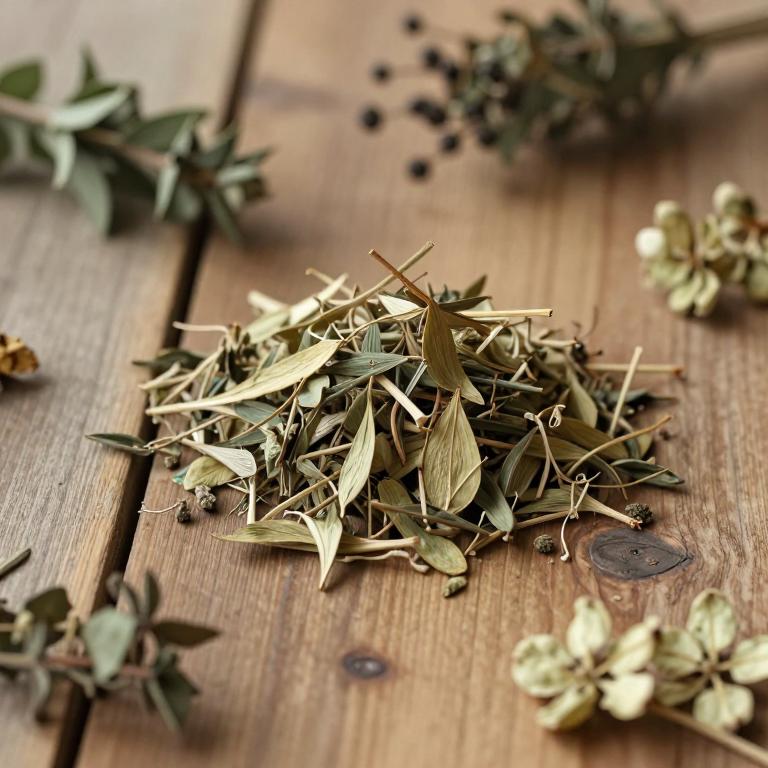
Names and Synonyms
Common Names
- Segera
Scientific Names
Accepted name
Aglaia ellipticaSynonyms
- Hearnia elliptica
Sources: Wikidata, Catalogue of Life
Taxonomical Classification
This plant, Aglaia elliptica, belongs to the kingdom Plantae and the phylum Streptophyta. Within the class Equisetopsida and subclass Magnoliidae, it is classified under the order Sapindales and the family Meliaceae. Finally, it is situated within the genus Aglaias.
| Rank | Classification |
|---|---|
| Kingdom | Plantae |
| Phylum | Streptophyta |
| Class | Equisetopsida |
| Subclass | Magnoliidae |
| Order | Sapindales |
| Family | Meliaceae |
| Genus | Aglaia |
Sources: The World Checklist of Vascular Plants (WCVP)
Distribution
This plant exhibits a broad geographical distribution across several distinct regions of Southeast Asia. Within the Indo-China region, it can be found growing in Myanmar and Thailand. Its presence extends further into the Malesia zone, where it inhabits the island of Borneo. Additionally, the species is documented throughout Jawa and the Lesser Sunda Islands. This wide range highlights its ecological adaptability across diverse island and mainland habitats.
| Region | Area |
|---|---|
| Indo-China | Myanmar |
| Indo-China | Thailand |
| Malesia | Borneo |
| Malesia | Jawa |
| Malesia | Lesser Sunda Is. |
| Malesia | Malaya |
| Malesia | Philippines |
| Malesia | Sulawesi |
| Malesia | Sumatera |
Sources: The World Checklist of Vascular Plants (WCVP)
Botanical Identification
Life history
The life history of Aglaias ellipticas is characterized by its nature as a perennial plant, allowing it to persist through multiple growing seasons and establish a stable presence within its ecological niche. Throughout its lifespan, it maintains an evergreen habit, ensuring that its foliage remains lush and functional year-round without the need for seasonal shedding.
- Deciduousness :
- evergreen
- Lifecycle :
- perennial
Morphology
The morphology of Aglaias ellipticas is characterized by a woody growth form, specifically manifesting as a tree. This species exhibits a significant stature, with a mean plant height of approximately 25 m and a maximum height that can reach up to 20 m. In terms of its climbing habit, it is classified as a self-supporting plant, categorized under the units of liana, vine, or self-supporting, and functions as a self-supporting rather than an obligatory or facultative climber. Furthermore, it is a terrestrial species, lacking the characteristics of an epiphyte such as holoepiphytic, hemiepiphytic, or facultative growth, maintaining its presence as a terrestrial plant.
- Climber :
- self-supporting
- Epiphyte :
- terrestrial
- Growth form :
- tree
- Plant height max:
- 20 m
- Plant height mean:
- 25 m
- Woodiness :
- woody
Physiology
The physiology of Aglaia elliptica is characterized by a standard C3 photosynthetic pathway, utilizing the Calvin cycle to fix atmospheric carbon dioxide through the enzyme RuBisCO. This metabolic process involves the direct fixation of CO2 into a three-carbon compound, which is typical for many woody dicotyledonous species within this genus. Furthermore, the plant does not function as a nitrogen fixer, meaning it lacks the specialized symbiotic relationship with nitrogen-fixing bacteria, such as Rhizobium, required to convert atmospheric nitrogen into bioavailable forms, and must instead rely on the uptake of nitrates and ammonium from the soil through its root system.
- Nitrogen fixer :
- no
- Photosynthetic pathway :
- C3
Reproduction
The reproduction of Aglaias ellipticas is driven by biotic mechanisms, specifically utilizing an insect-based pollination syndrome to facilitate fertilization. The plant exhibits a reproductive strategy where self-fertilization is absent, necessitating the involvement of external vectors to ensure genetic exchange. Once pollination is successful, the plant produces fruit classified as other, which serves as the vessel for seed development. The dispersal of these seeds follows a zoochorous syndrome, relying on animals to transport the reproductive units to new locations, thereby completing its life cycle through biological interaction.
- Dispersal syndrome :
- zoochorous
- Fruit type :
- other
- Pollination syndrome :
- insect
- Pollination syndrome :
- biotic
- Self fertilization :
- absent
Sources: Global Inventory of Floras and Traits (GIFT)
Plant Parts
Aglaia elliptica has 2 reported plant parts identified across 2 scientific publications and several other databases that are studied for medicinal purposes. The most consistently reported plant part include leaf, stem.
| Plant part | Supporting sources | Consensus |
|---|---|---|
| Leaf | 1 supporting sources | ★☆☆☆☆ |
| Stem | 1 supporting sources | ★☆☆☆☆ |
Leaf
- Chemical & pharmaceutical bulletin
Stem
- Chemico-biological interactions
Chemicals
Aglaia elliptica has 4 reported phytochemicals identified across 2 scientific publications and several other databases. The most consistently reported chemicals include 10-O-acetylaglain B, 4-epiaglain A, Aglain A, Odorine.
| Chemical | Supporting sources | Consensus |
|---|---|---|
| 10-O-acetylaglain B | 1 supporting sources | ★☆☆☆☆ |
| 4-epiaglain A | 1 supporting sources | ★☆☆☆☆ |
| Aglain A | 1 supporting sources | ★☆☆☆☆ |
| Odorine | 1 supporting sources | ★☆☆☆☆ |
10-O-acetylaglain B
- Chemical & pharmaceutical bulletin
4-epiaglain A
- Chemical & pharmaceutical bulletin
Aglain A
- Chemical & pharmaceutical bulletin
Odorine
- Chemical & pharmaceutical bulletin
Preparations
Aglaia elliptica has 1 reported preparations identified across 2 scientific publications and several other databases. The most consistently reported preparations include stems.
| Preparation | Supporting sources | Consensus |
|---|---|---|
| Stems | 1 supporting sources | ★☆☆☆☆ |
Stems
- Chemico-biological interactions