coastal boodyarra
Aglaia elaeagnoidea · Accepted scientific name
Scientific literature: Very Sparse (12 studies) · ★☆☆☆☆
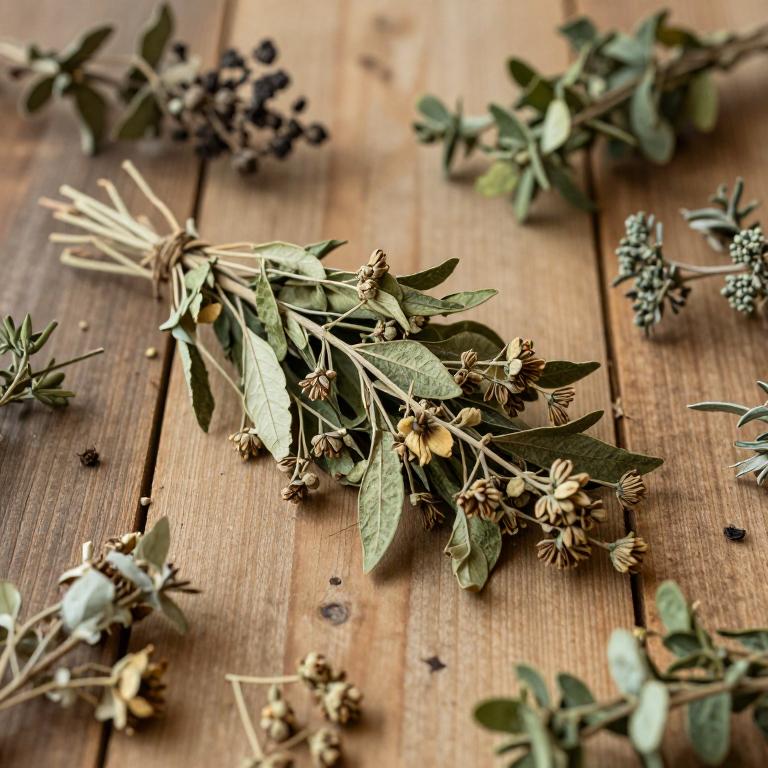
Coastal boodyarra, scientifically known as Aglia elaeagnoidea, is a distinctive evergreen tree native to tropical coastal regions. Renowned for its lush foliage and fragrant blooms, this medicinal plant offers significant therapeutic potential. It is traditionally utilized in various cultures to treat ailments, highlighting its profound ethnobotanical importance and value.
Names and Synonyms
Common Names
- coastal boodyarra
- droopyleaf
- priyangu
Scientific Names
Accepted name
Aglaia elaeagnoideaSynonyms
- Nemedra elaeagnoidea
- Aglaia lepidota var. pauperfula
- Aglaia pallens
- Aglaia roxburghiana var. pauperfula
- Aglaia parvifolia
- Aglaia elaeagnoidea var. glabrescens
- Aglaia spanoghei
- Aglaia lepidota
- Aglaia elaeagnoidea var. formosana
- Aglaia elaeagnoidea var. pallens
- Aglaia formosana
- Aglaia canariifolia
- Aglaia cupreolepidota
Sources: Wikidata, Catalogue of Life
Taxonomical Classification
This plant belongs to the kingdom Plantae and is classified under the phylum Streptophyta within the class Equisetopsida. As a member of the subclass Magnoliidae and the order Sapindales, it is further categorized into the family Meliaceae. Ultimately, its taxonomic identity is defined by its placement within the genus Aglaiia.
| Rank | Classification |
|---|---|
| Kingdom | Plantae |
| Phylum | Streptophyta |
| Class | Equisetopsida |
| Subclass | Magnoliidae |
| Order | Sapindales |
| Family | Meliaceae |
| Genus | Aglaia |
Sources: The World Checklist of Vascular Plants (WCVP)
Distribution
This plant exhibits a wide geographical distribution across several key regions in Asia. In Eastern Asia, its presence is specifically noted within the island of Taiwan. Moving into the Malesia region, it can be found across the diverse landscapes of Borneo. Its range further extends to the Lesser Sunda Islands and the Maluku archipelago. Finally, the species is also documented as growing within the Philippines.
| Region | Area |
|---|---|
| Eastern Asia | Taiwan |
| Malesia | Borneo |
| Malesia | Lesser Sunda Is. |
| Malesia | Maluku |
| Malesia | Philippines |
| Malesia | Sulawesi |
| Papuasia | New Guinea |
| Australia | Queensland |
| Australia | Western Australia |
| Southwestern Pacific | New Caledonia |
Sources: The World Checklist of Vascular Plants (WCVP)
Botanical Identification
Ecology
The ecology of Aglaia elaeagnoidea is characterized by its adaptability to diverse forest environments, as it is primarily found inhabiting both lush rain forests and more seasonal dry forests. This ability to thrive in varying moisture regimes suggests a versatile physiological tolerance to both high humidity and periods of lower precipitation. Within these ecosystems, the plant plays a role in the structural complexity of the forest canopy or sub-canopy, interacting with the specific soil compositions and microclimates unique to both wet and dry woodland habitats.
- Habitat :
- rain forest, dry forest
Life history
The life history of Aglaias elaeagnoidea is characterized by its status as a perennial organism, ensuring long-term survival and stability within its ecosystem. As a phanerophyte, the plant maintains its photosynthetic organs on elevated branches, a life form classification that appears consistently across its morphological descriptions (both as phanerophyte and specifically as a phanerophyte). Furthermore, it exhibits an evergreen deciduousness, meaning it retains its foliage throughout the year rather than shedding it seasonally, which allows for continuous metabolic activity and growth cycles.
- Deciduousness :
- evergreen
- Life form :
- phanerophyte
- Lifecycle :
- perennial
Morphology
The morphology of Aglaias elaeagnoidea is characterized by its growth form as a woody tree that functions as a self-supporting structure. This terrestrial species exhibits a significant vertical presence, with plant heights ranging from a minimum of 2.5 m to a maximum of 15 m, maintaining an average height of approximately 10 m. As an independent organism, it does not exhibit parasitic behavior and thrives in terrestrial environments rather than aquatic or semiaquatic habitats. Furthermore, the plant is strictly terrestrial in its ecological positioning, lacking any epiphytic tendencies such as hemi-epiphytic or facultative epiphytic growth.
- Aquatic :
- terrestrial
- Climber :
- self-supporting
- Epiphyte :
- terrestrial
- Growth form :
- tree
- Parasite :
- independent
- Plant height max:
- 15 m
- Plant height mean:
- 10 m
- Plant height min:
- 2.5 m
- Woodiness :
- woody
Physiology
The physiology of Aglaia eleagnoides is characterized by a C3 photosynthetic pathway, a common metabolic strategy among tropical woody species that utilizes the Calvin cycle to fix atmospheric carbon dioxide. The structural integrity and biomass allocation of the plant are reflected in its wood properties, specifically exhibiting a mean stem specific density (SSD) of 770 mg/cm³, which indicates a relatively dense and robust wood tissue structure. Furthermore, regarding its nutrient acquisition strategies, the species does not function as a nitrogen fixer, meaning it relies on the uptake of mineral nitrogen from the soil rather than through symbiotic relationships with diazotrophic bacteria.
- Nitrogen fixer :
- no
- Photosynthetic pathway :
- C3
- Stem specific density (SSD) mean:
- 770 mg/cm³
Reproduction
The reproduction of Aglaias elaeagnoidea is characterized by a biotic pollination syndrome, primarily relying on insects to facilitate the transfer of pollen. The species exhibits an absence of self-fertilization, suggesting a reliance on cross-pollination to maintain genetic diversity. The reproductive output culminates in the production of fleshy fruits, which serve to protect and potentially disperse the seeds. The seeds themselves are remarkably consistent in their physical dimensions, maintaining a uniform seed volume of 660 mm³. Furthermore, the seeds demonstrate a highly stable mass, with a mean, minimum, and maximum value all recorded at 0.45455 g, indicating a highly standardized seed production process within the species.
- Fruit dryness :
- fleshy
- Pollination syndrome :
- insect
- Pollination syndrome :
- biotic
- Seed mass mean:
- 0.45455 g
- Seed volume max:
- 660 mm³
- Self fertilization :
- absent
Sources: Global Inventory of Floras and Traits (GIFT)
Chemicals
Aglaia elaeagnoidea has 2 reported phytochemicals identified across 0 scientific publications and several other databases. The most consistently reported chemicals include aglalactone, cyclopenta[bc]benzopyran.
| Chemical | Supporting sources | Consensus |
|---|---|---|
| aglalactone | 1 supporting sources | ★☆☆☆☆ |
| cyclopenta[bc]benzopyran | 1 supporting sources | ★☆☆☆☆ |
aglalactone
- Dr. Duke
cyclopenta[bc]benzopyran
- Journal of agricultural and food chemistry
Activities
Aglaia elaeagnoidea has 7 reported activities identified across 0 scientific publications and several other databases. The most consistently reported activities include Analgesic, Anesthetic, Antibacterial, Anticancer, Antifungal.
| Activity | Supporting sources | Consensus |
|---|---|---|
| Analgesic | 1 supporting sources | ★☆☆☆☆ |
| Anesthetic | 1 supporting sources | ★☆☆☆☆ |
| Antibacterial | 1 supporting sources | ★☆☆☆☆ |
| Anticancer | 1 supporting sources | ★☆☆☆☆ |
| Antifungal | 1 supporting sources | ★☆☆☆☆ |
| Antioxidant | 1 supporting sources | ★☆☆☆☆ |
| Fungicide | 1 supporting sources | ★☆☆☆☆ |
Analgesic
- Environmental science and pollution research international
Anesthetic
- Environmental science and pollution research international
Antibacterial
- Food chemistry
Anticancer
- Environmental science and pollution research international
Antifungal
- Environmental science and pollution research international
Antioxidant
- Food chemistry
Fungicide
- Dr. Duke
Conditions
Aglaia elaeagnoidea has 3 reported investigations on conditions identified across 0 scientific publications and several other databases. The most consistently reported conditions include Pyricularia grisea, analgesic, anesthetic.
| Condition | Supporting sources | Consensus |
|---|---|---|
| Pyricularia grisea | 1 supporting sources | ★☆☆☆☆ |
| Analgesic | 1 supporting sources | ★☆☆☆☆ |
| Anesthetic | 1 supporting sources | ★☆☆☆☆ |
Pyricularia grisea
- Journal of agricultural and food chemistry
Analgesic
- Environmental science and pollution research international
Anesthetic
- Environmental science and pollution research international