Ageratum fastigiatum
Ageratum fastigiatum · Accepted scientific name
Scientific literature: Very Sparse (7 studies) · ★☆☆☆☆
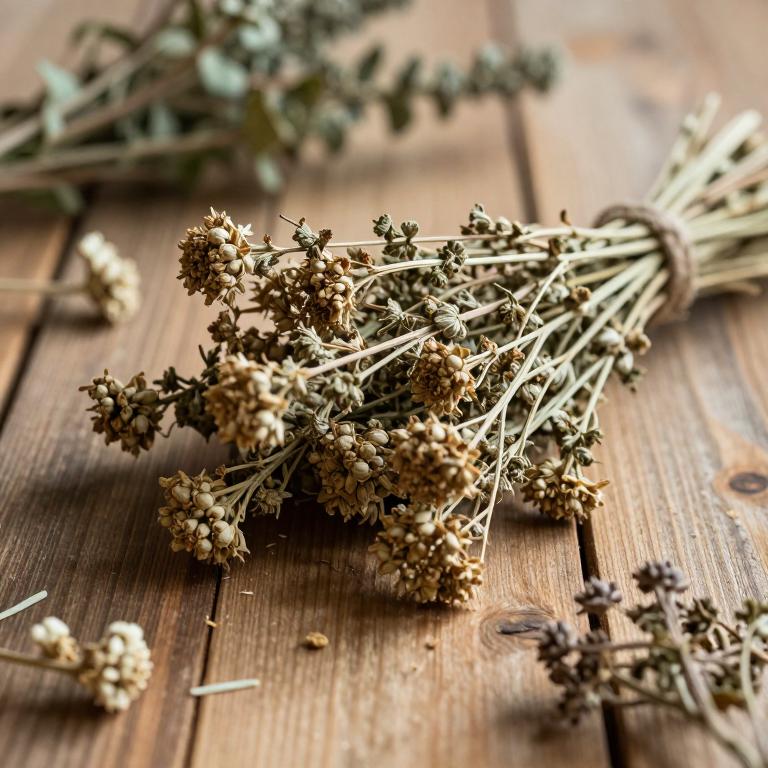
scientifically known as Ageratum fastigiatum, is a versatile medicinal herb prized for its therapeutic properties. Traditionally used to treat inflammation, wounds, and skin ailments, this plant contains bioactive compounds with significant antioxidant potential. Understanding its phytochemical profile offers promising insights into its role in natural healthcare and pharmacology.
- Family
- Asteraceae
- Native range
- Southern America
- Parts used
- Not available
- Common names
- Not available
- Scientific synonyms
- Alomia Fastigiata · Alomia Polyphylla · 3 more
Names and Synonyms
Scientific Names
Accepted name
Ageratum fastigiatumSynonyms
- Alomia fastigiata
- Alomia polyphylla
- Caelestina linearifolia
- Isocarpha fastigiata
- Piqueria fastigiata
Sources: Wikidata
Taxonomical Classification
This plant belongs to the kingdom Plantae within the phylum Streptophyta and the class Equisetopsida. It is further classified under the subclass Magnoliidae and the order Asterales. Finally, it is a member of the family Asteraceae and falls under the genus Ageratum.
| Rank | Classification |
|---|---|
| Kingdom | Plantae |
| Phylum | Streptophyta |
| Class | Equisetopsida |
| Subclass | Magnoliidae |
| Order | Asterales |
| Family | Asteraceae |
| Genus | Ageratum |
Sources: The World Checklist of Vascular Plants (WCVP)
Distribution
This plant exhibits a wide geographical distribution across several distinct regions of South America. Within the continent, it can be found growing in the nation of Bolivia. In Brazil, its presence is extensive, spanning across the North and Northeast regions. Furthermore, the species is established within the West-Central areas of Brazil. Finally, its range extends into the Southeast portion of the Brazilian territory.
| Region | Area |
|---|---|
| Western South America | Bolivia |
| Brazil | Brazil West-Central |
| Brazil | Brazil Northeast |
| Brazil | Brazil Southeast |
| Brazil | Brazil North |
Sources: The World Checklist of Vascular Plants (WCVP)
Botanical Identification
Ecology
The ecology of Ageratum fastigiatum is intrinsically linked to the Cerrado (latto sensu) biome, where it functions as a component of the complex mosaic of tropical savanna ecosystems. Within this habitat, the species thrives in environments characterized by distinct seasonal cycles of rainfall and prolonged dry periods, often occupying open areas or transitional zones within the shrubby vegetation. Its presence is closely tied to the specific soil compositions and fire regimes typical of the Cerrado, which influence its distribution and competitive dynamics among other herbaceous and shrubby flora. By occupying these niches, the plant participates in the local nutrient cycling and provides essential resources for specialized pollinators adapted to the seasonal availability of flowering plants in this high-biodiversity landscape.
- Habitat :
- Cerrado (lato sensu)
Life history
The life history of Ageratum fastigiatum is characterized by its classification as a therophyte, a life form that completes its entire biological cycle within a single growing season. As a therophyte, the plant relies on the production of hardy seeds to survive unfavorable environmental periods, such as droughts or cold seasons, entering a state of dormancy until conditions become optimal for germination. This ephemeral strategy allows the plant to rapidly exploit available resources, progressing quickly from germination through vegetative growth to flowering and seed dispersal. Within the broader spectrum of plant life forms, its growth habit is specifically defined by its status as a therophyte, distinguishing it from perennial forms such as phanerophytes, chamaephytes, hemicryptophytes, cryptophytes, geophtyes, hydrophytes, helophytes, or lithophytes. By prioritizing rapid maturation and high seed output, Ageratum fastigiatum effectively ensures the continuity of its lineage through seasonal transitions.
- Life form :
- therophyte
Morphology
The morphology of Ageratum fastigiatum is characterized by its growth form as a non-woody herb, specifically categorized as a forb. It functions as a self-supporting plant rather than a climber, maintaining its structure independently through its herbaceous stems. In terms of its ecological habitat and growth habit, the plant is strictly terrestrial, lacking any epiphytic tendencies such as being a holoepiphyte or hemiepiphyte, and it does not inhabit aquatic or semiaquatic environments. Furthermore, it is an independent organism that does not exhibit parasitic behavior, relying on its own physiological processes for sustenance.
- Aquatic :
- terrestrial
- Climber :
- self-supporting
- Epiphyte :
- terrestrial
- Growth form :
- herb
- Parasite :
- independent
- Woodiness :
- non-woody
Sources: Global Inventory of Floras and Traits (GIFT)
Chemicals
Ageratum fastigiatum has 4 reported phytochemicals identified across 0 scientific publications and several other databases. The most consistently reported chemicals include Bicyclogermacrene, D-Limonene, Germacrene, Sesquiterpenes.
| Chemical | Supporting sources | Consensus |
|---|---|---|
| Bicyclogermacrene | 1 supporting sources | ★☆☆☆☆ |
| D-Limonene | 1 supporting sources | ★☆☆☆☆ |
| Germacrene | 1 supporting sources | ★☆☆☆☆ |
| Sesquiterpenes | 1 supporting sources | ★☆☆☆☆ |
Bicyclogermacrene
- Natural product research
D-Limonene
- Natural product research
Germacrene
- Natural product research
Sesquiterpenes
- Natural product research
Conditions
Ageratum fastigiatum has 1 reported investigations on conditions identified across 0 scientific publications and several other databases. The most consistently reported conditions include wound healing.
| Condition | Supporting sources | Consensus |
|---|---|---|
| Wound healing | 1 supporting sources | ★☆☆☆☆ |
Wound healing
- Natural product research
Preparations
Ageratum fastigiatum has 2 reported preparations identified across 0 scientific publications and several other databases. The most consistently reported preparations include essential oil, ethanolic extract from aerial parts.
| Preparation | Supporting sources | Consensus |
|---|---|---|
| Essential oil | 1 supporting sources | ★☆☆☆☆ |
| Ethanolic extract from aerial parts | 1 supporting sources | ★☆☆☆☆ |
Essential oil
- Natural product research
Ethanolic extract from aerial parts
- Journal of immunological methods