Agave lophantha
Agave lophantha · Accepted scientific name
Scientific literature: Very Sparse (0 studies) · ★☆☆☆☆
Agave lophantha is a succulent species known for its unique structural beauty and potential biochemical properties. Recent scientific investigations have focused on evaluating the medicinal potential of this plant through various specialized preparations. Researchers have analyzed the plant in the form of a dry powder to determine its fundamental chemical composition. Furthermore, studies have utilized butanol extract and different extracts to isolate specific bioactive compounds. These diverse methodologies aim to uncover the therapeutic efficacy hidden within the plant's tissues.
- Synonyms
- Agave Lophantha Var. Gracilior · Agave Lophantha Var. Subcanescens · 18 more
- Common names
- Not available
- Family
- Asparagaceae
- Distribution
- Not available
- Plant Parts
- Not available
Classification
Common Names
Agave lophantha is a versatile succulent known by a diverse array of regional and descriptive names. It is frequently referred to as Maguey estoquillo or Maguey jarcia depending on the local context. In certain areas, the plant is also recognized by the name Mezortillo. Its distinctive physical appearance has earned it the common title of Thorn-crested Agave. Additionally, it is known as Tula-Ixtle, reflecting the various cultural identities associated with this species.
Sources: Catalogue of Life (COL)
Synonyms
Agave lophantha is a plant that is frequently identified by various botanical synonyms in scientific literature. It is closely associated with the name Agave caerulescens, which includes the specific variety Agave caerulescens var. grisea. Furthermore, this species is linked to Agave heteracantha and its distinct forms. This connection extends to the varieties Agave heteracantha var. univittata and Agave heteracantha var. vittata. Understanding these overlapping classifications is essential for accurate botanical identification.
Sources: The World Checklist of Vascular Plants (WCVP)
Taxonomy
Agave lophantha belongs to the expansive kingdom Plantae, encompassing all known forms of plant life. Within this kingdom, it is classified under the class Equisetopsida, representing its fundamental biological structure. The species further descends through the order Asparagales, which defines its evolutionary lineage. It is a prominent member of the family Asparagaceae, showcasing the specific characteristics common to its relatives. Ultimately, this unique plant is identified by its genus, Agave, placing it among a well-known group of succulent species.
| Rank | Classification |
|---|---|
| Kingdom | Plantae |
| Phylum | Streptophyta |
| Class | Equisetopsida |
| Subclass | Magnoliidae |
| Order | Asparagales |
| Family | Asparagaceae |
| Genus | Agave |
Sources: The World Checklist of Vascular Plants (WCVP)
Distribution
Geographic Regions
Agave lophantha exhibits a diverse geographic range that spans multiple continents and distinct climate zones. In the Old World, this species can be found throughout Southwestern Europe, with specific occurrences noted in Spain. Its primary stronghold, however, lies within Northern America, particularly across the varied landscapes of Mexico. Within the Mexican territory, the plant thrives in both the Gulf and Northeast regions. Additionally, its presence extends into the South-Central United States, where it is notably established in Texas.
Sources: The World Checklist of Vascular Plants (WCVP)
Identification
Morphology
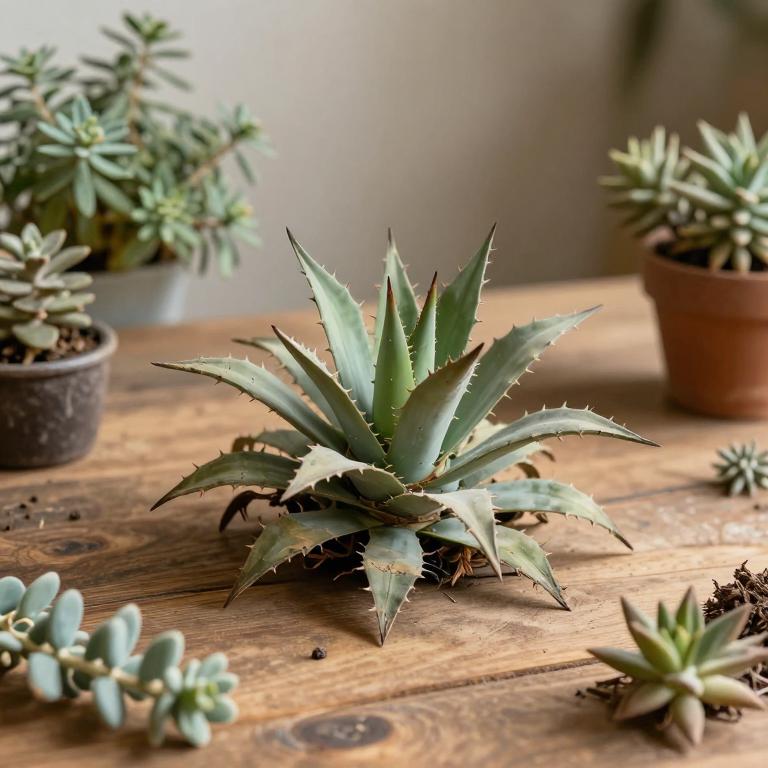
Agave lophantha exhibits a self-supporting growth form that allows it to stand firmly on its own. This structural stability makes it an ideal choice for various landscape designs where a reliable plant silhouette is required.
Sources: Global Inventory of Floras and Traits (GIFT)
Biological Activities
Compounds
Conditions
Agave lophantha exhibits significant molluscicidal activity against the snail species Biomphalaria alexandrina. Research indicates that the butanol extract of this plant is particularly effective at targeting these mollusks. Furthermore, the dry powder form of Agave lophantha maintains stable activity even under simulated field conditions. These findings highlight the plant's potential as a biological agent for controlling such snail populations. The study specifically evaluates how different preparations of the plant interact with and impact Biomphalaria alexandrina.
Preparations
Agave lophantha is prepared as a dry powder to test its stability under simulated field conditions. Researchers also utilized the plant to create different extracts for testing purposes. Specifically, Agave lophantha is prepared as a butanol extract to evaluate its molluscicidal activity. These various forms, including the dry powder and different extracts, were tested against Biomphalaria alexandrina. Each preparation method allows for a detailed assessment of the plant's biological and toxicological properties.