Agave inaequidens
Agave inaequidens · Accepted scientific name
Scientific literature: Very Sparse (0 studies) · ★☆☆☆☆
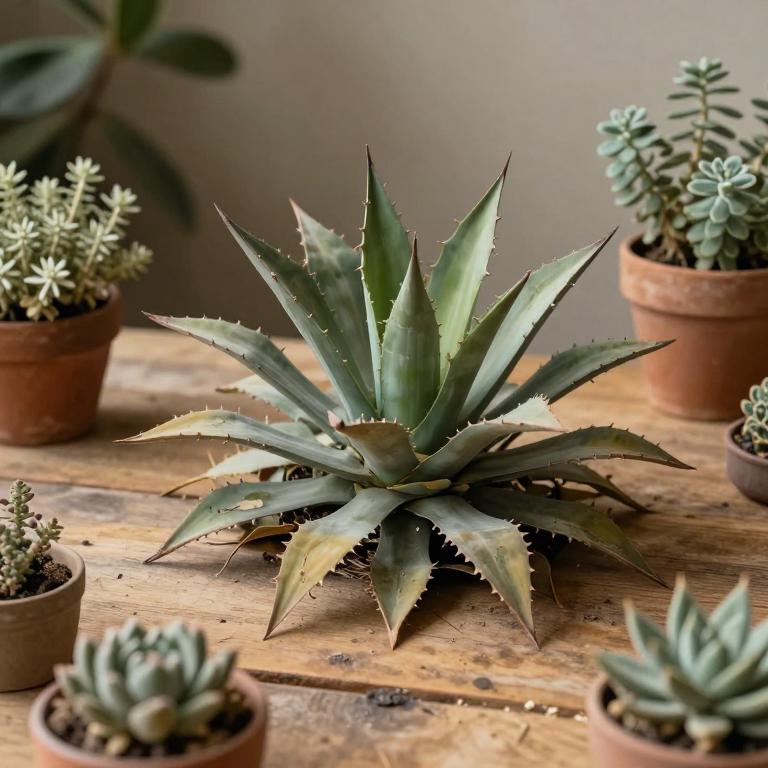
Agave inaequidens, commonly known as the Queen Victoria Agave, is a striking succulent characterized by its dramatic, rosette-shaped foliage. While prized by many gardeners for its architectural beauty, this species holds a significant place in the history of traditional spirits. The heart of the plant, or piña, serves as the essential raw material for various fermented and distilled beverages. Most notably, its fibers and sugars can be utilized in the complex preparations required to produce authentic mescal. Understanding this plant offers a fascinating glimpse into the intersection of botany and ancient artisanal traditions.
- Synonyms
- Not available
- Common names
- Not available
- Family
- Asparagaceae
- Distribution
- Not available
- Plant Parts
- Not available
Classification
Common Names
Agave inaequidens is a versatile succulent known by a variety of different names depending on the region. While it is widely recognized by the common name Lechuguilla, it also carries several other local monikers. Enthusiasts may refer to the plant as Maguey Alto or Maguey Bravo to distinguish its specific characteristics. Furthermore, it is frequently identified in various contexts as either Maguey Bruto or Maguey Largo. These diverse names highlight the plant's widespread presence and cultural importance across its native habitats.
Sources: Catalogue of Life (COL)
Taxonomy
Agave inaequidens is a fascinating specimen that belongs to the vast kingdom Plantae. Within this biological realm, it is specifically classified under the class Equisetopsida. The plant's lineage continues through the order Asparagales, showcasing its unique evolutionary path. It further belongs to the family Asparagaceae, a group known for diverse and striking characteristics. Ultimately, this species is defined by its membership in the renowned genus Agave.
| Rank | Classification |
|---|---|
| Kingdom | Plantae |
| Phylum | Streptophyta |
| Class | Equisetopsida |
| Subclass | Magnoliidae |
| Order | Asparagales |
| Family | Asparagaceae |
| Genus | Agave |
Sources: The World Checklist of Vascular Plants (WCVP)
Distribution
Geographic Regions
Agave inaequidens is a resilient species with a broad natural range spanning across Northern America. Within this region, its presence is most notable throughout the diverse landscapes of Mexico. Specifically, the plant thrives in the unique environments found in Central Mexico. It also maintains a significant distribution throughout the Northeast and Southwest portions of the country. These varying locations highlight the plant's ability to adapt to different Mexican territories.
Sources: The World Checklist of Vascular Plants (WCVP)
Identification
Morphology
Agave inaequidens grows in a distinct herb form that allows it to flourish in various landscapes. As a self-supporting plant, it maintains a sturdy structure without the need for external assistance.
Sources: Global Inventory of Floras and Traits (GIFT)
Biological Activities
Compounds
Conditions
Preparations
Agave inaequidens is prepared as mescal, which serves as the primary economic activity for agave handlers in Mexico. Within the state of Michoacán, this specific preparation method was identified by 76.1% of the interviewed population. The increasing demand for mescal has introduced significant ecological and social risks to the wild agave populations. To manage these risks, various practices are employed to ensure the species remains available for continued mescal production. Ultimately, the sustainable harvest of Agave inaequidens for mescal depends on the complexity of these local management responses.