giant-hyssop
Agastache · Accepted scientific name
Scientific literature: Very Sparse (4 studies) · ★☆☆☆☆
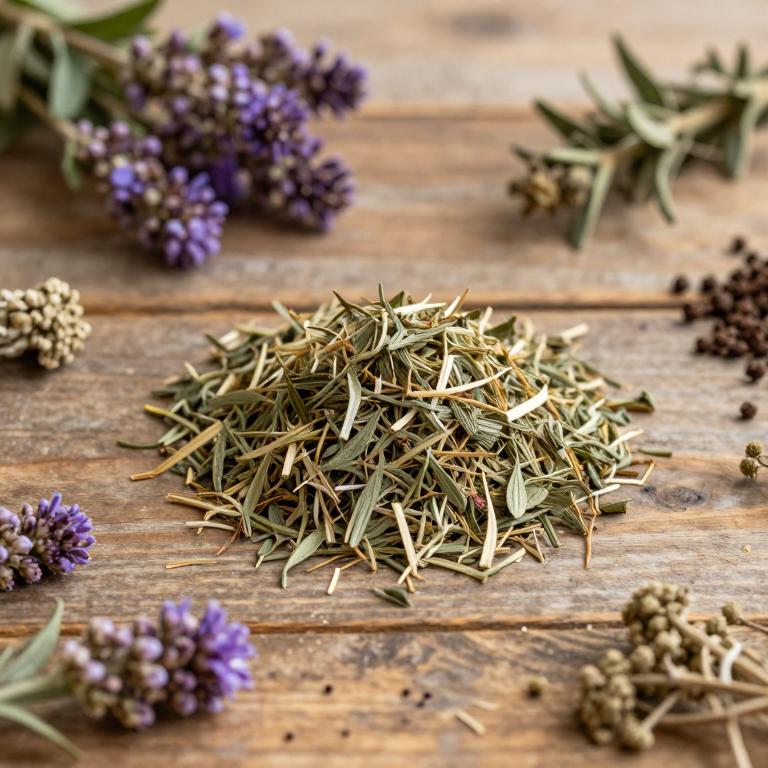
Giant-hyssop, scientifically known as Agastache, is a versatile perennial cherished in both ornamental gardens and traditional medicine. Renowned for its aromatic foliage and vibrant flower spikes, this resilient plant attracts pollinators while offering therapeutic benefits, including soothing digestive issues and reducing inflammation through its potent, essential oil-rich leaves.
Names and Synonyms
Common Names
- giant-hyssop
- Hyssops
- giant hyssops
- Giant Hyssop
Scientific Names
Accepted name
AgastacheSynonyms
- Flessera
- Dekinia
- Brittonastrum
Regional and Traditional Names
Spanish:
- Flessera
- Dekinia
- Lophanthus
- Brittonastrum
- Toronjiles
French:
- Agastache rugosa
Sources: Wikidata, Catalogue of Life
Taxonomical Classification
This plant belongs to the kingdom Plantae within the phylum Streptophyta and the class Equisetopsida. It is further classified under the subclass Magnoliidae and the order Lamiales, falling into the family Lamiaceae. Finally, it is identified by the genus Agastache.
| Rank | Classification |
|---|---|
| Kingdom | Plantae |
| Phylum | Streptophyta |
| Class | Equisetopsida |
| Subclass | Magnoliidae |
| Order | Lamiales |
| Family | Lamiaceae |
| Genus | Agastache |
Sources: The World Checklist of Vascular Plants (WCVP)
Distribution
This plant exhibits a broad distribution across several regions of the European continent. In Northern Europe, its presence can be observed in both Great Britain and Sweden. Moving toward the central part of the continent, it is also found throughout Middle Europe. Specifically, its range includes the territories of Austria and the Czechia-Slovakia region. Finally, the plant maintains a consistent presence within the borders of Germany.
| Region | Area |
|---|---|
| Northern Europe | Great Britain |
| Northern Europe | Sweden |
| Middle Europe | Austria |
| Middle Europe | Czechia-Slovakia |
| Middle Europe | Germany |
| Eastern Europe | Central European Russia |
| Russian Far East | Amur |
| Russian Far East | Khabarovsk |
| Russian Far East | Kuril Is. |
| Russian Far East | Primorye |
Sources: The World Checklist of Vascular Plants (WCVP)
Activities
Agastache has 4 reported activities identified across 0 scientific publications and several other databases. The most consistently reported activities include Antimicrobial, Antioxidant, Antiviral, Cytotoxic.
| Activity | Supporting sources | Consensus |
|---|---|---|
| Antimicrobial | 1 supporting sources | ★☆☆☆☆ |
| Antioxidant | 1 supporting sources | ★☆☆☆☆ |
| Antiviral | 1 supporting sources | ★☆☆☆☆ |
| Cytotoxic | 1 supporting sources | ★☆☆☆☆ |
Antimicrobial
- Phytochemistry reviews : proceedings of the Phytochemical Society of Europe
Antioxidant
- Phytochemistry reviews : proceedings of the Phytochemical Society of Europe
Antiviral
- Phytochemistry reviews : proceedings of the Phytochemical Society of Europe
Cytotoxic
- Phytochemistry reviews : proceedings of the Phytochemical Society of Europe
Preparations
Agastache has 1 reported preparations identified across 0 scientific publications and several other databases. The most consistently reported preparations include Agastache honey.
| Preparation | Supporting sources | Consensus |
|---|---|---|
| Agastache honey | 1 supporting sources | ★☆☆☆☆ |
Agastache honey
- Molecules (Basel, Switzerland)