Agastache urticifolia
Agastache urticifolia · Accepted scientific name
Scientific literature: Moderate (119 studies) · ★★★☆☆
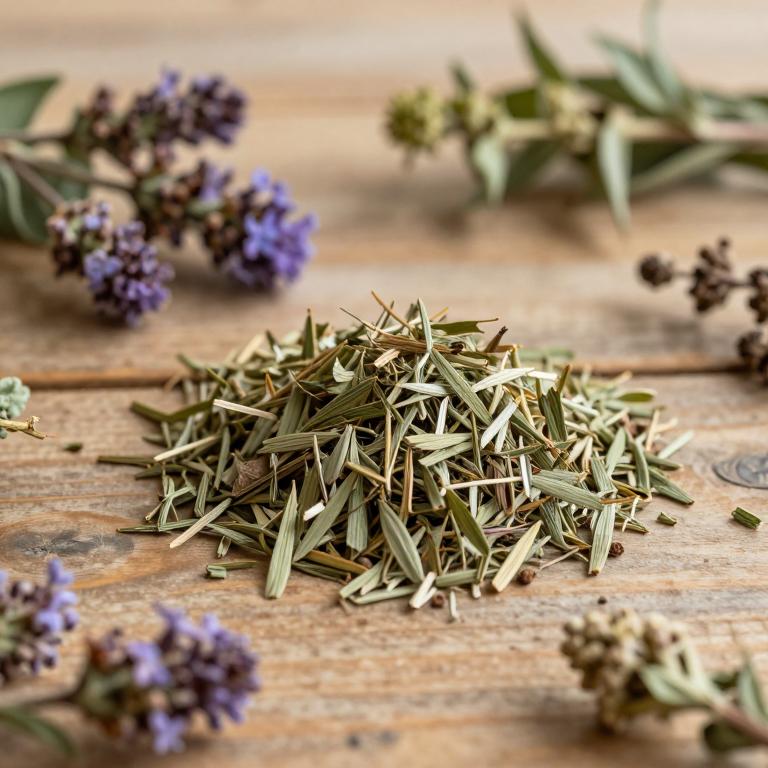
Agastache urticiifolia, scientifically known as Agastache urticiifolia, is a resilient perennial herb native to North America. Often called Giant Hyssop, this aromatic plant is prized for its medicinal properties, particularly in supporting digestive health and soothing respiratory issues. Its fragrant foliage and nectar-rich blooms attract pollinators beautifully.
- Family
- Not available
- Native range
- Northern America
- Parts used
- Not available
- Common names
- Not available
- Scientific synonyms
- Not available
Names and Synonyms
Scientific Names
Accepted name
Agastache urticifoliaDistribution
This plant exhibits a specific range across the western portions of North America. In Western Canada, its presence is limited to the province of British Columbia. Moving into the Northwestern United States, it can be found growing in the state of Oregon. The distribution continues through Washington and into the mountainous terrain of Montana. Finally, the species reaches as far south as Colorado within the Northwestern U.S.A. region.
| Region | Area |
|---|---|
| Western Canada | British Columbia |
| Northwestern U.S.A. | Colorado |
| Northwestern U.S.A. | Montana |
| Northwestern U.S.A. | Oregon |
| Northwestern U.S.A. | Washington |
| Southwestern U.S.A. | California |
| Southwestern U.S.A. | Nevada |
| Southwestern U.S.A. | Utah |
Sources: The World Checklist of Vascular Plants (WCVP)
Botanical Identification
Life history
The life history of Agastache urticifolia is characterized by its classification as a perennial plant, meaning it lives for more than two years and typically undergoes seasonal cycles of growth and dormancy. In terms of its structural growth strategy, the species functions as a hemicryptophyte, a life form where the perennating buds are located at the soil surface, protected by leaf litter or organic matter during unfavorable conditions. This hemicryptophytic nature allows the plant to persist through varying environmental stressors by maintaining its regenerative capacity at the ground level, ensuring its long-term survival within its ecological niche.
- Life form :
- hemicryptophyte
- Lifecycle :
- perennial
Morphology
The morphology of Agastache urticifolia is characterized by a growth form consisting of a non-woody herb and forb. This plant typically reaches an average height of 1.5 m and functions as a self-supporting species rather than a climber. It grows as an independent organism, meaning it is not a parasite, and maintains a terrestrial lifestyle as it is not an epiphyte.
- Climber :
- self-supporting
- Epiphyte :
- terrestrial
- Growth form :
- herb
- Growth form :
- forb
- Parasite :
- independent
- Plant height mean:
- 1.5 m
- Woodiness :
- non-woody
Reproduction
The reproduction of Agastache urticifolia is characterized by the production of specialized fruit and highly consistent seed metrics. The plant produces fruit that is categorized as dry rather than fleshy, facilitating efficient seed dispersal. The seeds themselves exhibit remarkably uniform volumetric properties, with a consistent seed volume measured at 0.35 mm³ (representing both the minimum and maximum values, as well as the mean). In terms of mass, the seeds demonstrate slight variability, ranging from a minimum of 0.0003 g (3e-04 g) to a maximum of 0.00074 g, with an overall average seed mass of approximately 0.000448 g.
- Fruit dryness :
- dry
- Seed mass max:
- 0.00074 g
- Seed mass mean:
- 0.000448 g
- Seed mass min:
- 3e-04 g
- Seed volume max:
- 0.35 mm³
Sources: Global Inventory of Floras and Traits (GIFT)
Chemicals
Agastache urticifolia has 13 reported phytochemicals identified across 0 scientific publications and several other databases. The most consistently reported chemicals include 1-OCTEN-3-OL, 3-OCTANOL, ALPHA-PINENE, BETA-PINENE, EO.
| Chemical | Supporting sources | Consensus |
|---|---|---|
| 1-OCTEN-3-OL | 1 supporting sources | ★☆☆☆☆ |
| 3-OCTANOL | 1 supporting sources | ★☆☆☆☆ |
| ALPHA-PINENE | 1 supporting sources | ★☆☆☆☆ |
| BETA-PINENE | 1 supporting sources | ★☆☆☆☆ |
| EO | 1 supporting sources | ★☆☆☆☆ |
| Germacrene D | 1 supporting sources | ★☆☆☆☆ |
| Isomenthone | 1 supporting sources | ★☆☆☆☆ |
| LIMONENE | 1 supporting sources | ★☆☆☆☆ |
| MENTHONE | 1 supporting sources | ★☆☆☆☆ |
| MYRCENE | 1 supporting sources | ★☆☆☆☆ |
1-OCTEN-3-OL
- Dr. Duke
3-OCTANOL
- Dr. Duke
ALPHA-PINENE
- Dr. Duke
BETA-PINENE
- Dr. Duke
EO
- Dr. Duke
Germacrene D
- Dr. Duke
Isomenthone
- Dr. Duke
LIMONENE
- Dr. Duke
MENTHONE
- Dr. Duke
MYRCENE
- Dr. Duke
Activities
Agastache urticifolia has 106 reported activities identified across 0 scientific publications and several other databases. The most consistently reported activities include ACE-Inhibitor, AChE-Inhibitor, Acaricide, Aldose-Reductase-Inhibitor, Allelochemic.
| Activity | Supporting sources | Consensus |
|---|---|---|
| ACE-Inhibitor | 1 supporting sources | ★☆☆☆☆ |
| AChE-Inhibitor | 1 supporting sources | ★☆☆☆☆ |
| Acaricide | 1 supporting sources | ★☆☆☆☆ |
| Aldose-Reductase-Inhibitor | 1 supporting sources | ★☆☆☆☆ |
| Allelochemic | 1 supporting sources | ★☆☆☆☆ |
| Allelopathic | 1 supporting sources | ★☆☆☆☆ |
| Allergenic | 1 supporting sources | ★☆☆☆☆ |
| Analgesic | 1 supporting sources | ★☆☆☆☆ |
| Antiacetylcholinesterase | 1 supporting sources | ★☆☆☆☆ |
| Antiacne | 1 supporting sources | ★☆☆☆☆ |
ACE-Inhibitor
- Dr. Duke
AChE-Inhibitor
- Dr. Duke
Acaricide
- Dr. Duke
Aldose-Reductase-Inhibitor
- Dr. Duke
Allelochemic
- Dr. Duke
Allelopathic
- Dr. Duke
Allergenic
- Dr. Duke
Analgesic
- Dr. Duke
Antiacetylcholinesterase
- Dr. Duke
Antiacne
- Dr. Duke