Agastache pallidiflora
Agastache pallidiflora · Accepted scientific name
Scientific literature: Sparse (90 studies) · ★★☆☆☆
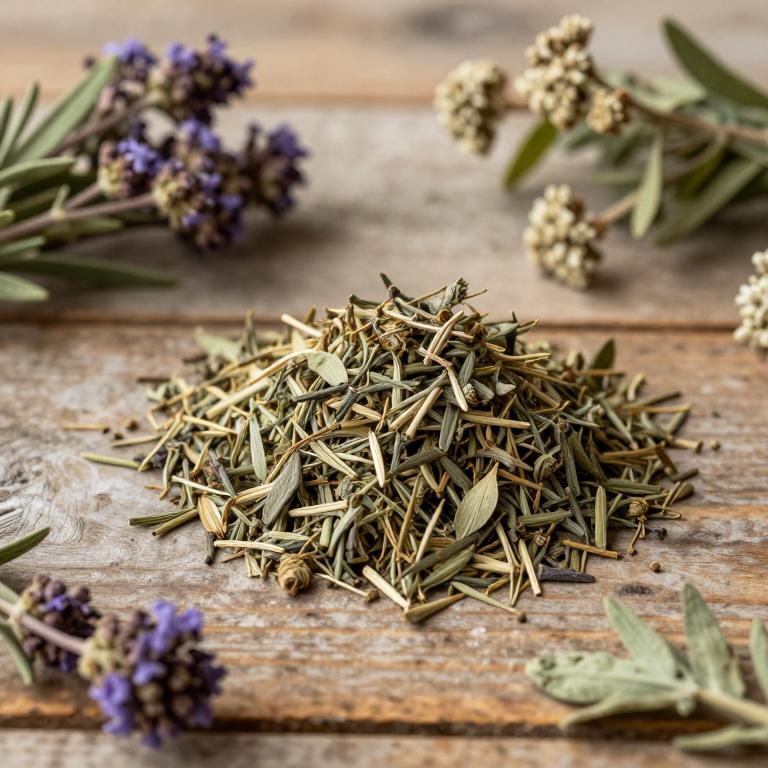
, scientifically known as Agastache pallidiflora, is a captivating perennial herb belonging to the mint family. Native to arid regions, this plant is prized for its pale, tubular flowers and aromatic foliage. Often utilized in traditional wellness practices, it offers unique medicinal properties and serves as a vital pollinator magnet.
- Family
- Not available
- Native range
- Northern America
- Parts used
- Not available
- Common names
- Not available
- Scientific synonyms
- Not available
Names and Synonyms
Scientific Names
Accepted name
Agastache pallidifloraDistribution
This plant exhibits a widespread distribution across several distinct regions of North America. In the Northwestern United States, its presence is noted within the state of Colorado. Moving toward the Southwest, it can be found growing in Arizona. The species also extends through the South-Central United States, specifically inhabiting New Mexico and Texas. Finally, its range reaches into Mexico, where it is located in the northeastern part of the country.
| Region | Area |
|---|---|
| Northwestern U.S.A. | Colorado |
| Southwestern U.S.A. | Arizona |
| South-Central U.S.A. | New Mexico |
| South-Central U.S.A. | Texas |
| Mexico | Mexico Northeast |
Sources: The World Checklist of Vascular Plants (WCVP)
Botanical Identification
Life history
The life history of Agastache pallidiflora is characterized by its classification as a perennial, allowing it to persist through multiple growing seasons. Structurally, the plant functions as a hemicryptophyte, a life form where the perennating buds are located at or just below the soil surface, protected by leaf litter or soil during unfavorable conditions. This growth strategy ensures its long-term survival and ability to re-emerge annually from its protected buds.
- Life form :
- hemicryptophyte
- Lifecycle :
- perennial
Morphology
The morphology of Agastache pallidiflora is characterized by its growth form as a forb, exhibiting a structural habit typical of herbaceous perennials. It functions as an independent organism, lacking any parasitic relationship with host plants. In terms of its growth strategy, it is a self-supporting plant, meaning it does not rely on external structures for climbing or vertical support. Furthermore, it maintains a terrestrial lifestyle, establishing its root system and growth within the soil rather than growing as an epiphyte.
- Climber :
- self-supporting
- Epiphyte :
- terrestrial
- Growth form :
- forb
- Parasite :
- independent
Sources: Global Inventory of Floras and Traits (GIFT)
Chemicals
Agastache pallidiflora has 9 reported phytochemicals identified across 0 scientific publications and several other databases. The most consistently reported chemicals include Diosmetin 7-O-beta-D-glucoside, EO, Isomenthone, Kaempferol 3-O-alpha-L-galactoside, Kaempferol 3-O-alpha-L-rhamnoside.
| Chemical | Supporting sources | Consensus |
|---|---|---|
| Diosmetin 7-O-beta-D-glucoside | 1 supporting sources | ★☆☆☆☆ |
| EO | 1 supporting sources | ★☆☆☆☆ |
| Isomenthone | 1 supporting sources | ★☆☆☆☆ |
| Kaempferol 3-O-alpha-L-galactoside | 1 supporting sources | ★☆☆☆☆ |
| Kaempferol 3-O-alpha-L-rhamnoside | 1 supporting sources | ★☆☆☆☆ |
| MENTHONE | 1 supporting sources | ★☆☆☆☆ |
| Pulegone | 1 supporting sources | ★☆☆☆☆ |
| Tilianin | 1 supporting sources | ★☆☆☆☆ |
| quercitrin | 1 supporting sources | ★☆☆☆☆ |
Diosmetin 7-O-beta-D-glucoside
- Dr. Duke
EO
- Dr. Duke
Isomenthone
- Dr. Duke
Kaempferol 3-O-alpha-L-galactoside
- Dr. Duke
Kaempferol 3-O-alpha-L-rhamnoside
- Dr. Duke
MENTHONE
- Dr. Duke
Pulegone
- Dr. Duke
Tilianin
- Dr. Duke
quercitrin
- Dr. Duke
Activities
Agastache pallidiflora has 80 reported activities identified across 0 scientific publications and several other databases. The most consistently reported activities include ACE-Inhibitor, AChE-Inhibitor, Acaricide, Aldose-Reductase-Inhibitor, Allelopathic.
| Activity | Supporting sources | Consensus |
|---|---|---|
| ACE-Inhibitor | 1 supporting sources | ★☆☆☆☆ |
| AChE-Inhibitor | 1 supporting sources | ★☆☆☆☆ |
| Acaricide | 1 supporting sources | ★☆☆☆☆ |
| Aldose-Reductase-Inhibitor | 1 supporting sources | ★☆☆☆☆ |
| Allelopathic | 1 supporting sources | ★☆☆☆☆ |
| Analgesic | 1 supporting sources | ★☆☆☆☆ |
| Antiacetylcholinesterase | 1 supporting sources | ★☆☆☆☆ |
| Antiaggregant | 1 supporting sources | ★☆☆☆☆ |
| Antiallergic | 1 supporting sources | ★☆☆☆☆ |
| Antialzheimeran? | 1 supporting sources | ★☆☆☆☆ |
ACE-Inhibitor
- Dr. Duke
AChE-Inhibitor
- Dr. Duke
Acaricide
- Dr. Duke
Aldose-Reductase-Inhibitor
- Dr. Duke
Allelopathic
- Dr. Duke
Analgesic
- Dr. Duke
Antiacetylcholinesterase
- Dr. Duke
Antiaggregant
- Dr. Duke
Antiallergic
- Dr. Duke
Antialzheimeran?
- Dr. Duke