Giant Mexican Hyssop
Agastache mexicana · Accepted scientific name
Scientific literature: Very Sparse (11 studies) · ★☆☆☆☆
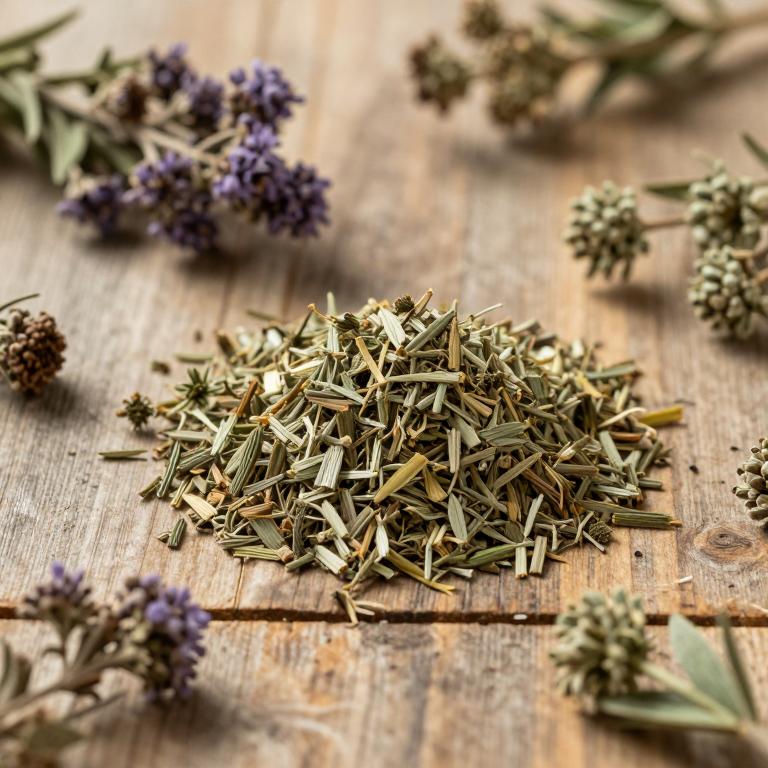
Giant Mexican Hyssop, scientifically known as Agastache mexicana, is a resilient perennial prized for its aromatic foliage and vibrant blooms. Native to Mexico, this medicinal herb offers therapeutic potential through its essential oils. It is widely used in traditional remedies to support respiratory health and soothe digestive discomfort.
Names and Synonyms
Common Names
- Giant Mexican Hyssop
- Mexican Giant Hyssop
- Mexican Hyssop
Scientific Names
Accepted name
Agastache mexicanaSynonyms
- Brittonastrum mexicanum
- Cedronella mexicana
- Dracocephalum mexicanum
Regional and Traditional Names
Spanish:
- Toronjil morado
German:
- Mexikanischer Riesenysop
- Mexikanische Minze
- Mexikanischer Anis-Ysop
- Lemonenagastache
- Mexikanischer Anisysop
- Lemon-Ysop
- Mexikanischer Riesenysop
Sources: Wikidata, Catalogue of Life
Taxonomical Classification
This plant belongs to the kingdom Plantae and is classified under the phylum Streptophyta and class Equisetopsida. Within the subclass Magnoliidae, it falls under the order Lamiales and the family Lamiaceae. Finally, its specific taxonomic designation is within the genus Agastache.
| Rank | Classification |
|---|---|
| Kingdom | Plantae |
| Phylum | Streptophyta |
| Class | Equisetopsida |
| Subclass | Magnoliidae |
| Order | Lamiales |
| Family | Lamiaceae |
| Genus | Agastache |
Sources: The World Checklist of Vascular Plants (WCVP)
Distribution
This plant, known as Agastache mexicana, exhibits a diverse range of locations across the country. Its presence is widely documented throughout the Central region of Mexico. Additionally, it can be found thriving in the Northeast part of the nation. The species also extends its reach into the Gulf regions of Mexico. Finally, its geographical distribution includes the Southwest areas of the country.
| Region | Area |
|---|---|
| Mexico | Mexico Central |
| Mexico | Mexico Northeast |
| Mexico | Mexico Gulf |
| Mexico | Mexico Southwest |
Sources: The World Checklist of Vascular Plants (WCVP)
Botanical Identification
Life history
The life history of Agastache mexicana is characterized by its classification as a hemicryptophyte, a growth form where the perennating buds are located at or just below the soil surface, allowing the plant to survive seasonal environmental stresses. Within the spectrum of life forms, it functions specifically as a hemicryptophyte, utilizing its protected buds to endure periods of dormancy before emerging to complete its reproductive cycle. This life strategy enables the plant to establish a persistent presence in its habitat, transitioning from its dormant state to active vegetative growth and eventually to flowering, ensuring long-term survival through seasonal fluctuations.
- Life form :
- hemicryptophyte
Morphology
The morphology of Agastache mexicana is characterized by its growth habit as a non-woody herbaceous plant. It functions as a self-supporting species, meaning it does not rely on other structures for vertical ascent through climbing mechanisms. As an independent organism, it does not exhibit parasitic behavior, maintaining its own nutritional processes without host dependency. Furthermore, it is a terrestrial plant, establishing its root system and lifecycle within the soil rather than living as an epiphyte.
- Climber :
- self-supporting
- Epiphyte :
- terrestrial
- Parasite :
- independent
- Woodiness :
- non-woody
Sources: Global Inventory of Floras and Traits (GIFT)
Chemicals
Agastache mexicana has 2 reported phytochemicals identified across 0 scientific publications and several other databases. The most consistently reported chemicals include Estragole, colchicine.
| Chemical | Supporting sources | Consensus |
|---|---|---|
| Estragole | 1 supporting sources | ★☆☆☆☆ |
| colchicine | 1 supporting sources | ★☆☆☆☆ |
Estragole
- International journal of molecular sciences
colchicine
- PeerJ
Activities
Agastache mexicana has 2 reported activities identified across 0 scientific publications and several other databases. The most consistently reported activities include Antihypertensive, Vasorelaxant.
| Activity | Supporting sources | Consensus |
|---|---|---|
| Antihypertensive | 2 supporting sources | ★☆☆☆☆ |
| Vasorelaxant | 1 supporting sources | ★☆☆☆☆ |
Antihypertensive
- Journal of ethnopharmacology
- Biochemical pharmacology
Vasorelaxant
- Biochemical pharmacology
Conditions
Agastache mexicana has 4 reported investigations on conditions identified across 0 scientific publications and several other databases. The most consistently reported conditions include cardiovascular diseases, antihypertensive, asthma, hypertension.
| Condition | Supporting sources | Consensus |
|---|---|---|
| Cardiovascular diseases | 2 supporting sources | ★☆☆☆☆ |
| Antihypertensive | 1 supporting sources | ★☆☆☆☆ |
| Asthma | 1 supporting sources | ★☆☆☆☆ |
| Hypertension | 1 supporting sources | ★☆☆☆☆ |
Cardiovascular diseases
- PeerJ
- Pharmaceutical biology
Antihypertensive
- Biochemical pharmacology
Asthma
- Asian Pacific journal of tropical medicine
Hypertension
- Journal of ethnopharmacology
Preparations
Agastache mexicana has 6 reported preparations identified across 0 scientific publications and several other databases. The most consistently reported preparations include EtOH:H(2)O (7:3), EtOH:H(2)O (7:3) extracts, decoction, dried, infusion.
| Preparation | Supporting sources | Consensus |
|---|---|---|
| Etoh:h(2)o (7:3) | 1 supporting sources | ★☆☆☆☆ |
| Etoh:h(2)o (7:3) extracts | 1 supporting sources | ★☆☆☆☆ |
| Decoction | 1 supporting sources | ★☆☆☆☆ |
| Dried | 1 supporting sources | ★☆☆☆☆ |
| Infusion | 1 supporting sources | ★☆☆☆☆ |
| Methanolic extracts | 1 supporting sources | ★☆☆☆☆ |
Etoh:h(2)o (7:3)
- Journal of ethnopharmacology
Etoh:h(2)o (7:3) extracts
- Journal of ethnopharmacology
Decoction
- Journal of ethnopharmacology
Dried
- Journal of food science
Infusion
- Journal of ethnopharmacology
Methanolic extracts
- Journal of ethnopharmacology