Agapanthus campanulatus
Agapanthus campanulatus · Accepted scientific name
Scientific literature: Very Sparse (3 studies) · ★☆☆☆☆
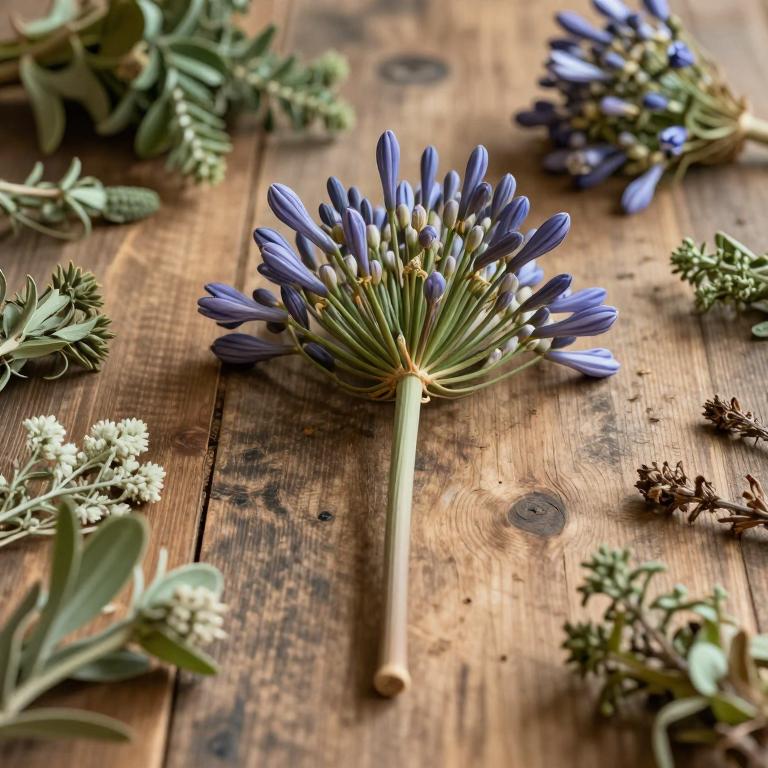
, scientifically known as Agapantus campanulatus, is a striking perennial herb native to South Africa. Renowned for its bell-shaped, blue-to-violet flowers, it is often called the African Lily. While primarily ornamental, its unique botanical properties offer intriguing potential for traditional medicinal applications and specialized pharmacological studies in herbal medicine.
- Family
- Not available
- Native range
- Africa
- Parts used
- Flower · Leaf
- Common names
- Not available
- Scientific synonyms
- Not available
Names and Synonyms
Scientific Names
Accepted name
Agapanthus campanulatusDistribution
This plant is indigenous to the southern regions of the African continent. Its natural habitat is primarily found within the Cape Provinces of Southern Africa. Additionally, the species can be discovered growing in the mountainous terrain of Lesotho. It also maintains a presence throughout the KwaZulu-Natal region. Finally, its distribution extends into the Free State and the Northern Provinces of South Africa.
| Region | Area |
|---|---|
| Southern Africa | Cape Provinces |
| Southern Africa | Lesotho |
| Southern Africa | KwaZulu-Natal |
| Southern Africa | Free State |
| Southern Africa | Northern Provinces |
Sources: The World Checklist of Vascular Plants (WCVP)
Botanical Identification
Ecology
The ecology of Agapanthus campanulatus is characterized by its ability to thrive across a diverse range of topographical gradients, typically occupying montane and sub-montane habitats. It is distributed across a significant altitudinal spectrum, ranging from a minimum elevation of 425 m AMSL to a maximum elevation of 2745 m AMSL. Within these varying elevations, the species adapts to various microclimates, often favoring well-drained soils and areas with moderate sunlight, which are common in the rocky slopes and grassy regions it inhabits. Its broad elevational range suggests a high degree of ecological plasticity, allowing it to persist in both lower-altitude warmer zones and higher-altitude environments where temperatures are considerably more temperate and moisture levels may fluctuate.
- Elevational range max:
- 2745 m AMSL
- Elevational range min:
- 425 m AMSL
Life history
The life history of Agapanthus campanulatus is characterized by its status as a perennial organism, allowing it to persist through multiple growing seasons. Functioning as a cryptophyte, the plant protects its vital regenerative structures beneath the soil surface to survive unfavorable environmental conditions. More specifically, it adopts a geophyte life form, relying on specialized underground storage organs to sustain its physiological processes and facilitate regrowth after periods of dormancy.
- Life form :
- geophyte
- Life form :
- cryptophyte
- Lifecycle :
- perennial
Morphology
The morphology of Agapanthus campanulatus is characterized by its growth form as a non-woody herb, specifically functioning as a self-supporting herb. As an independent organism, it does not exhibit parasitic behavior and maintains a terrestrial habit, rather than being aquatic or epiphytic. The plant typically reaches a height ranging from a minimum of 0.4 m to a maximum of 1.51 m.
- Aquatic :
- terrestrial
- Climber :
- self-supporting
- Epiphyte :
- terrestrial
- Growth form :
- herb
- Parasite :
- independent
- Plant height max:
- 1.51 m
- Plant height min:
- 0.4 m
- Woodiness :
- non-woody
Sources: Global Inventory of Floras and Traits (GIFT)
Plant Parts
Agapanthus campanulatus has 3 reported plant parts identified across 3 scientific publications and several other databases that are studied for medicinal purposes. The most consistently reported plant part include flower, leaf, root.
| Plant part | Supporting sources | Consensus |
|---|---|---|
| Flower | 1 supporting sources | ★☆☆☆☆ |
| Leaf | 1 supporting sources | ★☆☆☆☆ |
| Root | 1 supporting sources | ★☆☆☆☆ |
Flower
- Journal of ethnopharmacology
Leaf
- Journal of ethnopharmacology
Root
- Journal of ethnopharmacology
Preparations
Agapanthus campanulatus has 1 reported preparations identified across 3 scientific publications and several other databases. The most consistently reported preparations include aqueous extracts from leaves and flowers.
| Preparation | Supporting sources | Consensus |
|---|---|---|
| Aqueous extracts from leaves and flowers | 1 supporting sources | ★☆☆☆☆ |
Aqueous extracts from leaves and flowers
- Journal of ethnopharmacology