Pod Mahogany
Afzelia quanzensis · Accepted scientific name
Scientific literature: Very Sparse (8 studies) · ★☆☆☆☆
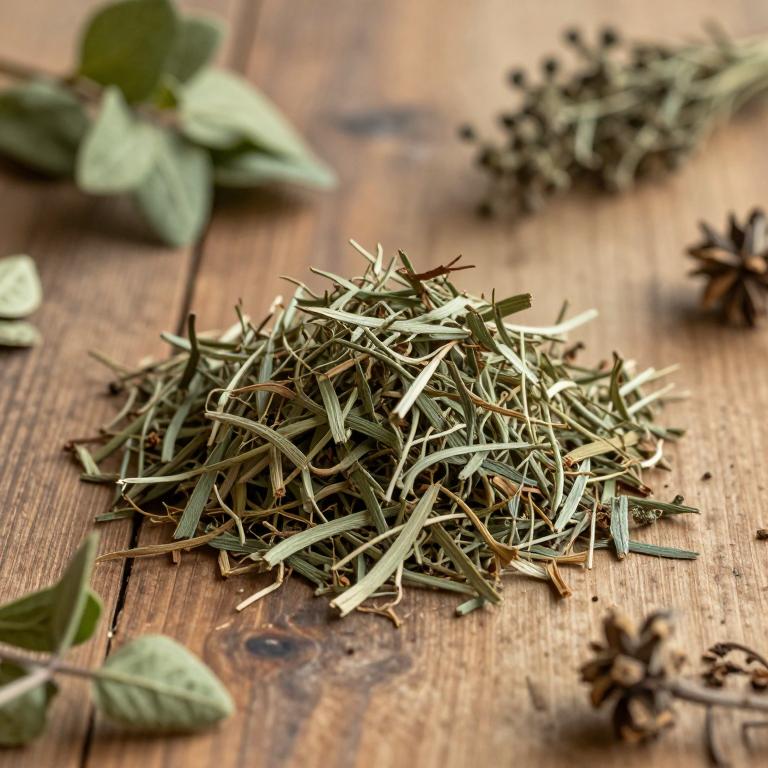
Pod Mahogany, scientifically known as Afzelia quanzensis, is a versatile medicinal tree native to tropical Africa. Renowned for its therapeutic properties, various parts of the tree—including the bark, leaves, and seeds—are utilized in traditional medicine to treat ailments such as inflammation, skin infections, and gastrointestinal issues.
Names and Synonyms
Common Names
- Pod Mahogany
- pod-mahogany
- African Mahogany
- African-Mahogany
- Chamfute
- Chamfuti
- Chanfuta
- Luckybean
- Mahogany Bean Tree
- Mahoganybean
- Red-Mahogany
- Rhodesian Mahogany
- Rhodesian-Mahogany
Scientific Names
Accepted name
Afzelia quanzensisSynonyms
- Pahudia quanzensis
- Pahudia attenuata
- Afzelia petersiana
- Afzelia attenuata
- Afrafzelia petersiana
- Afrafzelia quanzensis
- Afrafzelia attenuata
- Intsia attenuata
- Intsia quanzensis
- Intsia petersiana
Regional and Traditional Names
German:
- Schoten-Mahagoni
Sources: Wikidata, Catalogue of Life
Taxonomical Classification
This plant belongs to the kingdom Plantae and is classified under the phylum Streptophyta and the class Equisetopsida. Within the subclass Magnoliidae, it is further categorized under the order Fabales and the family Fabaceae. Ultimately, its specific taxonomic identity is defined by the genus Afzelia.
| Rank | Classification |
|---|---|
| Kingdom | Plantae |
| Phylum | Streptophyta |
| Class | Equisetopsida |
| Subclass | Magnoliidae |
| Order | Fabales |
| Family | Fabaceae |
| Genus | Afzelia |
Sources: The World Checklist of Vascular Plants (WCVP)
Distribution
This plant is widely distributed across several key regions within the African continent. In West-Central Tropical Africa, it can be found growing in the Democratic Republic of the Congo. Its range extends into Northeast Tropical Africa, where it is present in Somalia. Furthermore, the species is common throughout East Tropical Africa, specifically inhabiting Kenya and Tanzania. Finally, its geographical presence continues through the neighboring territory of Uganda.
| Region | Area |
|---|---|
| West-Central Tropical Africa | DR Congo |
| Northeast Tropical Africa | Somalia |
| East Tropical Africa | Kenya |
| East Tropical Africa | Tanzania |
| East Tropical Africa | Uganda |
| South Tropical Africa | Angola |
| South Tropical Africa | Malawi |
| South Tropical Africa | Mozambique |
| South Tropical Africa | Zambia |
| South Tropical Africa | Zimbabwe |
Sources: The World Checklist of Vascular Plants (WCVP)
Botanical Identification
Ecology
The ecology of Afzelia quanzensis is defined by its presence in diverse tropical ecosystems, where it typically inhabits woodland, dense bushland, and the edges of dry evergreen forests. This species thrives across a specific altitudinal gradient, occurring at elevations ranging from a minimum of 75 m AMSL to a maximum of 945 m AMSL.
- Elevational range max:
- 945 m AMSL
- Elevational range min:
- 75 m AMSL
- Habitat :
- woodland, dense bushland, dry evergreen forest (edges)
Life history
The life history of Afzelia quanziensis is characterized by its nature as a perennial species, allowing it to establish a long-lived presence within its natural ecosystem. Throughout its developmental stages, the plant exhibits a deciduous growth habit, shedding its foliage periodically as part of its seasonal biological rhythm. This cycle of leaf senescence and regrowth is a fundamental aspect of its survival strategy, helping it manage environmental stressors over its extended lifespan.
- Deciduousness :
- deciduous
- Lifecycle :
- perennial
Morphology
Morphologically, Afzelia quanzensis is a woody, self-supporting tree characterized by its substantial stature and independent growth habit. As a terrestrial species, it does not function as a parasite or an epiphyte, maintaining an independent lifestyle in its natural habitat. The plant exhibits significant variation in size, with heights ranging from a minimum of 3.5 m to a maximum of 20 m, though it typically reaches a mean height of approximately 17.5 m. Its structural development is defined by a robust, woody growth form, typical of large forest or savanna trees.
- Aquatic :
- terrestrial
- Climber :
- self-supporting
- Epiphyte :
- terrestrial
- Growth form :
- tree
- Parasite :
- independent
- Plant height max:
- 20 m
- Plant height mean:
- 17.5 m
- Plant height min:
- 3.5 m
- Woodiness :
- woody
Physiology
The physiology of Afzelia quanzensis is characterized by a C3 photosynthetic pathway, which involves the direct fixation of carbon dioxide through the Calvin cycle during the light-independent reactions. As a member of the Fabaceae family, the plant also functions as a nitrogen fixer, establishing symbiotic relationships with rhizobia bacteria in its root nodules to convert atmospheric nitrogen into bioavailable forms, thereby enhancing its nutrient uptake and growth in nitrogen-poor soils.
- Nitrogen fixer :
- yes
- Photosynthetic pathway :
- C3
Reproduction
The reproduction of Afzelia quanzensis is primarily centered around the production and dispersal of its seeds, which exhibit significant morphological variation in size. The seed mass within this species is notably diverse, characterized by a mean mass of approximately 8.24719 g. This variability is further evidenced by a wide range of individual seed weights, with the minimum recorded mass being as low as 1.87679 g, while the maximum mass can reach up to 31.25 g. This substantial spread in seed mass plays a critical role in the plant's reproductive strategy and its ability to establish in various environmental conditions.
- Seed mass max:
- 31.25 g
- Seed mass mean:
- 8.24719 g
- Seed mass min:
- 1.87679 g
Sources: Global Inventory of Floras and Traits (GIFT)
Chemicals
Afzelia quanzensis has 5 reported phytochemicals identified across 0 scientific publications and several other databases. The most consistently reported chemicals include Cardiac Glycosides, Flavonoids, Saponins, Steroids, Terpenoids.
| Chemical | Supporting sources | Consensus |
|---|---|---|
| Cardiac Glycosides | 1 supporting sources | ★☆☆☆☆ |
| Flavonoids | 1 supporting sources | ★☆☆☆☆ |
| Saponins | 1 supporting sources | ★☆☆☆☆ |
| Steroids | 1 supporting sources | ★☆☆☆☆ |
| Terpenoids | 1 supporting sources | ★☆☆☆☆ |
Cardiac Glycosides
- International journal of molecular sciences
Flavonoids
- International journal of molecular sciences
Saponins
- International journal of molecular sciences
Steroids
- International journal of molecular sciences
Terpenoids
- International journal of molecular sciences
Conditions
Afzelia quanzensis has 2 reported investigations on conditions identified across 0 scientific publications and several other databases. The most consistently reported conditions include anemia, cancer.
| Condition | Supporting sources | Consensus |
|---|---|---|
| Anemia | 1 supporting sources | ★☆☆☆☆ |
| Cancer | 1 supporting sources | ★☆☆☆☆ |
Anemia
- Journal of ethnopharmacology
Cancer
- International journal of molecular sciences
Preparations
Afzelia quanzensis has 4 reported preparations identified across 0 scientific publications and several other databases. The most consistently reported preparations include aqueous extract, ethanolic extract, methanol extract, methanolic extract.
| Preparation | Supporting sources | Consensus |
|---|---|---|
| Aqueous extract | 1 supporting sources | ★☆☆☆☆ |
| Ethanolic extract | 1 supporting sources | ★☆☆☆☆ |
| Methanol extract | 1 supporting sources | ★☆☆☆☆ |
| Methanolic extract | 1 supporting sources | ★☆☆☆☆ |
Aqueous extract
- International journal of molecular sciences
Ethanolic extract
- International journal of molecular sciences
Methanol extract
- International journal of molecular sciences
Methanolic extract
- International journal of molecular sciences