Afrohybanthus enneaspermus
Afrohybanthus enneaspermus · Accepted scientific name
Scientific literature: Very Sparse (22 studies) · ★☆☆☆☆
Afrohybanthus enneaspermus, is a distinctive medicinal plant native to specific African regions. Renowned in traditional healing practices, it possesses unique phytochemical properties used to treat various ailments. Exploring its botanical characteristics and therapeutic potential offers valuable insights into ethnobotany and the development of future natural pharmacological treatments.
- Family
- Violaceae
- Native range
- Africa
- Parts used
- Leaf
- Common names
- Not available
- Scientific synonyms
- Viola Frutescens · Calceolaria Thymifolia · 61 more
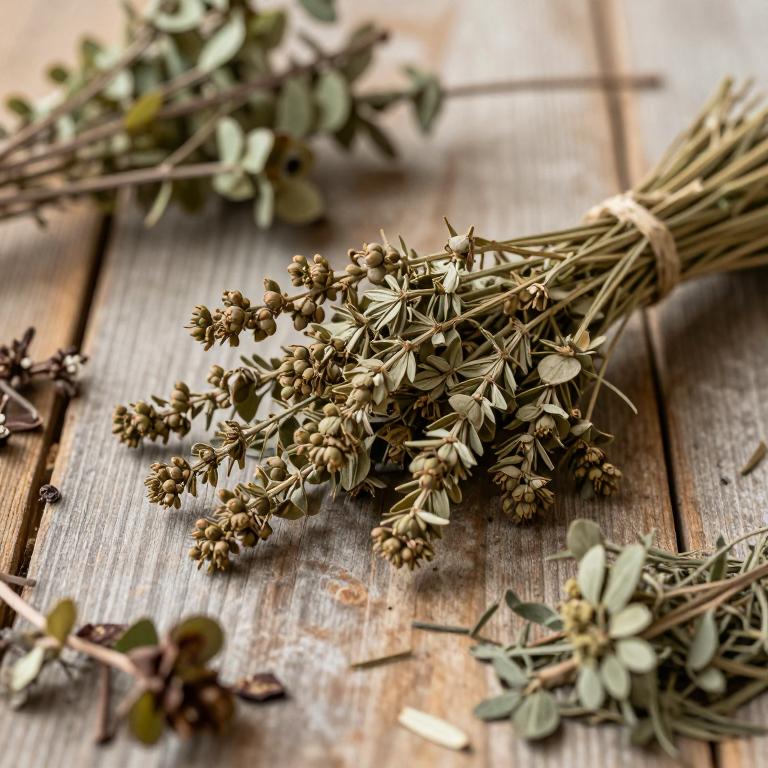
Names and Synonyms
Scientific Names
Accepted name
Afrohybanthus enneaspermusSynonyms
- Viola frutescens
- Calceolaria thymifolia
- Ionidium enneaspermum
- Ionidium enneaspermum var. hirtum
- Hybanthus enneaspermus var. banksianus
- Hybanthus hirtus var. glabrescens
- Hybanthus enneaspermus var. communis
- Hybanthus enneaspermus var. densifolius
- Hybanthus enneaspermus var. diversifolius
- Hybanthus fritzscheanus
- Hybanthus mollis
- Hybanthus nyassensis
- Hybanthus thesiifolius
- Hybanthus zippelii
- Ionidium wightiana
- Ionidium zippelii
- Alsodeia socotrana
- Hybanthus heterophyllus f. xerophilus
- Ionidium enneaspermum var. thesiifolium
- Ionidium thymifolium var. pubescens
- Polygala thea
- Viola guineensis
- Viola erecta
- Viola enneasperma
- Viola suffruticosa
- Viola linifolia
- Viola lanceifolia
- Viola thesiifolia
- Ionidium erectum
- Pigea banksiana
- Hybanthus suffruticosus
- Hybanthus thymifolius
- Ionidium rhabdospermum
- Hybanthus enneaspermus f. pubescens
- Ionidium subglaucum
- Ionidium suffruticosum
- Pigea enneasperma
- Ionidium thesiifolium
- Ionidium thymifolium
- Ionidium molle
- Ionidium linifolium
- Ionidium leptorhizum
- Hybanthus enneaspermus f. flavus
- Calceolaria enneasperma
- Hybanthus enneaspermus var. pseudoafer
- Solea erecta
- Hybanthus enneaspermus
- Solea enneasperma
- Hybanthus enneaspermus f. angustifolius
- Solea heterophylla
- Hybanthus linifolius
- Solea linifolia
- Hybanthus miniatus
- Solea montana
- Hybanthus heterophyllus
- Hybanthus hildebrandtii
- Hybanthus hirtus
- Ionidium heterophyllum
- Ionidium hirtum
- Ionidium hexaspermum
- Ionidium indicum
- Ionidium aethiopicum
- Ionidium banksianum
Sources: Wikidata
Taxonomical Classification
This plant belongs to the kingdom Plantae and is classified within the phylum Streptophyta and the class Equisetopsida. As a member of the subclass Magnoliidae and the order Malpighiales, it falls under the family Violaceae. Specifically, it is identified by its genus, Afrohybanthus, and its species name, Afrohybanthus enneaspermus.
| Rank | Classification |
|---|---|
| Kingdom | Plantae |
| Phylum | Streptophyta |
| Class | Equisetopsida |
| Subclass | Magnoliidae |
| Order | Malpighiales |
| Family | Violaceae |
| Genus | Afrohybanthus |
Sources: The World Checklist of Vascular Plants (WCVP)
Distribution
This plant, Afrohybantus enneaspermus, exhibits a specific geographical distribution across the West Tropical Africa region. Its presence has been documented in the nation of Benin. Furthermore, the species can be found extending into Burkina Faso. It is also widely distributed throughout Ghana and Guinea. Finally, the plant's range continues through the territory of Ivory Coast.
| Region | Area |
|---|---|
| West Tropical Africa | Benin |
| West Tropical Africa | Burkina |
| West Tropical Africa | Ghana |
| West Tropical Africa | Guinea |
| West Tropical Africa | Ivory Coast |
| West Tropical Africa | Liberia |
| West Tropical Africa | Mali |
| West Tropical Africa | Mauritania |
| West Tropical Africa | Nigeria |
| West Tropical Africa | Niger |
Sources: The World Checklist of Vascular Plants (WCVP)
Botanical Identification
Ecology
The ecology of Afrohyphantus enneaspermus is characterized by its adaptability across diverse landscapes and significant altitudinal variation. This species thrives in a variety of environments, including wooded grasslands, open grasslands, evergreen forests, as well as disturbed areas such as cultivated and waste places. Its distribution spans a broad elevational range, occurring from low-lying regions at 10 m AMSL up to higher elevations reaching a maximum of 1100 m AMSL.
- Elevational range max:
- 1100 m AMSL
- Elevational range min:
- 10 m AMSL
- Habitat :
- wooded grassland, grassland, cultivated and waste places, evergreen forest
Life history
The life history of Afrohybantus enneaspermus is characterized by its status as a perennial species, allowing it to persist through multiple growing seasons rather than completing its cycle within a single year. In terms of its structural growth strategy and ecological positioning, the plant is classified as a chamaephyte, a life form where the permanent buds are located close to the soil surface, often protected by a layer of leaf litter or substrate. This specific life form, categorized under both the chamaephyte and chamamephyte classifications, dictates its ability to survive various environmental stresses by maintaining its reproductive and vegetative potential at a low profile near the ground level.
- Life form :
- chamaephyte
- Lifecycle :
- perennial
Morphology
The morphology of Afrohybanthus enneaspermus is characterized by its growth form as a non-woody herb, specifically categorized as a herb and a forb. This plant is a self-supporting organism, meaning it does not function as a liana, vine, or climber, and it remains independent rather than acting as a parasite. It is a terrestrial species, lacking any aquatic, semiaquatic, or epiphytic tendencies. In terms of stature, the plant maintains a relatively low profile, with a plant height that ranges from a minimum of 0 m to a maximum of 0.6 m, resulting in a mean plant height of approximately 0.3 m.
- Aquatic :
- terrestrial
- Climber :
- self-supporting
- Epiphyte :
- terrestrial
- Growth form :
- herb
- Parasite :
- independent
- Plant height max:
- 0.6 m
- Plant height mean:
- 0.3 m
- Plant height min:
- 0 m
- Woodiness :
- non-woody
Physiology
The physiology of Afrohyphantus enneaspermus is characterized by a C3 photosynthetic pathway, indicating a standard carbon fixation process typical of many woody species in temperate or moist environments. The morphological dimensions of its foliage reflect a highly specialized structure, with leaves exhibiting a significant range in size. The leaf length is notably variable, with a minimum measurement of 0.5 cm, a mean length of 2 cm, and a maximum extent reaching up to 3.5 cm. Complementing these longitudinal dimensions, the leaf width is relatively narrow, ranging from a minimum of 0.2 cm to a maximum of 0.5 cm, contributing to a slender, linear leaf profile.
- Leaf length max:
- 3.5 cm
- Leaf length mean:
- 2 cm
- Leaf length min:
- 0.5 cm
- Leaf width max:
- 0.5 cm
- Leaf width min:
- 0.2 cm
- Photosynthetic pathway :
- C3
Sources: Global Inventory of Floras and Traits (GIFT)
Plant Parts
Afrohybanthus enneaspermus has 1 reported plant parts identified across 2 scientific publications and several other databases that are studied for medicinal purposes. The most consistently reported plant part include leaf.
| Plant part | Supporting sources | Consensus |
|---|---|---|
| Leaf | 2 supporting sources | ★☆☆☆☆ |
Leaf
- Pharmaceutical biology
- Nigerian quarterly journal of hospital medicine
Chemicals
Afrohybanthus enneaspermus has 13 reported phytochemicals identified across 2 scientific publications and several other databases. The most consistently reported chemicals include CATALASE, CU, Cardiac Glycosides, Flavonoids, L-dopa.
| Chemical | Supporting sources | Consensus |
|---|---|---|
| CATALASE | 1 supporting sources | ★☆☆☆☆ |
| CU | 1 supporting sources | ★☆☆☆☆ |
| Cardiac Glycosides | 1 supporting sources | ★☆☆☆☆ |
| Flavonoids | 1 supporting sources | ★☆☆☆☆ |
| L-dopa | 1 supporting sources | ★☆☆☆☆ |
| MG | 1 supporting sources | ★☆☆☆☆ |
| Malondialdehyde | 1 supporting sources | ★☆☆☆☆ |
| RUTIN | 1 supporting sources | ★☆☆☆☆ |
| SAPONIN | 1 supporting sources | ★☆☆☆☆ |
| Superoxide dismutase | 1 supporting sources | ★☆☆☆☆ |
CATALASE
- Plant physiology and biochemistry : PPB
CU
- Food chemistry
Cardiac Glycosides
- Nigerian quarterly journal of hospital medicine
Flavonoids
- Nigerian quarterly journal of hospital medicine
L-dopa
- Plant physiology and biochemistry : PPB
MG
- Food chemistry
Malondialdehyde
- Plant physiology and biochemistry : PPB
RUTIN
- Neurochemistry international
SAPONIN
- Nigerian quarterly journal of hospital medicine
Superoxide dismutase
- Plant physiology and biochemistry : PPB
Activities
Afrohybanthus enneaspermus has 4 reported activities identified across 2 scientific publications and several other databases. The most consistently reported activities include Antianxiety, Antioxidant, Anxiolytic, Aphrodisiac.
| Activity | Supporting sources | Consensus |
|---|---|---|
| Antianxiety | 1 supporting sources | ★☆☆☆☆ |
| Antioxidant | 1 supporting sources | ★☆☆☆☆ |
| Anxiolytic | 1 supporting sources | ★☆☆☆☆ |
| Aphrodisiac | 1 supporting sources | ★☆☆☆☆ |
Antianxiety
- Neurochemistry international
Antioxidant
- Neurochemistry international
Anxiolytic
- Neurochemistry international
Aphrodisiac
- Journal of ethnopharmacology
Preparations
Afrohybanthus enneaspermus has 6 reported preparations identified across 2 scientific publications and several other databases. The most consistently reported preparations include aqueous leaf extract, ethanol extracts, ethanol lyophilized fraction, extract, herbal powder.
| Preparation | Supporting sources | Consensus |
|---|---|---|
| Aqueous leaf extract | 1 supporting sources | ★☆☆☆☆ |
| Ethanol extracts | 1 supporting sources | ★☆☆☆☆ |
| Ethanol lyophilized fraction | 1 supporting sources | ★☆☆☆☆ |
| Extract | 1 supporting sources | ★☆☆☆☆ |
| Herbal powder | 1 supporting sources | ★☆☆☆☆ |
| Methylene chloride extract | 1 supporting sources | ★☆☆☆☆ |
Aqueous leaf extract
- Nigerian quarterly journal of hospital medicine
Ethanol extracts
- Pakistan journal of biological sciences : PJBS
Ethanol lyophilized fraction
- Pharmaceutical biology
Extract
- Journal of natural products
Herbal powder
- Journal of natural products
Methylene chloride extract
- Journal of ethnopharmacology