Aframomum daniellii
Aframomum daniellii · Accepted scientific name
Scientific literature: Very Sparse (4 studies) · ★☆☆☆☆
Aframomum daniellii, scientifically known as Aframomum daniellii, is a potent medicinal plant native to tropical African regions. Renowned for its aromatic properties, it is widely utilized in traditional medicine to treat digestive ailments, respiratory issues, and inflammation. Its bioactive compounds offer significant therapeutic potential for modern pharmacological research.
- Family
- Zingiberaceae
- Native range
- Africa
- Parts used
- Not available
- Common names
- Not available
- Scientific synonyms
- Amomum Daniellii · Amomum Erythrocarpum · 3 more
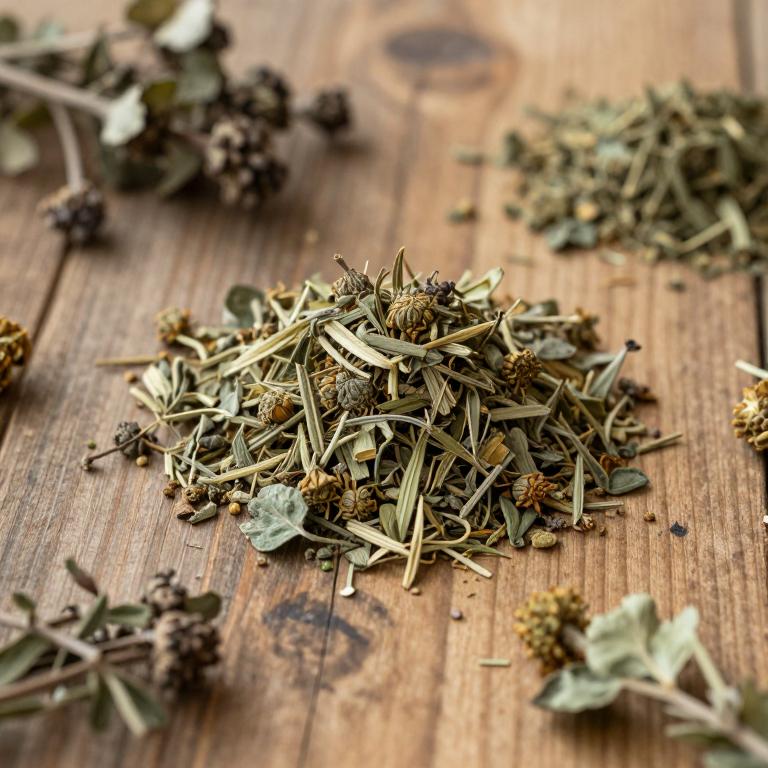
Names and Synonyms
Scientific Names
Accepted name
Aframomum danielliiSynonyms
- Amomum daniellii
- Amomum erythrocarpum
- Cardamomum daniellii
- Aframomum flavum
- Aframomum hanburyi
Sources: Wikidata, Catalogue of Life
Taxonomical Classification
This plant belongs to the kingdom Plantae and the phylum Streptophyta, falling under the class Equisetopsida and subclass Magnoliidae. Within the order Zingiberales, it is classified under the family Zingiberaceae. Specifically, Aframomum daniellii is a member of the genus Aframomum.
| Rank | Classification |
|---|---|
| Kingdom | Plantae |
| Phylum | Streptophyta |
| Class | Equisetopsida |
| Subclass | Magnoliidae |
| Order | Zingiberales |
| Family | Zingiberaceae |
| Genus | Aframomum |
Sources: The World Checklist of Vascular Plants (WCVP)
Distribution
This plant, Aframomum danielii, exhibits a specific distribution pattern across the tropical regions of the African continent. In West Tropical Africa, its presence is documented within the borders of Nigeria. Moving into the West-Central Tropical Africa zone, the species can be found in the Central African Republic. Its range further extends through Cameroon and into the Congo. Finally, the geographical reach of this medicinal plant includes Equatorial Guinea.
| Region | Area |
|---|---|
| West Tropical Africa | Nigeria |
| West-Central Tropical Africa | Central African Republic |
| West-Central Tropical Africa | Cameroon |
| West-Central Tropical Africa | Congo |
| West-Central Tropical Africa | Equatorial Guinea |
| West-Central Tropical Africa | Gabon |
| West-Central Tropical Africa | Gulf of Guinea Is. |
| West-Central Tropical Africa | Rwanda |
| East Tropical Africa | Kenya |
| East Tropical Africa | Uganda |
Sources: The World Checklist of Vascular Plants (WCVP)
Botanical Identification
Life history
The life history of Aframomum danielii is characterized by its classification as a perennial plant, allowing it to persist through multiple growing seasons rather than completing its cycle in a single year. Structurally, it functions as a geophtye, a life form where the essential regenerative organs are located underground, protected from seasonal environmental stressors. This survival strategy is further supported by its status as a cryptophyte, meaning its buds and vital growing points remain concealed beneath the soil surface or at the ground level to ensure continued development and resilience within its habitat.
- Life form :
- geophyte
- Life form :
- cryptophyte
- Lifecycle :
- perennial
Morphology
The morphology of Aframomum daniellii is characterized by its growth form as a non-woody herb, typically manifesting as a self-supporting plant that does not require climbing structures. It is a terrestrial species, existing as an independent organism without parasitic tendencies, and it thrives in non-aquatic environments rather than being aquatic or semiaquatic. The plant maintains a relatively modest stature, with a maximum plant height reaching approximately 4 meters. As a non-woody herb, its structure is primarily composed of soft, herbaceous tissues, lacking the lignified stems associated with shrubs or trees.
- Aquatic :
- terrestrial
- Climber :
- self-supporting
- Epiphyte :
- terrestrial
- Growth form :
- herb
- Parasite :
- independent
- Plant height max:
- 4 m
- Woodiness :
- non-woody
Physiology
The physiology of Aframomum danielii is characterized by complex metabolic pathways geared toward the biosynthesis of aromatic volatile compounds, primarily within its rhizomes and leaves. The plant undergoes standard photosynthetic processes to convert solar energy into chemical energy, driving its growth in tropical understory environments. In terms of nutrient cycling and soil interaction, the species does not exhibit the physiological capacity for symbiotic nitrogen fixation; it is not a nitrogen fixer, meaning it lacks the specialized root nodules required to host diazotrophic bacteria for atmospheric nitrogen conversion. Instead, it relies on the uptake of available nitrates and ammonium from the soil substrate to support its protein synthesis and enzymatic functions. Its metabolic activity is heavily focused on the production of essential oils, involving specialized secretory structures that manage the synthesis and storage of bioactive secondary metabolites.
- Nitrogen fixer :
- no
Reproduction
The reproduction cycle of Aframomum danielii is characterized by specific seasonal windows for flowering and highly adaptable fruiting patterns. The flowering process typically begins in February and concludes around March, although the specific timing can be variable depending on environmental conditions. Following the flowering stage, the plant enters its fruiting phase; however, the timing for fruit development and maturation is highly variable throughout the year, showing no fixed seasonal constraints across the months of January through December.
- Flowering time :
- Feb
- Flowering time :
- Mar
- Fruiting time :
- variable
Sources: Global Inventory of Floras and Traits (GIFT)
Chemicals
Aframomum daniellii has 2 reported phytochemicals identified across 0 scientific publications and several other databases. The most consistently reported chemicals include 1,8-Cineole, SABINENE.
| Chemical | Supporting sources | Consensus |
|---|---|---|
| 1,8-Cineole | 1 supporting sources | ★☆☆☆☆ |
| SABINENE | 1 supporting sources | ★☆☆☆☆ |
1,8-Cineole
- Parasitology research
SABINENE
- Parasitology research
Conditions
Aframomum daniellii has 2 reported investigations on conditions identified across 0 scientific publications and several other databases. The most consistently reported conditions include cancer, infectious diseases.
| Condition | Supporting sources | Consensus |
|---|---|---|
| Cancer | 1 supporting sources | ★☆☆☆☆ |
| Infectious diseases | 1 supporting sources | ★☆☆☆☆ |
Cancer
- Parasitology research
Infectious diseases
- International journal of environmental research and public health
Preparations
Aframomum daniellii has 1 reported preparations identified across 0 scientific publications and several other databases. The most consistently reported preparations include Essential oils.
| Preparation | Supporting sources | Consensus |
|---|---|---|
| Essential oils | 1 supporting sources | ★☆☆☆☆ |
Essential oils
- International journal of environmental research and public health