Ethiopian Cardamom
Aframomum corrorima · Accepted scientific name
Scientific literature: Very Sparse (8 studies) · ★☆☆☆☆
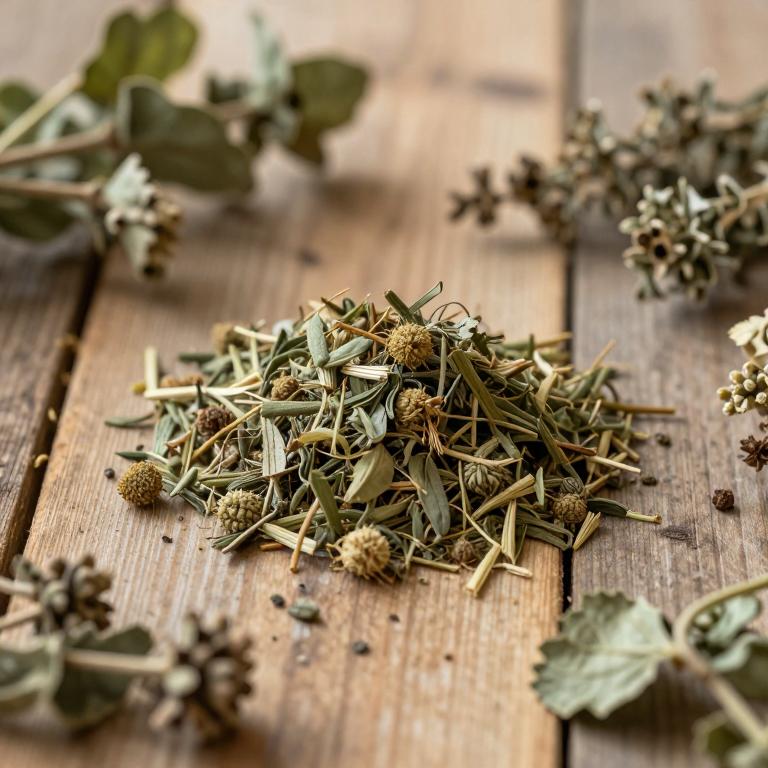
Ethiopian Cardamom, scientifically known as Aframomum corrorima, is a highly aromatic medicinal plant native to the Ethiopian highlands. Valued for its unique spicy flavor, it is widely utilized in traditional medicine to treat digestive ailments, respiratory issues, and inflammation, serving as both a culinary staple and a potent herbal remedy.
Names and Synonyms
Common Names
- Ethiopian Cardamom
- False Cardamom
- Korarima
Scientific Names
Accepted name
Aframomum corrorimaSynonyms
- Amomum corrorima
- Aframomum korarima
- Aframomum usambarense
- Amomum korarima
Regional and Traditional Names
French:
- kororima
- Cardamome d'Ethiopie
- Poivre d'Ethiopie
Sources: Wikidata, Catalogue of Life
Taxonomical Classification
This plant belongs to the kingdom Plantae and the phylum Streptophyta, falling under the class Equisetopsida and subclass Magnoliidae. Within the order Zingiberales, it is classified under the family Zingiberaceae. Finally, its taxonomic identity is defined by the genus Aframomum, specifically as the species Aframomum corrorima.
| Rank | Classification |
|---|---|
| Kingdom | Plantae |
| Phylum | Streptophyta |
| Class | Equisetopsida |
| Subclass | Magnoliidae |
| Order | Zingiberales |
| Family | Zingiberaceae |
| Genus | Aframomum |
Sources: The World Checklist of Vascular Plants (WCVP)
Distribution
This plant is widely distributed across several distinct regions of the African continent. In West-Central Tropical Africa, its presence is documented in both Burundi and Rwanda. Its range extends into Northeast Tropical Africa, where it can be found in Ethiopia. Furthermore, the species is prevalent throughout East Tropical Africa. Specifically, it inhabits the territories of both Kenya and Tanzania.
| Region | Area |
|---|---|
| West-Central Tropical Africa | Burundi |
| West-Central Tropical Africa | Rwanda |
| Northeast Tropical Africa | Ethiopia |
| East Tropical Africa | Kenya |
| East Tropical Africa | Tanzania |
| East Tropical Africa | Uganda |
Sources: The World Checklist of Vascular Plants (WCVP)
Botanical Identification
Life history
The life history of Aframomum corrorima is characterized by a perennial lifecycle, allowing the plant to persist across multiple growing seasons. As a member of the ginger family, its growth strategy is defined by its status as a geophyte, meaning it survives unfavorable periods through underground storage organs such as rhizomes. Furthermore, its classification as a cryptophyte underscores its reliance on these protected subterranean structures to maintain its biological continuity and withstand environmental fluctuations.
- Life form :
- geophyte
- Life form :
- cryptophyte
- Lifecycle :
- perennial
Morphology
The morphology of Aframomum corrorima is characterized by a growth form classified as a herb, typically reaching a mean plant height of approximately 1.5 m. The plant exhibits a non-woody structure and functions as a self-supporting climber, rather than relying on external hosts through obligatory or facultative climbing mechanisms. It is an independent organism that does not exhibit parasitic behavior, and it maintains a terrestrial lifestyle, growing in the soil rather than as an epiphyte.
- Climber :
- self-supporting
- Epiphyte :
- terrestrial
- Growth form :
- herb
- Parasite :
- independent
- Plant height mean:
- 1.5 m
- Woodiness :
- non-woody
Physiology
The physiology of Aframomum corrorima is characterized by specialized metabolic pathways that facilitate the synthesis and accumulation of bioactive essential oils within its rhizomes and leaves. Its vegetative development is driven by efficient photosynthetic processes adapted to the shaded understory environments of tropical ecosystems, allowing for optimal carbon fixation under varying light intensities. Regarding its nutrient acquisition and soil interactions, the plant does not function as a nitrogen fixer; therefore, it lacks the symbiotic relationship with nitrogen-fixing bacteria, such as Rhizobium, typically found in leguminous species. Consequently, its physiological reliance on nitrogen is strictly dependent on the uptake of nitrates and ammonium from the soil through its root system to support protein synthesis and enzymatic functions. This metabolic profile ensures the production of complex secondary metabolites while maintaining a standard nitrogen assimilation cycle characteristic of non-leguminous Zingiberaceae.
- Nitrogen fixer :
- no
Reproduction
The reproduction of Aframomum corrorima is driven by a biotic pollination syndrome, indicating that its reproductive success is dependent on living organisms rather than abiotic factors. The plant utilizes a multifaceted pollination strategy involving various biological vectors to facilitate genetic exchange. Specifically, the pollination process is categorized under a general insect syndrome, which encompasses a diverse range of pollinators. This includes interactions with various insect types, such as bees, beetles, ants, butterflies, moths, and flies, which play a critical role in the transfer of pollen. By relying on these biotic agents, the plant ensures efficient fertilization and subsequent seed development through complex ecological interactions.
- Pollination syndrome :
- insect
- Pollination syndrome :
- biotic
Sources: Global Inventory of Floras and Traits (GIFT)
Plant Parts
Aframomum corrorima has 2 reported plant parts identified across 2 scientific publications and several other databases that are studied for medicinal purposes. The most consistently reported plant part include fruit, seed.
| Plant part | Supporting sources | Consensus |
|---|---|---|
| Fruit | 1 supporting sources | ★☆☆☆☆ |
| Seed | 1 supporting sources | ★☆☆☆☆ |
Fruit
- BMC microbiology
Seed
- Heliyon
Chemicals
Aframomum corrorima has 1 reported phytochemicals identified across 2 scientific publications and several other databases. The most consistently reported chemicals include 1,8-Cineole.
| Chemical | Supporting sources | Consensus |
|---|---|---|
| 1,8-Cineole | 1 supporting sources | ★☆☆☆☆ |
1,8-Cineole
- Molecules (Basel, Switzerland)
Activities
Aframomum corrorima has 2 reported activities identified across 2 scientific publications and several other databases. The most consistently reported activities include Antimicrobial, Antioxidant.
| Activity | Supporting sources | Consensus |
|---|---|---|
| Antimicrobial | 1 supporting sources | ★☆☆☆☆ |
| Antioxidant | 1 supporting sources | ★☆☆☆☆ |
Antimicrobial
- BMC microbiology
Antioxidant
- Heliyon
Conditions
Aframomum corrorima has 3 reported investigations on conditions identified across 2 scientific publications and several other databases. The most consistently reported conditions include Candida albicans, Pseudomonas aeruginosa, Staphylococcus aureus.
| Condition | Supporting sources | Consensus |
|---|---|---|
| Candida albicans | 1 supporting sources | ★☆☆☆☆ |
| Pseudomonas aeruginosa | 1 supporting sources | ★☆☆☆☆ |
| Staphylococcus aureus | 1 supporting sources | ★☆☆☆☆ |
Candida albicans
- BMC microbiology
Pseudomonas aeruginosa
- BMC microbiology
Staphylococcus aureus
- BMC microbiology
Preparations
Aframomum corrorima has 3 reported preparations identified across 2 scientific publications and several other databases. The most consistently reported preparations include essential oils, oil extract from mature ripe fruit husk, seeds extracts.
| Preparation | Supporting sources | Consensus |
|---|---|---|
| Essential oils | 1 supporting sources | ★☆☆☆☆ |
| Oil extract from mature ripe fruit husk | 1 supporting sources | ★☆☆☆☆ |
| Seeds extracts | 1 supporting sources | ★☆☆☆☆ |
Essential oils
- Molecules (Basel, Switzerland)
Oil extract from mature ripe fruit husk
- BMC microbiology
Seeds extracts
- Heliyon