red buckeye
Aesculus pavia · Accepted scientific name
Scientific literature: Very Sparse (5 studies) · ★☆☆☆☆
Red buckeye, scientifically known as Aesculus pavia, is a striking ornamental shrub celebrated for its vibrant, tubular red flowers. Beyond its beauty, traditional medicine utilizes its bark and seeds to treat ailments like inflammation and skin conditions. While visually stunning, caution is essential due to its inherent toxicity.
- Family
- Sapindaceae
- Native range
- Europe
- Parts used
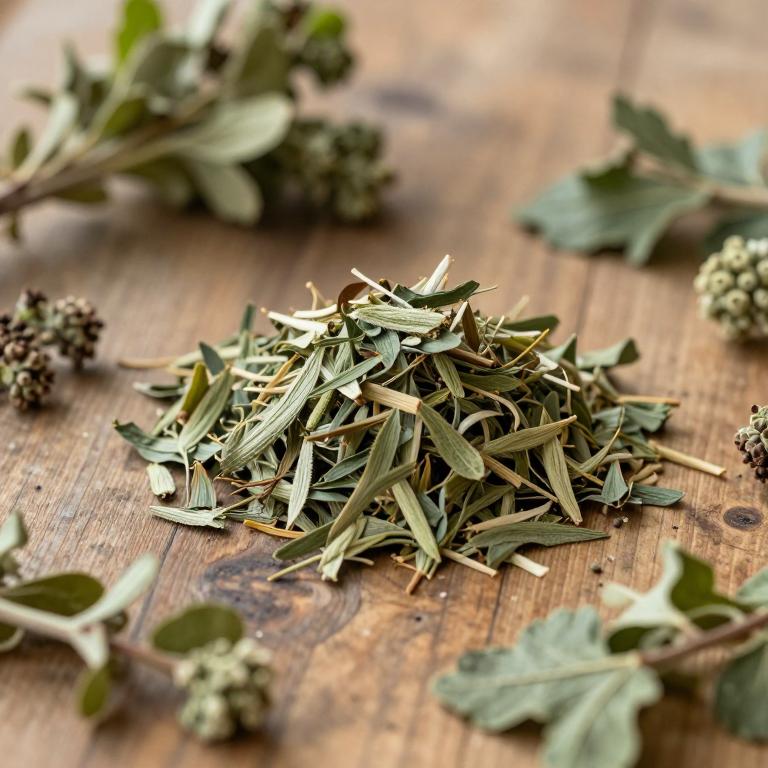
- Leaf
- Common names
- Red Buckeye · Red Horse-Chestnut · 2 more
- Scientific synonyms
- Not available
Names and Synonyms
Common Names
- red buckeye
- red horse-chestnut
- firecracker plant
- scarlet buckeye
Scientific Names
Accepted name
Aesculus paviaRegional and Traditional Names
Spanish:
- Pavia mutabilis
German:
- Rote Rosskastanie
- echte Pavie
- Rote Rosskastanie
French:
- Pavier rouge
- marronier rouge
- marronnier de Virginie
- marronnier à fleurs rouges
- pavier
- pavier rouge
Sources: Wikidata, Catalogue of Life
Taxonomical Classification
This plant belongs to the kingdom Plantae and is classified under the phylum Streptophyta and class Equisetopsida. Within the subclass Magnoliidae, it is placed in the order Sapindales and the family Sapindaceae. Finally, its specific taxonomic identification is found within the genus Aesculus.
| Rank | Classification |
|---|---|
| Kingdom | Plantae |
| Phylum | Streptophyta |
| Class | Equisetopsida |
| Subclass | Magnoliidae |
| Order | Sapindales |
| Family | Sapindaceae |
| Genus | Aesculus |
Sources: The World Checklist of Vascular Plants (WCVP)
Distribution
This plant exhibits a diverse geographical range that spans across several different continents. In North America, it is found within the provinces of Eastern Canada, specifically in Ontario. Its presence extends into the North-Central United States, where it inhabits states such as Illinois, Missouri, and Oklahoma. Beyond the American continent, the species also makes an appearance in Middle Europe, specifically within Germany. This wide distribution highlights the adaptable nature of the plant across varying climates.
| Region | Area |
|---|---|
| Middle Europe | Germany |
| Eastern Canada | Ontario |
| North-Central U.S.A. | Illinois |
| North-Central U.S.A. | Missouri |
| North-Central U.S.A. | Oklahoma |
| Northeastern U.S.A. | West Virginia |
| South-Central U.S.A. | Texas |
| Southeastern U.S.A. | Alabama |
| Southeastern U.S.A. | Arkansas |
| Southeastern U.S.A. | Florida |
Sources: The World Checklist of Vascular Plants (WCVP)
Botanical Identification
Life history
The life history of Aesculus pavia is characterized by its status as a perennial species, meaning it persists through multiple growing seasons rather than completing its cycle in a single year. As a long-lived woody deciduous shrub or small tree, its life cycle involves a continuous pattern of seasonal dormancy and regrowth. In the spring, the plant emerges from dormancy to produce striking red floral displays, which serve as a critical nectar source for pollinators, followed by the development of palmate leaves and fruit. Following successful pollination, the plant develops spiny capsules containing seeds that facilitate dispersal. Once the seeds germinate, the plant undergoes a multi-year establishment phase before reaching reproductive maturity, after which it continues to live and reproduce over many years, provided environmental conditions remain favorable.
- Lifecycle :
- perennial
Morphology
The morphology of Aesculus pavia is characterized by its robust growth habit, primarily manifesting as a woody tree or shrub. It typically reaches an average plant height of approximately 6.85 m. As a woody plant, it lacks a climbing habit, functioning instead as a self-supporting structure that maintains its upright posture through its lignified stem.
- Climber :
- self-supporting
- Growth form :
- tree
- Growth form :
- shrub
- Plant height mean:
- 6.85 m
- Woodiness :
- woody
Physiology
The physiology of Aesculus pavia is characterized by a C3 photosynthetic pathway, which is typical for most deciduous woody perennials in temperate climates. This metabolic process involves the direct fixation of atmospheric carbon dioxide through the enzyme RuBisCO within the mesophyll cells, leading to the production of three-carbon molecules during the Calvin cycle. As a C3 plant, its physiological efficiency is highly dependent on environmental factors such as light intensity, temperature, and moisture availability, as it lacks the specialized mechanisms found in C4 or CAM plants to minimize photorespiration. During the growing season, the plant utilizes its expansive leaf surface area to drive carbon assimilation, fueling the development of its complex vascular system and the storage of carbohydrates in its woody tissues. These metabolic processes support the seasonal phenology of the species, driving the energetic requirements for both its spring flowering period and its subsequent vegetative growth.
- Photosynthetic pathway :
- C3
Reproduction
The reproduction of Aesculus pavia is characterized by a specific seasonal flowering window and distinct seed characteristics. The flowering period typically commences in April and concludes in May. During this reproductive phase, the plant produces seeds that exhibit significant variation in size; the seed mass ranges from a minimum of 0.00862 g to a maximum of 8.5583466 g, with a calculated mean seed mass of approximately 6.77088517766667 g. Regarding its dispersal strategy, the plant utilizes an autochorous dispersal syndrome, meaning it relies on internal mechanisms for seed dispersal.
- Dispersal syndrome :
- autochorous
- Flowering time :
- Apr
- Flowering time :
- May
- Seed mass max:
- 8.5583466 g
- Seed mass mean:
- 6.77088517766667 g
- Seed mass min:
- 0.00862 g
Sources: Global Inventory of Floras and Traits (GIFT)
Plant Parts
Aesculus pavia has 1 reported plant parts identified across 1 scientific publications and several other databases that are studied for medicinal purposes. The most consistently reported plant part include leaf.
| Plant part | Supporting sources | Consensus |
|---|---|---|
| Leaf | 1 supporting sources | ★☆☆☆☆ |
Leaf
- Journal of natural products
Chemicals
Aesculus pavia has 3 reported phytochemicals identified across 1 scientific publications and several other databases. The most consistently reported chemicals include PAVIETIN, quercetin-3-O-alpha-arabinoside, quercetin-3-O-alpha-rhamnoside.
| Chemical | Supporting sources | Consensus |
|---|---|---|
| PAVIETIN | 1 supporting sources | ★☆☆☆☆ |
| quercetin-3-O-alpha-arabinoside | 1 supporting sources | ★☆☆☆☆ |
| quercetin-3-O-alpha-rhamnoside | 1 supporting sources | ★☆☆☆☆ |
PAVIETIN
- Journal of natural products
quercetin-3-O-alpha-arabinoside
- Journal of natural products
quercetin-3-O-alpha-rhamnoside
- Journal of natural products
Activities
Aesculus pavia has 1 reported activities identified across 1 scientific publications and several other databases. The most consistently reported activities include Toxic.
| Activity | Supporting sources | Consensus |
|---|---|---|
| Toxic | 1 supporting sources | ★☆☆☆☆ |
Toxic
- Journal of ethnobiology and ethnomedicine