Aesculus parviflora
Aesculus parviflora · Accepted scientific name
Scientific literature: Very Sparse (2 studies) · ★☆☆☆☆
Aesculus parviflora, scientifically known as Aesculus parviflora, is the delicate dwarf buckeye, native to the mountains of East Asia. Renowned for its stunning, weeping panicles of white flowers, this ornamental plant is valued in traditional herbalism for its unique properties and its ability to thrive in shaded woodland environments.
- Family
- Not available
- Native range
- Europe
- Parts used
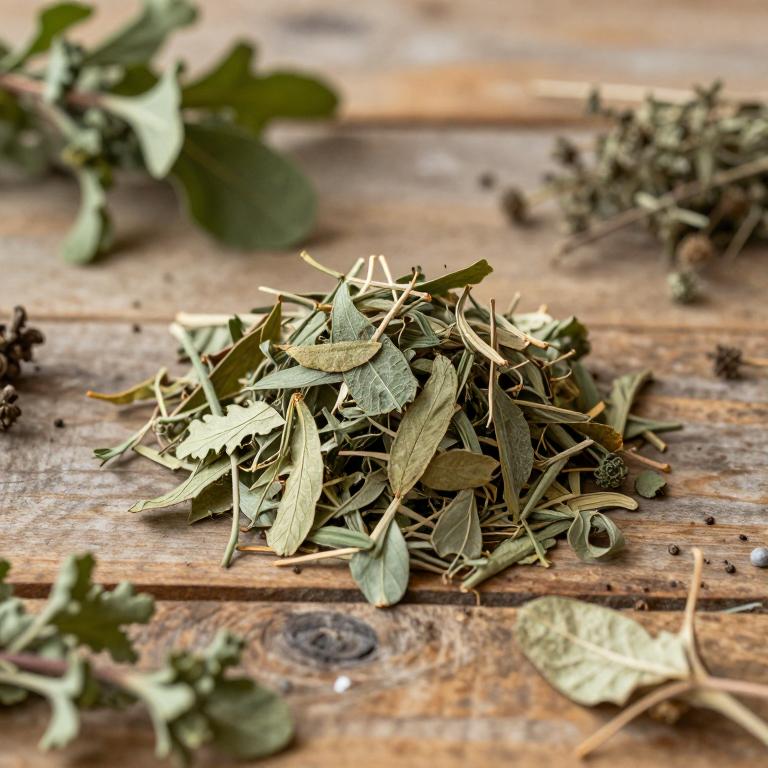
- Leaf
- Common names
- Not available
- Scientific synonyms
- Not available
Names and Synonyms
Scientific Names
Accepted name
Aesculus parvifloraDistribution
This plant exhibits a wide geographical range that spans across both Europe and North America. In Middle Europe, it can be found growing within the borders of Germany. Its presence is also notable across the Northeastern United States, specifically in New Jersey, New York, and Pennsylvania. Furthermore, the species extends its reach into the Southeastern United States, where it is located in Alabama. This diverse distribution demonstrates the plant's ability to adapt to various regional environments.
| Region | Area |
|---|---|
| Middle Europe | Germany |
| Northeastern U.S.A. | New Jersey |
| Northeastern U.S.A. | New York |
| Northeastern U.S.A. | Pennsylvania |
| Southeastern U.S.A. | Alabama |
| Southeastern U.S.A. | Georgia |
| Southeastern U.S.A. | Maryland |
| Southeastern U.S.A. | South Carolina |
Sources: The World Checklist of Vascular Plants (WCVP)
Botanical Identification
Life history
The life history of Aesculus parviflora is characterized by its nature as a perennial species, meaning it survives for multiple years and maintains its presence in the ecosystem through successive growing seasons. As a long-lived woody plant, it undergoes a consistent seasonal cycle, establishing a robust root system and structural framework that allows it to persist far beyond the single-season lifespan of annual or biennial plants. Its development involves a recurring pattern of vegetative growth during the warmer months, followed by a period of dormancy to survive unfavorable environmental conditions, ultimately leading to repeated reproductive cycles over its lifespan.
- Lifecycle :
- perennial
Morphology
The morphology of Aesculus parviflora is characterized by its growth form as a shrub, exhibiting a robust and perennial structure. It is a woody plant, developing significant lignified tissue that supports its upright and spreading habit. Although it possesses a sturdy architecture, it functions as a self-supporting plant, meaning it does not rely on external structures for climbing and maintains its own stability through its woody stem development.
- Climber :
- self-supporting
- Growth form :
- shrub
- Woodiness :
- woody
Physiology
The physiology of Aesculus parviflora is characterized by a specialized metabolic framework optimized for temperate forest environments. Central to its energy acquisition is its photosynthetic pathway, which utilizes the C3 mechanism; in this process, carbon dioxide is fixed directly through the Calvin cycle using the enzyme RuBisCO, facilitating efficient biomass production under moderate light and temperature conditions typical of its native woodland habitats. This C3 pathway dictates the plant's water-use efficiency and stomatal conductance patterns, as it relies on maintaining sufficient internal CO2 concentrations while managing transpiration rates. Furthermore, its physiological processes include robust nutrient uptake and translocation systems designed to support its large, compound leaf structures and significant reproductive output, ensuring metabolic stability across varying seasonal shifts.
- Photosynthetic pathway :
- C3
Reproduction
Reproduction in Aesculus parviflora is primarily achieved through the production of large, fragrant, panicle-shaped white inflorescences that serve to attract various pollinators. The flowering cycle of this species is notably flexible; while it typically follows seasonal patterns, the flowering time can be highly variable, with the flowering start potentially occurring at any point throughout the year, including December, and spanning through January, February, March, April, May, June, July, August, September, October, and November. Once pollination occurs, the plant develops distinctive woody capsules that contain large, nutrient-rich seeds. These seeds are the primary agents for sexual reproduction, often dispersed by gravity or water, though the plant may also spread through vegetative means such as root suckering, allowing it to establish new individuals in its natural habitat.
- Flowering time :
- Dec
Sources: Global Inventory of Floras and Traits (GIFT)
Plant Parts
Aesculus parviflora has 1 reported plant parts identified across 1 scientific publications and several other databases that are studied for medicinal purposes. The most consistently reported plant part include leaf.
| Plant part | Supporting sources | Consensus |
|---|---|---|
| Leaf | 1 supporting sources | ★☆☆☆☆ |
Leaf
- Molecules (Basel, Switzerland)
Preparations
Aesculus parviflora has 2 reported preparations identified across 1 scientific publications and several other databases. The most consistently reported preparations include Aesculus parviflora Walt. leaves, Aesculus parviflora and A. glabra leaf extracts.
| Preparation | Supporting sources | Consensus |
|---|---|---|
| Aesculus parviflora walt. leaves | 1 supporting sources | ★☆☆☆☆ |
| Aesculus parviflora and a. glabra leaf extracts | 1 supporting sources | ★☆☆☆☆ |
Aesculus parviflora walt. leaves
- Molecules (Basel, Switzerland)
Aesculus parviflora and a. glabra leaf extracts
- Molecules (Basel, Switzerland)