Sola
Aeschynomene aspera · Accepted scientific name
Scientific literature: Very Sparse (4 studies) · ★☆☆☆☆
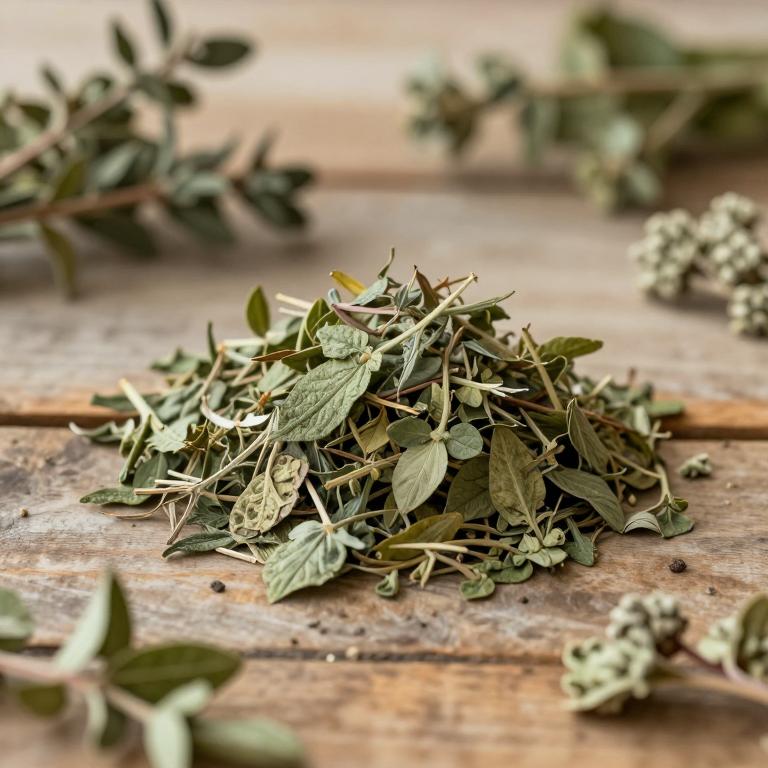
Sola, scientifically known as Aeschynomene aspera, is a versatile medicinal plant indigenous to tropical regions. Renowned for its therapeutic properties, it is traditionally utilized in folk medicine to treat various ailments, including skin inflammations and digestive issues. Its unique phytochemical profile offers significant potential for modern pharmacological research and development.
Names and Synonyms
Common Names
- Pith Plant
- Sola Pith Plant
- sola-pith-plant
Scientific Names
Accepted name
Aeschynomene asperaSynonyms
- Hedysarum lagenarium
- Aeschynomene lagenaria
- Aeschynomene indica var. aspera
- Aeschynomene aquatica
- Aeschynomene surattensis
- Aeschynomene aspera var. oligarthra
- Adesmia wallichiana
Regional and Traditional Names
German:
- raue Schampflanze
Sources: Wikidata, Catalogue of Life
Taxonomical Classification
This plant belongs to the kingdom Plantae within the phylum Streptophyta and the class Equisetopsida. It is further classified under the subclass Magnoliidae and the order Fabales. Finally, it is a member of the family Fabaceae and falls under the genus Aeschynomene.
| Rank | Classification |
|---|---|
| Kingdom | Plantae |
| Phylum | Streptophyta |
| Class | Equisetopsida |
| Subclass | Magnoliidae |
| Order | Fabales |
| Family | Fabaceae |
| Genus | Aeschynomene |
Sources: The World Checklist of Vascular Plants (WCVP)
Distribution
This plant is widely distributed across several key regions within the Indian Subcontinent. It can be found growing in the diverse landscapes of India and its neighboring nation, Bangladesh. Its presence is also noted in the specific state of Assam, contributing to the local biodiversity. Furthermore, the species inhabits the rugged terrain of the East Himalaya. Finally, its geographical range extends into the mountainous areas of Nepal.
| Region | Area |
|---|---|
| Indian Subcontinent | Assam |
| Indian Subcontinent | Bangladesh |
| Indian Subcontinent | East Himalaya |
| Indian Subcontinent | India |
| Indian Subcontinent | Nepal |
| Indian Subcontinent | Pakistan |
| Indian Subcontinent | Sri Lanka |
| Indian Subcontinent | West Himalaya |
| Indo-China | Cambodia |
| Indo-China | Laos |
Sources: The World Checklist of Vascular Plants (WCVP)
Botanical Identification
Life history
The life history of Aeschynomene aspera is characterized by a variable lifecycle, which can manifest as an annual, biennial, or perennial species depending on environmental conditions and local ecological niches. As a member of the Fabaceae family, its development typically begins with seed germination, followed by a vegetative growth phase where it establishes its structure. Depending on its specific lifecycle classification in a given habitat, the plant may complete its entire reproductive cycle within a single year, persist through two years, or establish long-term perennial root systems that allow it to survive across multiple growing seasons. This variability in its lifespan allows the species to adapt to diverse hydrological and climatic shifts in its native range.
- Lifecycle :
- annual
Morphology
The morphology of Aeschynomene aspera is characterized by a growth form that functions as both a herb and a shrub, reaching an average plant height of approximately 2 meters. This species exhibits a non-woody structure and is categorized as a self-supporting plant, rather than an obligatory or facultative climber, vine, or liana. In terms of its ecological habit, the plant is terrestrial but can exist in aquatic or semiaquatic environments. Furthermore, it is an independent organism, lacking parasitic tendencies, and functions as a terrestrial species rather than an epiphyte.
- Aquatic :
- aquatic
- Climber :
- self-supporting
- Epiphyte :
- terrestrial
- Growth form :
- herb
- Growth form :
- shrub
- Parasite :
- independent
- Plant height mean:
- 2 m
- Woodiness :
- non-woody
Physiology
The physiology of Aeschynomene aspera is characterized by a specialized metabolic capacity for atmospheric nutrient acquisition, most notably through its role as a nitrogen fixer. This process is facilitated by a symbiotic relationship with specific diazotrophic bacteria housed within specialized root nodules, allowing the plant to convert atmospheric nitrogen into biologically available forms such as ammonia. This nitrogen-fixing capability is a critical physiological adaptation that enables the species to thrive in nitrogen-deficient environments, supporting robust protein synthesis and cellular development. Beyond this specialized nitrogen metabolism, the plant's physiological processes include standard photosynthetic pathways to drive carbon fixation and complex hydraulic mechanisms to maintain turgor and nutrient transport throughout its tissues.
- Nitrogen fixer :
- yes
Sources: Global Inventory of Floras and Traits (GIFT)
Plant Parts
Aeschynomene aspera has 1 reported plant parts identified across 1 scientific publications and several other databases that are studied for medicinal purposes. The most consistently reported plant part include stem.
| Plant part | Supporting sources | Consensus |
|---|---|---|
| Stem | 1 supporting sources | ★☆☆☆☆ |
Stem
- Indian journal of experimental biology
Chemicals
Aeschynomene aspera has 2 reported phytochemicals identified across 1 scientific publications and several other databases. The most consistently reported chemicals include arabinose, rhamnose.
| Chemical | Supporting sources | Consensus |
|---|---|---|
| arabinose | 1 supporting sources | ★☆☆☆☆ |
| rhamnose | 1 supporting sources | ★☆☆☆☆ |
arabinose
- Indian journal of experimental biology
rhamnose
- Indian journal of experimental biology
Conditions
Aeschynomene aspera has 1 reported investigations on conditions identified across 1 scientific publications and several other databases. The most consistently reported conditions include tuberculosis.
| Condition | Supporting sources | Consensus |
|---|---|---|
| Tuberculosis | 1 supporting sources | ★☆☆☆☆ |
Tuberculosis
- Tropical medicine and health