Adonis tianschanica ex
Adonis tianschanica · Accepted scientific name
Scientific literature: Very Sparse (9 studies) · ★☆☆☆☆
Adonis tianschanica ex, scientifically known as Adonis tianschanica, is a perennial herb native to the mountainous regions of Central Asia. Renowned for its vibrant yellow blooms, this medicinal plant contains glycosides used in traditional pharmacology to support cardiovascular health, acting as a mild sedative and cardiac stimulant.
- Family
- Ranunculaceae
- Native range
- Asia-Temperate
- Parts used
- Not available
- Common names
- Not available
- Scientific synonyms
- Chrysocyathus Tianshanicus · Adonanthe Tianschanica · 2 more
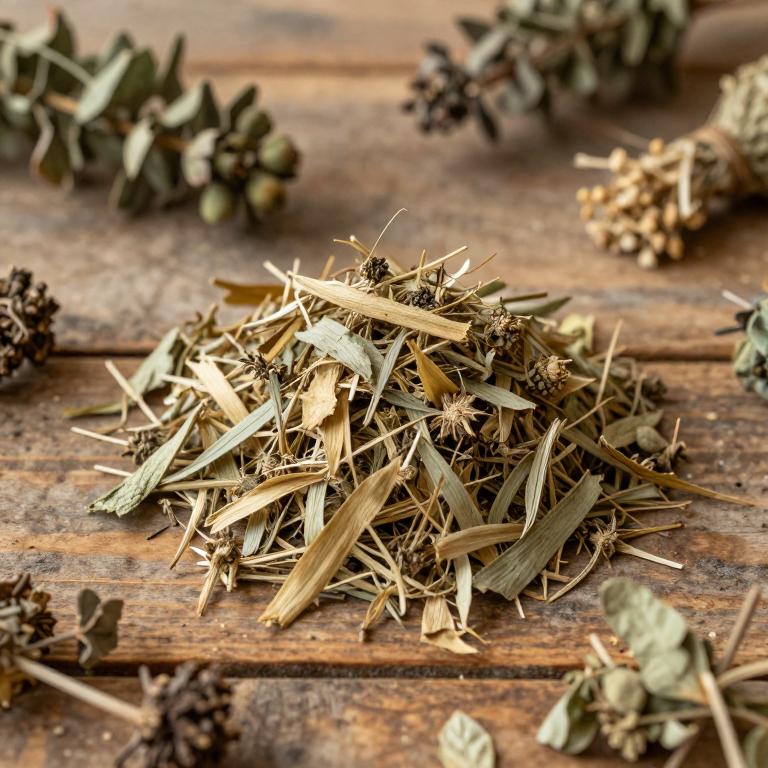
Names and Synonyms
Scientific Names
Accepted name
Adonis tianschanicaSynonyms
- Chrysocyathus tianshanicus
- Adonanthe tianschanica
- Adonis vernalis var. pinnatifida
- Adonis turkestanica var. tianschanica
Regional and Traditional Names
Spanish:
- Adonis tianschanica ex
German:
- Adonis tianschanica ex
French:
- Adonis tianschanica ex
Sources: Wikidata, Catalogue of Life
Taxonomical Classification
This plant belongs to the kingdom Plantae and is classified under the phylum Streptophyta and class Equisetopsida. Within the subclass Magnoliidae, it is organized under the order Ranunculales and the family Ranunculaceae. Finally, it is categorized under the genus Adonis.
| Rank | Classification |
|---|---|
| Kingdom | Plantae |
| Phylum | Streptophyta |
| Class | Equisetopsida |
| Subclass | Magnoliidae |
| Order | Ranunculales |
| Family | Ranunculaceae |
| Genus | Adonis |
Sources: The World Checklist of Vascular Plants (WCVP)
Distribution
This plant is primarily located within the diverse landscapes of Central Asia. Specifically, it can be found growing in the natural habitats of Kazakhstan. Its distribution also extends into the mountainous regions of Kirgizstan. Furthermore, the species is native to the Xinjiang region of China. These three distinct areas define the core geographical range of Adonis tianschanica.
| Region | Area |
|---|---|
| Central Asia | Kazakhstan |
| Central Asia | Kirgizstan |
| China | Xinjiang |
Sources: The World Checklist of Vascular Plants (WCVP)
Botanical Identification
Ecology
The ecology of Adonis tianschanica is characterized by its specific preference for mountainous and steppe environments. This species thrives within a highly specialized altitudinal niche, maintaining a consistent presence throughout its habitat at an elevation of approximately 1900 m AMSL. The data indicates a narrow ecological band, as both the minimum and maximum elevational ranges are recorded at 1900 m AMSL, resulting in a mean elevation of 1900 m AMSL. This suggests a highly localized distribution pattern within its mountainous steppe ecosystem.
- Elevational range max:
- 1900 m AMSL
- Habitat :
- mountains, steppe
Life history
The life history of Adonis tianschanica is characterized by its nature as a perennial plant, allowing it to persist through multiple growing seasons within its natural habitat. As a perennial species, it does not complete its life cycle in a single year like annuals or two years like biennials, but instead establishes a stable presence in the ecosystem, often developing robust root systems that support its survival through dormant periods. This long-term growth strategy enables the plant to invest energy into repeated flowering cycles, contributing to its stability in the mountainous or meadow environments it typically inhabits. Throughout its lifespan, the plant undergoes seasonal transformations, emerging from dormancy to undergo vegetative growth and eventual reproductive stages, which are essential for the dispersal of seeds and the continuation of its lineage across the landscape.
- Lifecycle :
- perennial
Morphology
The morphology of Adonis tianschanica is characterized by its growth form as a non-woody herb, appearing as a herbaceous plant that does not exhibit woodiness. It is a self-supporting species, meaning it does not require external structures for support. In terms of stature, the plant maintains a relatively low profile, with a height ranging from a minimum of 0.1 m to a maximum of 0.4 m.
- Climber :
- self-supporting
- Growth form :
- herb
- Plant height max:
- 0.4 m
- Plant height min:
- 0.1 m
- Woodiness :
- non-woody
Physiology
The physiological development of Adonis tianschanica is characterized by specific vegetative growth patterns, particularly regarding its foliar architecture. The leaf morphology exhibits measurable variation in size, which is critical for its photosynthetic capacity and overall metabolic regulation. Based on observed data, the leaf length within this species follows a distinct range, with a minimum length of 2 cm and a maximum length reaching up to 4 cm. On average, the leaf length is maintained at 3 cm, representing the central tendency of its vegetative growth during its developmental stages.
- Leaf length max:
- 4 cm
- Leaf length mean:
- 3 cm
- Leaf length min:
- 2 cm
Reproduction
The reproduction of Adonis tianschanica is characterized by a specific seasonal flowering window and distinct morphological dimensions of its reproductive organs. The flowering period typically commences in May and concludes within the same month, though the timing can be variable. During this stage, the plant produces flowers that vary in size, with a minimum length of 3.5 cm and a maximum length reaching up to 5 cm. Following successful pollination, the development of the fruit occurs, resulting in small structures with a minimum length of 0.3 cm, a mean length of 0.4 cm, and a maximum length of 0.5 cm.
- Flower length max:
- 5 cm
- Flower length min:
- 3.5 cm
- Flowering time :
- May
- Fruit length max:
- 0.5 cm
- Fruit length mean:
- 0.4 cm
- Fruit length min:
- 0.3 cm
Sources: Global Inventory of Floras and Traits (GIFT)
Chemicals
Adonis tianschanica has 7 reported phytochemicals identified across 0 scientific publications and several other databases. The most consistently reported chemicals include Cardiac Glycosides, Coumarins, Flavonoids, Isoquercitrin, kaempferol.
| Chemical | Supporting sources | Consensus |
|---|---|---|
| Cardiac Glycosides | 1 supporting sources | ★☆☆☆☆ |
| Coumarins | 1 supporting sources | ★☆☆☆☆ |
| Flavonoids | 1 supporting sources | ★☆☆☆☆ |
| Isoquercitrin | 1 supporting sources | ★☆☆☆☆ |
| kaempferol | 1 supporting sources | ★☆☆☆☆ |
| polyphenols | 1 supporting sources | ★☆☆☆☆ |
| quercetin | 1 supporting sources | ★☆☆☆☆ |
Cardiac Glycosides
- Molecules (Basel, Switzerland)
Coumarins
- Molecules (Basel, Switzerland)
Flavonoids
- Molecules (Basel, Switzerland)
Isoquercitrin
- Molecules (Basel, Switzerland)
kaempferol
- Molecules (Basel, Switzerland)
polyphenols
- Molecules (Basel, Switzerland)
quercetin
- Molecules (Basel, Switzerland)
Conditions
Adonis tianschanica has 1 reported investigations on conditions identified across 0 scientific publications and several other databases. The most consistently reported conditions include inflammation.
| Condition | Supporting sources | Consensus |
|---|---|---|
| Inflammation | 1 supporting sources | ★☆☆☆☆ |
Inflammation
- Molecules (Basel, Switzerland)
Preparations
Adonis tianschanica has 1 reported preparations identified across 0 scientific publications and several other databases. The most consistently reported preparations include ethanolic extracts.
| Preparation | Supporting sources | Consensus |
|---|---|---|
| Ethanolic extracts | 1 supporting sources | ★☆☆☆☆ |
Ethanolic extracts
- Molecules (Basel, Switzerland)