Adonis dentata
Adonis dentata · Accepted scientific name
Scientific literature: Very Extensive (317 studies) · ★★★★★
Adonis dentata, scientifically known as Adonis dentata, is a perennial herb belonging to the Ranunculaceae family. Native to specific Mediterranean regions, this striking plant is characterized by its delicate, tooth-edged leaves and vibrant yellow blooms. Historically valued in traditional medicine, it contains bioactive compounds used for their therapeutic potential.
- Family
- Ranunculaceae
- Native range
- Africa
- Parts used
- Not available
- Common names
- Not available
- Scientific synonyms
- Adonis Dentata Var. Persica · Adonis Dentata Var. Subinermis · 3 more
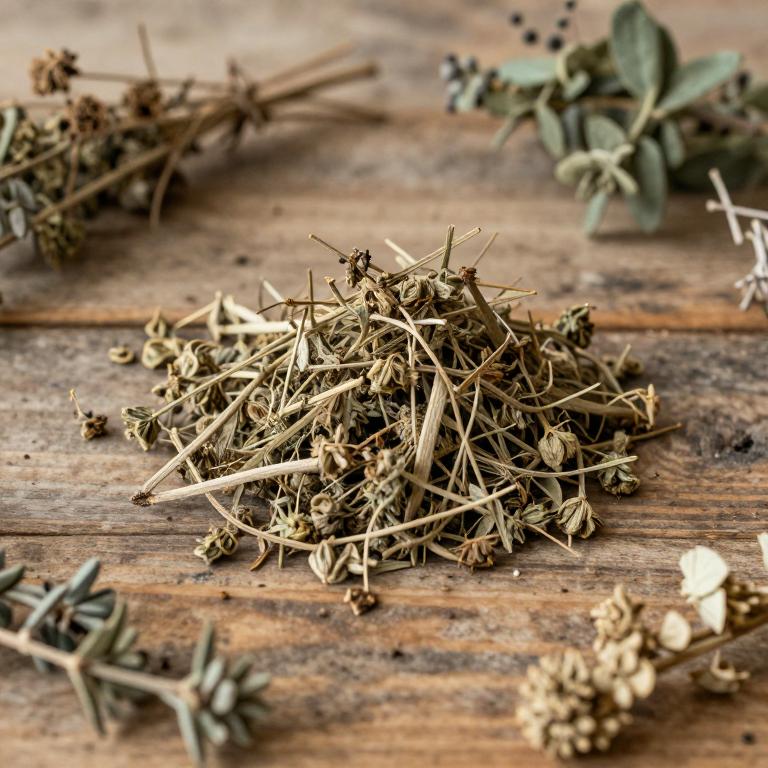
Names and Synonyms
Scientific Names
Accepted name
Adonis dentataSynonyms
- Adonis dentata var. persica
- Adonis dentata var. subinermis
- Adonis dentata subsp. persica
- Adonis microcarpa var. dentata
- Adonis persica
Sources: Wikidata, Catalogue of Life
Taxonomical Classification
This plant belongs to the kingdom Plantae and the phylum Streptophyta, falling under the class Equisetopsida and subclass Magnoliidae. It is classified within the order Ranunculales and the family Ranunculaceae. Finally, it is identified by its genus, Adonis.
| Rank | Classification |
|---|---|
| Kingdom | Plantae |
| Phylum | Streptophyta |
| Class | Equisetopsida |
| Subclass | Magnoliidae |
| Order | Ranunculales |
| Family | Ranunculaceae |
| Genus | Adonis |
Sources: The World Checklist of Vascular Plants (WCVP)
Distribution
This plant exhibits a diverse geographical range spanning across several distinct regions. In Northern Africa, its presence is recorded within the countries of Egypt and Libya. Moving toward Central Asia, the species can be found growing in Turkmenistan. The plant also extends into the Caucasus region, specifically inhabiting the Transcaucasus area. Finally, its distribution reaches into Western Asia, where it is located on the island of Cyprus.
| Region | Area |
|---|---|
| Northern Africa | Egypt |
| Northern Africa | Libya |
| Central Asia | Turkmenistan |
| Caucasus | Transcaucasus |
| Western Asia | Cyprus |
| Western Asia | Iran |
| Western Asia | Iraq |
| Western Asia | Lebanon-Syria |
| Western Asia | Palestine |
| Western Asia | Sinai |
Sources: The World Checklist of Vascular Plants (WCVP)
Botanical Identification
Life history
The life history of Adonis dentata is characterized by a variable lifecycle, meaning it can function as an annual, biennial, or perennial depending on environmental conditions and local ecological pressures. This flexibility allows the species to adapt to fluctuating habitats, ensuring reproductive success even in unstable terrains. During its growth phases, the plant undergoes a series of physiological developments typical of the Ranunculaceae family, transitioning from seed germination to the establishment of its vegetative structure. As it matures, it enters a reproductive stage where it produces distinctive flowers to facilitate pollination, eventually leading to seed dispersal that initiates the next generation. This ability to shift between different lifecycles provides the plant with a resilient survival strategy in its natural ecosystem.
- Lifecycle :
- annual
Morphology
The morphology of Adonis dentata is characterized by its growth form as a non-woody herb, specifically classified as a forb. It exhibits a self-supporting habit, functioning as a non-climbing plant that does not require external support like a liana or vine. As a terrestrial species, it is neither aquatic nor semiaquatic, nor does it function as an epiphyte. Furthermore, the plant is an independent organism, lacking any parasitic tendencies, and maintains a strictly non-woody structure throughout its development.
- Aquatic :
- terrestrial
- Climber :
- self-supporting
- Epiphyte :
- terrestrial
- Growth form :
- herb
- Parasite :
- independent
- Woodiness :
- non-woody
Physiology
The physiology of Adonis dentata is characterized by a C3 photosynthetic pathway, which governs its carbon fixation processes and metabolic efficiency. As a C3 plant, it utilizes the enzyme Rubisco to fix atmospheric carbon dioxide directly into a three-carbon compound during the Calvin cycle, a mechanism that is highly efficient under temperate environmental conditions where moisture is sufficiently available. This metabolic strategy influences its transpiration rates and water-use efficiency, as the plant must balance stomatal conductance to facilitate CO2 uptake while minimizing water loss. The physiological performance of Adonis dentata is closely tied to these C3 characteristics, dictating its growth patterns, energy assimilation rates, and overall adaptation to its specific ecological niche.
- Photosynthetic pathway :
- C3
Sources: Global Inventory of Floras and Traits (GIFT)
Chemicals
Adonis dentata has 27 reported phytochemicals identified across 0 scientific publications and several other databases. The most consistently reported chemicals include 3-epi-Periplogenin, ACONITIC ACID, Adonitoxin, Adonivernith, CHLOROGENIC ACID.
| Chemical | Supporting sources | Consensus |
|---|---|---|
| 3-epi-Periplogenin | 1 supporting sources | ★☆☆☆☆ |
| ACONITIC ACID | 1 supporting sources | ★☆☆☆☆ |
| Adonitoxin | 1 supporting sources | ★☆☆☆☆ |
| Adonivernith | 1 supporting sources | ★☆☆☆☆ |
| CHLOROGENIC ACID | 1 supporting sources | ★☆☆☆☆ |
| CYMARIN | 1 supporting sources | ★☆☆☆☆ |
| Dextrin | 1 supporting sources | ★☆☆☆☆ |
| K-STROPHANTHIN | 1 supporting sources | ★☆☆☆☆ |
| L-asparagine | 1 supporting sources | ★☆☆☆☆ |
| L-rhamnose | 1 supporting sources | ★☆☆☆☆ |
3-epi-Periplogenin
- Dr. Duke
ACONITIC ACID
- Dr. Duke
Adonitoxin
- Dr. Duke
Adonivernith
- Dr. Duke
CHLOROGENIC ACID
- Dr. Duke
CYMARIN
- Dr. Duke
Dextrin
- Dr. Duke
K-STROPHANTHIN
- Dr. Duke
L-asparagine
- Dr. Duke
L-rhamnose
- Dr. Duke
Activities
Adonis dentata has 284 reported activities identified across 0 scientific publications and several other databases. The most consistently reported activities include Cardiotonic, Diuretic, Sedative, (+)-Inotropic, 5-Alpha-Reductase-Inhibitor.
| Activity | Supporting sources | Consensus |
|---|---|---|
| Cardiotonic | 3 supporting sources | ★★☆☆☆ |
| Diuretic | 2 supporting sources | ★☆☆☆☆ |
| Sedative | 2 supporting sources | ★☆☆☆☆ |
| (+)-Inotropic | 1 supporting sources | ★☆☆☆☆ |
| 5-Alpha-Reductase-Inhibitor | 1 supporting sources | ★☆☆☆☆ |
| ACE-Inhibitor | 1 supporting sources | ★☆☆☆☆ |
| Abortifacient | 1 supporting sources | ★☆☆☆☆ |
| Adrenolytic | 1 supporting sources | ★☆☆☆☆ |
| Aldose-Reductase-Inhibitor | 1 supporting sources | ★☆☆☆☆ |
| Allelochemic | 1 supporting sources | ★☆☆☆☆ |
Cardiotonic
- Dr. Duke
- Current pharmaceutical design
- Farmakologiia i toksikologiia
Diuretic
- Dr. Duke
- Farmakologiia i toksikologiia
Sedative
- Dr. Duke
- Farmakologiia i toksikologiia
(+)-Inotropic
- Dr. Duke
5-Alpha-Reductase-Inhibitor
- Dr. Duke
ACE-Inhibitor
- Dr. Duke
Abortifacient
- Dr. Duke
Adrenolytic
- Dr. Duke
Aldose-Reductase-Inhibitor
- Dr. Duke
Allelochemic
- Dr. Duke