delta maidenhair fern
Adiantum raddianum · Accepted scientific name
Scientific literature: Very Sparse (4 studies) · ★☆☆☆☆
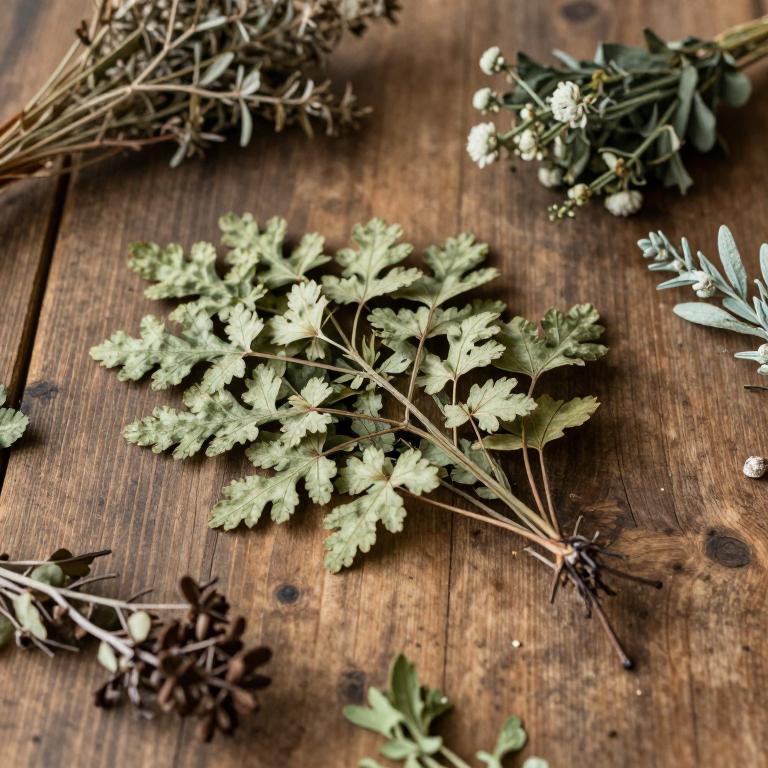
Delta maidenhair fern, scientifically known as Adiantum radianum, is a delicate, ornamental plant prized for its lush, lace-like foliage. Beyond its aesthetic beauty in tropical landscapes, this species holds significant interest in ethnobotany. It is often studied for its potential therapeutic properties and traditional uses in various medicinal practices.
Names and Synonyms
Common Names
- delta maidenhair fern
- Delta Maidenhair
- Delta Maidenhair-fern
- Fine Maidenhair Fern
Scientific Names
Accepted name
Adiantum raddianumSynonyms
- Adiantum aemulum
- Adiantum werckleanum
- Adiantum decorum
- Adiantum mexicanum
- Adiantum weigandii
- Adiantum rubellum
- Adiantum cyclosorum
- Adiantum cuneatum var. majus
- Adiantum cuneatum var. subintegrum
- Adiantum cuneatum var. vastum
- Adiantum baenitzii
- Adiantum elegantissimum
- Adiantum gracillimum
- Adiantum cuneatum f. elongatum
Regional and Traditional Names
Spanish:
- Culandrillo
- Helecho culantrillo
French:
- Adiante de Raddi
Sources: Wikidata, Catalogue of Life
Taxonomical Classification
This plant belongs to the kingdom Plantae and is classified within the phylum Streptophyta and the class Equisetopsida. It falls under the subclass Polypodiinae and the order Polypodiales, specifically within the family Pteridaceae. Finally, its taxonomic identity is defined by the genus Adiantum.
| Rank | Classification |
|---|---|
| Kingdom | Plantae |
| Phylum | Streptophyta |
| Class | Equisetopsida |
| Subclass | Polypodiinae |
| Order | Polypodiales |
| Family | Pteridaceae |
| Genus | Adiantum |
Sources: The World Checklist of Vascular Plants (WCVP)
Distribution
This plant exhibits a widespread distribution across several regions of the European continent. In Northern Europe, its presence is specifically noted within Great Britain. Moving into Middle Europe, the species can be found inhabiting Belgium, Germany, and the Netherlands. Furthermore, its range extends into Southwestern Europe, where it grows in France. Together, these locations highlight the diverse geographical footprint of Adiantum radicans.
| Region | Area |
|---|---|
| Northern Europe | Great Britain |
| Middle Europe | Belgium |
| Middle Europe | Germany |
| Middle Europe | Netherlands |
| Southwestern Europe | France |
| Southwestern Europe | Portugal |
| Macaronesia | Azores |
| Macaronesia | Canary Is. |
| Macaronesia | Madeira |
| West-Central Tropical Africa | Gulf of Guinea Is. |
Sources: The World Checklist of Vascular Plants (WCVP)
Botanical Identification
Ecology
The ecology of Adiantum raddianum is defined by its preference for highly specific moisture-rich environments, primarily thriving within the Bosque medio on saturated soil and throughout gallery forests. This species exhibits a broad vertical distribution across varying landscapes, occupying an elevational range that begins at sea level (0 m AMSL) and extends up to a maximum altitude of 3450 m AMSL. Its presence in saturated substrates and forest corridors suggests a close dependency on consistent hydrological cycles and the shaded, humid microclimates provided by forest canopies.
- Elevational range max:
- 3450 m AMSL
- Elevational range min:
- 0 m AMSL
- Habitat :
- Bosque medio on saturated soil, gallery forest
Life history
The life history of Adiantum radicans is characterized by its perennial lifecycle, allowing the plant to persist through multiple growing seasons. It functions as a cryptophyte, utilizing specialized underground or near-surface structures to survive unfavorable conditions, and is specifically classified as a geophyte. This life form enables the plant to maintain its biological continuity by protecting its vital organs beneath the soil surface or within specialized rhizomes during periods of environmental stress.
- Life form :
- geophyte
- Life form :
- cryptophyte
- Lifecycle :
- perennial
Morphology
The morphology of Adiantum radianum is characterized by its growth form as a non-woody herb and forb, maintaining a relatively low stature with a plant height ranging from a minimum of 0.25 m to a maximum of 0.34 m. As a self-supporting organism, it does not function as a climber, liana, or vine, and it operates as an independent species without parasitic tendencies. Its ecological habit is primarily terrestrial, encompassing aquatic, semiaquatic, and terrestrial environments, and it lacks epiphytic qualities, remaining strictly terrestrial rather than acting as a holoepiphyte or hemiepiphyte.
- Aquatic :
- terrestrial
- Climber :
- self-supporting
- Epiphyte :
- terrestrial
- Growth form :
- herb
- Growth form :
- forb
- Parasite :
- independent
- Plant height max:
- 0.34 m
- Plant height min:
- 0.25 m
- Woodiness :
- non-woody
Sources: Global Inventory of Floras and Traits (GIFT)
Plant Parts
Adiantum raddianum has 1 reported plant parts identified across 1 scientific publications and several other databases that are studied for medicinal purposes. The most consistently reported plant part include leaf.
| Plant part | Supporting sources | Consensus |
|---|---|---|
| Leaf | 1 supporting sources | ★☆☆☆☆ |
Leaf
- Pharmacology, biochemistry, and behavior
Chemicals
Adiantum raddianum has 2 reported phytochemicals identified across 1 scientific publications and several other databases. The most consistently reported chemicals include Filicene, Filicenal.
| Chemical | Supporting sources | Consensus |
|---|---|---|
| Filicene | 2 supporting sources | ★☆☆☆☆ |
| Filicenal | 1 supporting sources | ★☆☆☆☆ |
Filicene
- Pharmacology, biochemistry, and behavior
- Zeitschrift fur Naturforschung. C, Journal of biosciences
Filicenal
- Zeitschrift fur Naturforschung. C, Journal of biosciences
Preparations
Adiantum raddianum has 3 reported preparations identified across 1 scientific publications and several other databases. The most consistently reported preparations include hexane fraction, leaves, non polar fraction.
| Preparation | Supporting sources | Consensus |
|---|---|---|
| Hexane fraction | 1 supporting sources | ★☆☆☆☆ |
| Leaves | 1 supporting sources | ★☆☆☆☆ |
| Non polar fraction | 1 supporting sources | ★☆☆☆☆ |
Hexane fraction
- Zeitschrift fur Naturforschung. C, Journal of biosciences
Leaves
- Pharmacology, biochemistry, and behavior
Non polar fraction
- Zeitschrift fur Naturforschung. C, Journal of biosciences