baneberry
Actaea · Accepted scientific name
Scientific literature: Very Sparse (9 studies) · ★☆☆☆☆
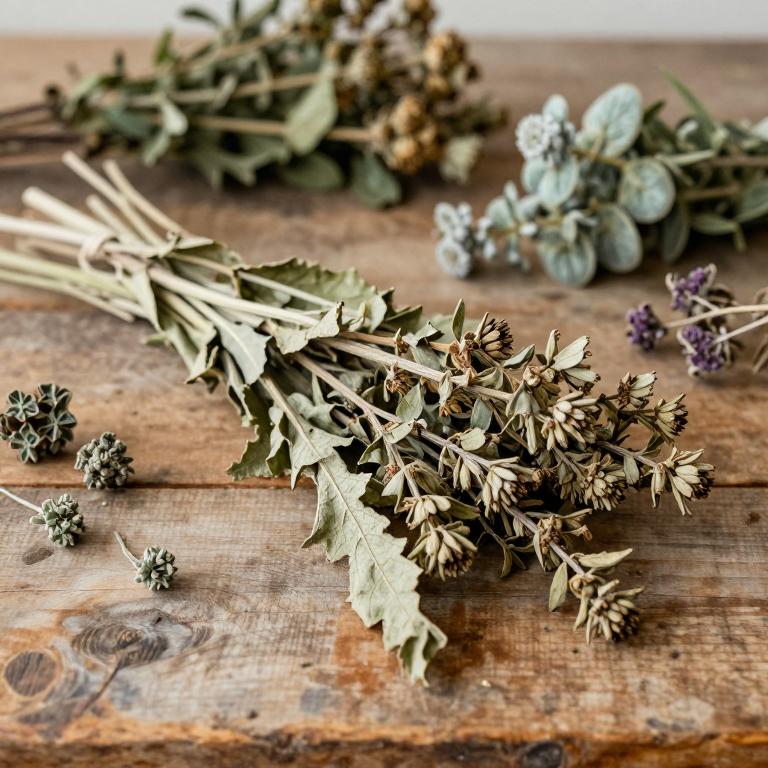
Baneberry, scientifically known as Actaea, is a genus of perennial herbs renowned for their striking, often toxic characteristics. Found in shaded woodlands, these plants feature distinctive clusters of white or red berries. While historically used in traditional medicine, their potent alkaloids require extreme caution due to significant toxicity.
Names and Synonyms
Common Names
- baneberry
- cohosh
- baneberries
- baneberries and cohoshes
- bugbane
Scientific Names
Accepted name
ActaeaSynonyms
- Dipleina
- Actinospora
- Christophoriana
- Botrophis
- Megotrys
- Macrotrys
- Cimicifuga
- Souliea
- Pityrosperma
- Actinospora
Regional and Traditional Names
Spanish:
- Actaea (Xanthidae)
German:
- Christophskräuter
- Silberkerze
- Actaea (Xanthidae)
- Christophskräuter
French:
- Actaea (Xanthidae)
Sources: Wikidata, Catalogue of Life
Taxonomical Classification
This plant belongs to the kingdom Plantae within the phylum Streptophyta and the class Equisetopsida. It is further classified under the subclass Magnoliidae and the order Ranunculales. Finally, it is a member of the family Ranunculaceae and falls under the genus Actaea.
| Rank | Classification |
|---|---|
| Kingdom | Plantae |
| Phylum | Streptophyta |
| Class | Equisetopsida |
| Subclass | Magnoliidae |
| Order | Ranunculales |
| Family | Ranunculaceae |
| Genus | Actaea |
Sources: The World Checklist of Vascular Plants (WCVP)
Distribution
This plant exhibits a specific geographical range concentrated within the northern regions of Europe. Its presence is documented across several countries, including Denmark and Finland. Additionally, the species can be found throughout the territories of Great Britain and Norway. The distribution also extends into the landscape of Sweden. Collectively, these locations highlight its preference for the northern European environment.
| Region | Area |
|---|---|
| Northern Europe | Denmark |
| Northern Europe | Finland |
| Northern Europe | Great Britain |
| Northern Europe | Norway |
| Northern Europe | Sweden |
| Middle Europe | Austria |
| Middle Europe | Belgium |
| Middle Europe | Czechia-Slovakia |
| Middle Europe | Germany |
| Middle Europe | Hungary |
Sources: The World Checklist of Vascular Plants (WCVP)
Plant Parts
Actaea has 2 reported plant parts identified across 5 scientific publications and several other databases that are studied for medicinal purposes. The most consistently reported plant part include rhizome, root.
| Plant part | Supporting sources | Consensus |
|---|---|---|
| Rhizome | 4 supporting sources | ★★☆☆☆ |
| Root | 1 supporting sources | ★☆☆☆☆ |
Rhizome
- Journal of ethnopharmacology
- Plants (Basel, Switzerland)
- Molecules (Basel, Switzerland)
- Biomedicine & pharmacotherapy = Biomedecine & pharmacotherapie
Root
- Molecules (Basel, Switzerland)
Chemicals
Actaea has 1 reported phytochemicals identified across 5 scientific publications and several other databases. The most consistently reported chemicals include Cimicifugamide.
| Chemical | Supporting sources | Consensus |
|---|---|---|
| Cimicifugamide | 1 supporting sources | ★☆☆☆☆ |
Cimicifugamide
- Biomedicine & pharmacotherapy = Biomedecine & pharmacotherapie
Preparations
Actaea has 3 reported preparations identified across 5 scientific publications and several other databases. The most consistently reported preparations include Dried rhizomes, crude extracts, dried rhizomes.
| Preparation | Supporting sources | Consensus |
|---|---|---|
| Dried rhizomes | 1 supporting sources | ★☆☆☆☆ |
| Crude extracts | 1 supporting sources | ★☆☆☆☆ |
| Dried rhizomes | 1 supporting sources | ★☆☆☆☆ |
Dried rhizomes
- Plants (Basel, Switzerland)
Crude extracts
- Journal of ethnopharmacology
Dried rhizomes
- Journal of ethnopharmacology