Actaea vaginata
Actaea vaginata · Accepted scientific name
Scientific literature: Very Sparse (21 studies) · ★☆☆☆☆
Actaea vaginata, scientifically known as Actaea vaginata, is a rare medicinal herb valued in traditional pharmacology. Primarily recognized for its potent bioactive compounds, this plant is studied for its potential therapeutic applications in treating inflammatory conditions and hormonal imbalances, offering significant promise for future developments in natural medicine.
- Family
- Ranunculaceae
- Native range
- Asia-Temperate
- Parts used
- Rhizome · Root
- Common names
- Not available
- Scientific synonyms
- Isopyrum Vaginatum · Souliea Vaginata · 1 more
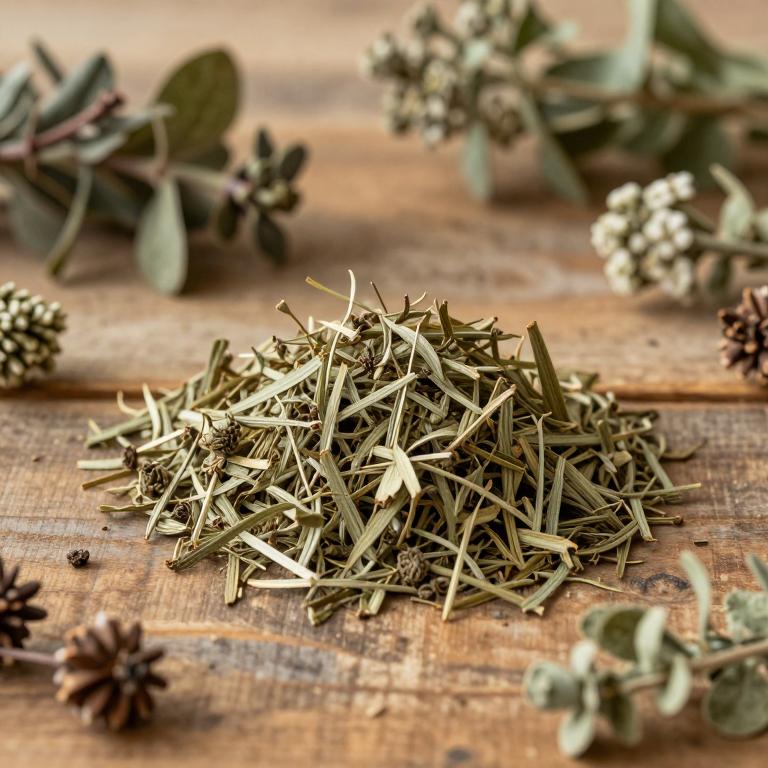
Names and Synonyms
Scientific Names
Accepted name
Actaea vaginataSynonyms
- Isopyrum vaginatum
- Souliea vaginata
- Coptis ospriocarpa
Sources: Wikidata, Catalogue of Life
Taxonomical Classification
This plant, Actaea vaginata, belongs to the kingdom Plantae and is classified under the phylum Streptophyta. Within the class Equisetopsida and subclass Magnoliidae, it falls under the order Ranunculales. It is a member of the family Ranunculaceae and is specifically categorized within the genus Actaea.
| Rank | Classification |
|---|---|
| Kingdom | Plantae |
| Phylum | Streptophyta |
| Class | Equisetopsida |
| Subclass | Magnoliidae |
| Order | Ranunculales |
| Family | Ranunculaceae |
| Genus | Actaea |
Sources: The World Checklist of Vascular Plants (WCVP)
Distribution
This plant exhibits a wide and varied geographical distribution across several key regions of Asia. In China, its presence is noted throughout the South-Central and North-Central territories. It can also be found growing within the high-altitude landscapes of Qinghai and Tibet. Additionally, the species extends its range into the Indian Subcontinent, specifically within the state of Assam. Together, these locations highlight the plant's ability to inhabit diverse ecological zones.
| Region | Area |
|---|---|
| China | China South-Central |
| China | China North-Central |
| China | Qinghai |
| China | Tibet |
| Indian Subcontinent | Assam |
| Indian Subcontinent | East Himalaya |
| Indo-China | Myanmar |
Sources: The World Checklist of Vascular Plants (WCVP)
Botanical Identification
Ecology
The ecology of Actaea vaginaata is characterized by its specialized adaptation to high-altitude montane environments, where it occupies a specific vertical niche within its habitat. This species is predominantly found in high-elevation zones, maintaining a distribution that spans from a minimum of 2,800 m AMSL to a maximum of 4,000 m AMSL. The ecological preference of the plant centers around a mean elevation of 3,400 m AMSL, suggesting that it thrives most effectively within these subalpine or alpine conditions. Such an elevational range indicates that the plant is well-adapted to the unique climatic pressures of high-altitude ecosystems, including lower temperatures and specific moisture regimes associated with these heights.
- Elevational range max:
- 4000 m AMSL
- Elevational range mean:
- 3400 m AMSL
- Elevational range min:
- 2800 m AMSL
Life history
The life history of Actaea pachypoda (noted as Actaea vaginaata) is characterized by its nature as a perennial plant, meaning it lives for multiple years and undergoes recurring seasonal growth cycles. As a long-lived herbaceous species, it typically establishes itself through a robust root system that allows it to persist through dormant winter periods before emerging again in the spring. Its lifecycle involves a predictable pattern of seasonal development, beginning with the emergence of foliage in the spring, followed by the production of flowering stalks in early summer, and culminating in the development of distinctive white, berry-like structures in late summer and autumn. Because it follows a perennial strategy, the plant invests significant energy into underground structures to ensure survival and reproductive success over many consecutive growing seasons.
- Lifecycle :
- perennial
Morphology
The morphology of Actaea vaginaata is characterized by a herbaceous growth form, functioning as a non-woody plant that lacks woody tissue. It is a terrestrial species that does not exhibit epiphytic behavior, maintaining its position on the ground. In terms of stature, the plant is relatively low-growing, with a height that typically ranges from a minimum of 0.25 m to a maximum of 0.75 m, resulting in an average plant height of approximately 0.5 m. Regarding its structural habit, the plant is classified as a self-supporting herb, meaning it does not require external structures for climbing or support.
- Climber :
- self-supporting
- Epiphyte :
- terrestrial
- Growth form :
- herb
- Plant height max:
- 0.75 m
- Plant height mean:
- 0.5 m
- Plant height min:
- 0.25 m
- Woodiness :
- non-woody
Physiology
The physiological development of the foliage in Actaea vaginaata is characterized by significant morphological variation in leaf dimensions, which plays a critical role in its photosynthetic capacity and environmental adaptation. The leaf length within a healthy specimen exhibits a broad spectrum of growth, ranging from a minimum of 5 cm to a maximum of 34 cm. This substantial range in size suggests a dynamic developmental process where leaf expansion is influenced by various ontogenetic stages and localized microclimatic conditions. On average, the leaves maintain a mean length of 19.5 cm, serving as a primary indicator of the plant's overall vegetative vigor and its ability to optimize light interception within its ecological niche.
- Leaf length max:
- 34 cm
- Leaf length mean:
- 19.5 cm
- Leaf length min:
- 5 cm
Reproduction
The reproduction of Actaea vaginaata is characterized by distinct morphological variations in both its floral and fruiting structures. The flowering stage produces blooms with a flower length that typically ranges from a minimum of 1.2 cm to a maximum of 1.4 cm. Following successful pollination, the plant develops fruit that exhibits significant dimensional diversity; the fruit length can be as small as 3.5 cm at its minimum and can reach a maximum of 7 cm. On average, the fruit length measures approximately 5.25 cm, facilitating the dispersal of seeds necessary for the continuation of the species.
- Flower length max:
- 1.4 cm
- Flower length min:
- 1.2 cm
- Fruit length max:
- 7 cm
- Fruit length mean:
- 5.25 cm
- Fruit length min:
- 3.5 cm
Sources: Global Inventory of Floras and Traits (GIFT)
Plant Parts
Actaea vaginata has 2 reported plant parts identified across 4 scientific publications and several other databases that are studied for medicinal purposes. The most consistently reported plant part include rhizome, root.
| Plant part | Supporting sources | Consensus |
|---|---|---|
| Rhizome | 3 supporting sources | ★★☆☆☆ |
| Root | 1 supporting sources | ★☆☆☆☆ |
Rhizome
- Natural product research
- Chemical & pharmaceutical bulletin
- Journal of Asian natural products research
Root
- European journal of medicinal chemistry
Chemicals
Actaea vaginata has 8 reported phytochemicals identified across 4 scientific publications and several other databases. The most consistently reported chemicals include Beesioside I, Beesioside J, Beesioside O, OLEANOLIC ACID, Soulieoside A.
| Chemical | Supporting sources | Consensus |
|---|---|---|
| Beesioside I | 2 supporting sources | ★☆☆☆☆ |
| Beesioside J | 1 supporting sources | ★☆☆☆☆ |
| Beesioside O | 1 supporting sources | ★☆☆☆☆ |
| OLEANOLIC ACID | 1 supporting sources | ★☆☆☆☆ |
| Soulieoside A | 1 supporting sources | ★☆☆☆☆ |
| Soulieoside B | 1 supporting sources | ★☆☆☆☆ |
| Soulieoside C | 1 supporting sources | ★☆☆☆☆ |
| soulieoside O | 1 supporting sources | ★☆☆☆☆ |
Beesioside I
- Natural product research
- European journal of medicinal chemistry
Beesioside J
- Natural product research
Beesioside O
- International journal of molecular sciences
OLEANOLIC ACID
- Natural product research
Soulieoside A
- Chemical & pharmaceutical bulletin
Soulieoside B
- Chemical & pharmaceutical bulletin
Soulieoside C
- Chemical & pharmaceutical bulletin
soulieoside O
- Journal of Asian natural products research
Conditions
Actaea vaginata has 3 reported investigations on conditions identified across 4 scientific publications and several other databases. The most consistently reported conditions include Breast cancer, pharyngitis, stomatitis.
| Condition | Supporting sources | Consensus |
|---|---|---|
| Breast cancer | 1 supporting sources | ★☆☆☆☆ |
| Pharyngitis | 1 supporting sources | ★☆☆☆☆ |
| Stomatitis | 1 supporting sources | ★☆☆☆☆ |
Breast cancer
- International journal of molecular sciences
Pharyngitis
- International journal of molecular sciences
Stomatitis
- International journal of molecular sciences
Preparations
Actaea vaginata has 5 reported preparations identified across 4 scientific publications and several other databases. The most consistently reported preparations include ethanolic extract, ethanolic extract of the rhizomes, rhizome, rhizomes, roots.
| Preparation | Supporting sources | Consensus |
|---|---|---|
| Ethanolic extract | 1 supporting sources | ★☆☆☆☆ |
| Ethanolic extract of the rhizomes | 1 supporting sources | ★☆☆☆☆ |
| Rhizome | 1 supporting sources | ★☆☆☆☆ |
| Rhizomes | 1 supporting sources | ★☆☆☆☆ |
| Roots | 1 supporting sources | ★☆☆☆☆ |
Ethanolic extract
- Natural product research
Ethanolic extract of the rhizomes
- Natural product research
Rhizome
- Chemical & pharmaceutical bulletin
Rhizomes
- Chemical & pharmaceutical bulletin
Roots
- European journal of medicinal chemistry