Actaea simplex
Actaea simplex · Accepted scientific name
Scientific literature: Very Sparse (10 studies) · ★☆☆☆☆
Actaea simplex, scientifically known as Actaea simplex, is a perennial herbaceous plant native to temperate regions of Asia and North America. Often admired for its striking white flower clusters, this species is recognized in traditional medicine for its diverse phytochemical properties and potential therapeutic applications in treating various ailments.
- Family
- Not available
- Native range
- Asia-Temperate
- Parts used
- Root
- Common names
- Not available
- Scientific synonyms
- Not available
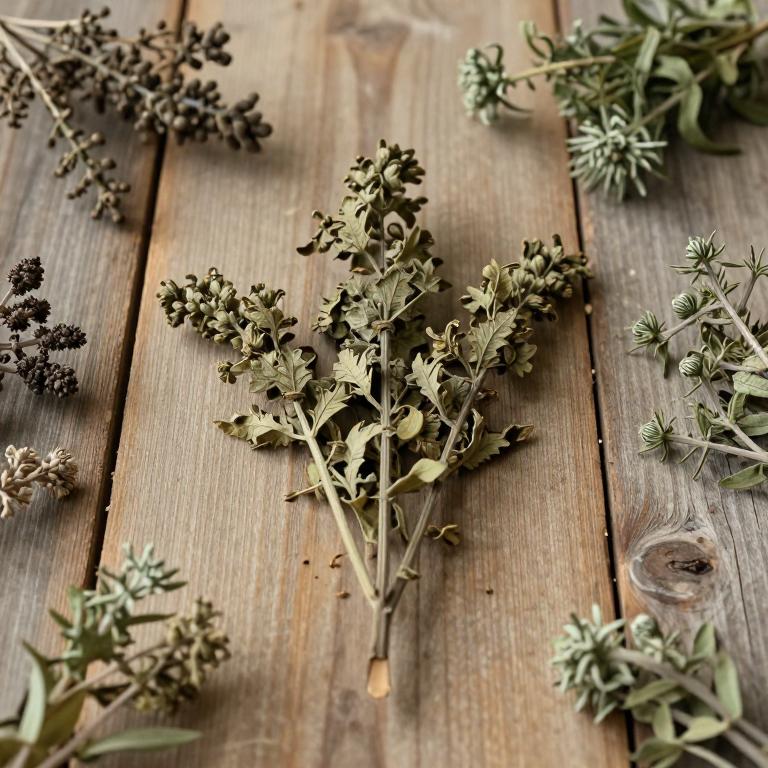
Names and Synonyms
Scientific Names
Accepted name
Actaea simplexDistribution
This plant exhibits a broad geographical distribution across several key regions of Northern Asia. In the Siberian territory, it can be found specifically in the areas of Chita and Yakutiya. The species also extends into the Russian Far East, covering the Amur region. Furthermore, its range includes the Kamchatka Peninsula. Finally, it is documented to grow within the Khabarovsk region as well.
| Region | Area |
|---|---|
| Siberia | Chita |
| Siberia | Yakutiya |
| Russian Far East | Amur |
| Russian Far East | Kamchatka |
| Russian Far East | Khabarovsk |
| Russian Far East | Kuril Is. |
| Russian Far East | Primorye |
| Russian Far East | Sakhalin |
| China | China South-Central |
| China | Inner Mongolia |
Sources: The World Checklist of Vascular Plants (WCVP)
Botanical Identification
Ecology
The ecology of Actaea simplex is characterized by its presence in diverse, moist environments, including forests, forest edges, meadows, shrubberies, and swamps. This species exhibits a broad altitudinal distribution, thriving at elevations ranging from a minimum of 300 m AMSL to a maximum of 2300 m AMSL, with a mean elevation of approximately 1300 m AMSL. Its ability to inhabit both shaded woodland settings and more open meadow or edge habitats allows it to occupy various ecological niches within these moisture-rich landscapes.
- Elevational range max:
- 2300 m AMSL
- Elevational range mean:
- 1300 m AMSL
- Elevational range min:
- 300 m AMSL
- Habitat :
- forest, forest edges, meadows, shrubberies, swamps
Life history
The life history of Actaea simplex is characterized by its nature as a perennial plant, allowing it to persist through multiple growing seasons by establishing a robust root system. Its development follows a cyclical pattern where it emerges from underground rhizomes each spring to invest energy into vegetative growth and the production of lush, compound foliage. As the plant matures, it transitions into its reproductive phase, typically producing tall, terminal racemes of creamy white flowers that facilitate pollination. Following successful fertilization, the plant develops clusters of dark berries, which serve as a mechanism for seed dispersal, often through avian vectors. Once the seeds are distributed and the plant enters a period of dormancy during the colder months, it relies on its stored nutrients within the perennial rootstock to survive until the following growing season, ensuring its long-term presence within its ecological niche.
- Lifecycle :
- perennial
Morphology
The morphology of Actaea simplex is characterized by its growth form as a non-woody herb, existing as both a herb and a forb. It is a terrestrial plant that grows independently, lacking any parasitic or epiphytic tendencies. In terms of stature, it is a self-supporting plant that does not function as a liana or vine, typically reaching a height ranging from a minimum of 1 meter to a maximum of 1.5 meters, with an average plant height of approximately 1.25 meters.
- Aquatic :
- terrestrial
- Climber :
- self-supporting
- Epiphyte :
- terrestrial
- Growth form :
- herb
- Parasite :
- independent
- Plant height max:
- 1.5 m
- Plant height mean:
- 1.25 m
- Plant height min:
- 1 m
- Woodiness :
- non-woody
Physiology
The physiology of Actaea simplex is characterized by a C3 photosynthetic pathway, which dictates its metabolic efficiency and carbon fixation processes. The plant's vegetative structure is defined by its leaf morphology, where the foliage exhibits significant variation in dimensions. The leaves typically maintain a mean length of 6.5 cm, ranging from a minimum of 4.5 cm to a maximum of 8.5 cm. In terms of lateral expansion, the leaf width shows a mean measurement of 3.75 cm, with individual leaves spanning a range from a minimum width of 2 cm to a maximum width of 5.5 cm.
- Leaf length max:
- 8.5 cm
- Leaf length mean:
- 6.5 cm
- Leaf length min:
- 4.5 cm
- Leaf width max:
- 5.5 cm
- Leaf width mean:
- 3.75 cm
- Leaf width min:
- 2 cm
- Photosynthetic pathway :
- C3
Reproduction
The reproduction of Actaea simplex is characterized by its bisexual flowers, which facilitate sexual reproduction. The flowering period typically begins in July and continues through September, though the timing can be variable. Following successful pollination, the plant produces fruits that exhibit specific morphological dimensions. These fruits generally have a mean length of 0.8 cm, ranging from a minimum of 0.7 cm to a maximum of 0.9 cm. In terms of width, the fruits possess a mean measurement of 0.45 cm, with a minimum width of 0.4 cm and a maximum width of 0.5 cm.
- Flowering time :
- Jul
- Flowering time :
- Sep
- Fruit length max:
- 0.9 cm
- Fruit length mean:
- 0.8 cm
- Fruit length min:
- 0.7 cm
- Fruit width max:
- 0.5 cm
- Fruit width mean:
- 0.45 cm
- Fruit width min:
- 0.4 cm
- Reproduction sexual :
- bisexual
Sources: Global Inventory of Floras and Traits (GIFT)
Plant Parts
Actaea simplex has 1 reported plant parts identified across 1 scientific publications and several other databases that are studied for medicinal purposes. The most consistently reported plant part include root.
| Plant part | Supporting sources | Consensus |
|---|---|---|
| Root | 1 supporting sources | ★☆☆☆☆ |
Root
- Bioorganic & medicinal chemistry
Chemicals
Actaea simplex has 7 reported phytochemicals identified across 1 scientific publications and several other databases. The most consistently reported chemicals include Acetylcimifugoside, Ammiol, Cimicifugenol, Cimicifugin, Cimicifugoside.
| Chemical | Supporting sources | Consensus |
|---|---|---|
| Acetylcimifugoside | 1 supporting sources | ★☆☆☆☆ |
| Ammiol | 1 supporting sources | ★☆☆☆☆ |
| Cimicifugenol | 1 supporting sources | ★☆☆☆☆ |
| Cimicifugin | 1 supporting sources | ★☆☆☆☆ |
| Cimicifugoside | 1 supporting sources | ★☆☆☆☆ |
| Cimigenoside | 1 supporting sources | ★☆☆☆☆ |
| Khellol | 1 supporting sources | ★☆☆☆☆ |
Acetylcimifugoside
- Dr. Duke
Ammiol
- Dr. Duke
Cimicifugenol
- Dr. Duke
Cimicifugin
- Dr. Duke
Cimicifugoside
- Dr. Duke
Cimigenoside
- Dr. Duke
Khellol
- Dr. Duke
Activities
Actaea simplex has 1 reported activities identified across 1 scientific publications and several other databases. The most consistently reported activities include Antiatherosclerotic.
| Activity | Supporting sources | Consensus |
|---|---|---|
| Antiatherosclerotic | 1 supporting sources | ★☆☆☆☆ |
Antiatherosclerotic
- Dr. Duke