Actaea rubra
Actaea rubra · Accepted scientific name
Scientific literature: Very Sparse (24 studies) · ★☆☆☆☆
Actaea rubra, scientifically known as Actaea rubra, is a perennial herb native to North American woodlands. Often called Red Baneberry, this striking plant is characterized by its distinctive clusters of bright red berries. While historically used in traditional medicine, it is highly toxic and requires extreme caution.
- Family
- Not available
- Native range
- Europe
- Parts used
- Not available
- Common names
- Not available
- Scientific synonyms
- Not available
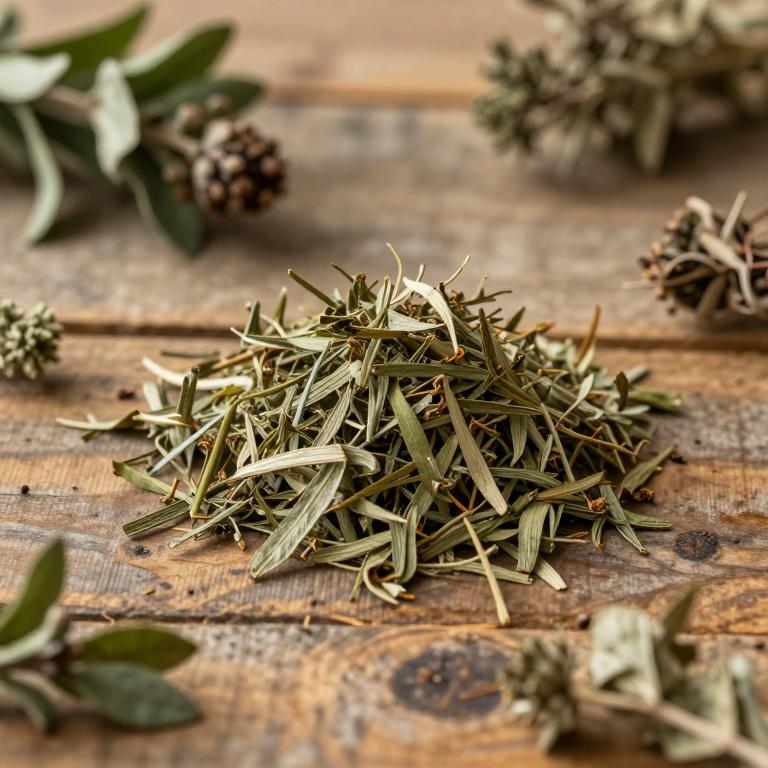
Names and Synonyms
Scientific Names
Accepted name
Actaea rubraDistribution
This plant exhibits a widespread presence across several high-latitude regions of the globe. In Northern Europe, its distribution includes the territories of Finland and Norway. Moving across the ocean, it is also found throughout various parts of Subarctic America. Specifically, it can be located in the state of Alaska. Furthermore, its range extends into the Canadian territories of Nunavut and the Northwest Territories.
| Region | Area |
|---|---|
| Northern Europe | Finland |
| Northern Europe | Norway |
| Subarctic America | Alaska |
| Subarctic America | Nunavut |
| Subarctic America | Northwest Territories |
| Subarctic America | Yukon |
| Western Canada | Alberta |
| Western Canada | British Columbia |
| Western Canada | Manitoba |
| Western Canada | Saskatchewan |
Sources: The World Checklist of Vascular Plants (WCVP)
Botanical Identification
Life history
The life history of Actaea rubra is characterized by its nature as a perennial plant, meaning it lives for more than two years and undergoes multiple growth cycles throughout its existence. Its developmental stages begin with the germination of seeds, which typically require specific environmental conditions to establish a root system. As a perennial, the plant focuses significant energy on developing a robust rhizome, which serves as a storage organ to facilitate survival during dormant periods. During the growing season, the plant emerges from the soil to produce foliage and eventually develops flowering stalks. Following pollination, the plant produces fruits and seeds, after which it enters a period of seasonal senescence or dormancy to protect itself from harsh environmental conditions. This continuous cycle of growth, reproduction, and dormancy allows the species to persist in its habitat over many years.
- Lifecycle :
- perennial
Morphology
The morphology of Actaea rubra is characterized by its growth form as a non-woody herb, specifically categorized as a forb. It functions as an independent organism rather than a parasite and maintains a terrestrial existence, showing no aquatic or epiphytic tendencies. In terms of its structural support, the plant is self-supporting, lacking the climbing or vining characteristics associated with lianas or obligatory climbers.
- Aquatic :
- terrestrial
- Climber :
- self-supporting
- Epiphyte :
- terrestrial
- Growth form :
- herb
- Growth form :
- forb
- Parasite :
- independent
- Woodiness :
- non-woody
Physiology
The physiology of Actaea rubra is characterized by a metabolic framework consistent with the C3 photosynthetic pathway, meaning it utilizes the Calvin cycle to fix atmospheric carbon dioxide directly through the enzyme RuBisCO. This carbon fixation process occurs primarily within the mesophyll cells, where CO2 is incorporated into a three-carbon compound, a mechanism typical of most temperate forest understory plants. Due to this C3 pathway, the plant's gas exchange and photosynthetic efficiency are highly sensitive to light intensity and ambient temperature, often necessitating adaptations to manage photorespiration during periods of high light or heat. Its physiological processes are finely tuned to seasonal shifts, managing resource allocation and metabolic rates to thrive in the temperate environments where its C3 metabolism is most advantageous for efficient biomass production.
- Photosynthetic pathway :
- C3
Reproduction
The reproduction of Actaea rubra is characterized by the production of specialized fruit structures and specific dispersal mechanisms. The plant produces fruit classified as a berry, which is indehiscent in nature, meaning it does not split open at maturity to release its contents. These berries maintain an average width of 0.86 cm. The dispersal syndrome is primarily zoochorous, indicating that the seeds are spread via animal vectors. Within these fruits, the seeds exhibit varying physical properties, with a recorded minimum mass of 0.00425 g and a maximum mass of 0.015141 g, resulting in an overall mean seed mass of 0.01039725 g.
- Dehiscence :
- indehiscent
- Dispersal syndrome :
- zoochorous
- Fruit type :
- berry
- Fruit width mean:
- 0.86 cm
- Seed mass max:
- 0.015141 g
- Seed mass mean:
- 0.01039725 g
- Seed mass min:
- 0.00425 g
Sources: Global Inventory of Floras and Traits (GIFT)
Chemicals
Actaea rubra has 2 reported phytochemicals identified across 0 scientific publications and several other databases. The most consistently reported chemicals include Protoanemonin, Ranunculin.
| Chemical | Supporting sources | Consensus |
|---|---|---|
| Protoanemonin | 1 supporting sources | ★☆☆☆☆ |
| Ranunculin | 1 supporting sources | ★☆☆☆☆ |
Protoanemonin
- Dr. Duke
Ranunculin
- Dr. Duke
Activities
Actaea rubra has 22 reported activities identified across 0 scientific publications and several other databases. The most consistently reported activities include Antibacterial, Antibiotic, Antileukemic, Antimitotic, Antimutagenic.
| Activity | Supporting sources | Consensus |
|---|---|---|
| Antibacterial | 1 supporting sources | ★☆☆☆☆ |
| Antibiotic | 1 supporting sources | ★☆☆☆☆ |
| Antileukemic | 1 supporting sources | ★☆☆☆☆ |
| Antimitotic | 1 supporting sources | ★☆☆☆☆ |
| Antimutagenic | 1 supporting sources | ★☆☆☆☆ |
| Antipyretic | 1 supporting sources | ★☆☆☆☆ |
| Antiseptic | 1 supporting sources | ★☆☆☆☆ |
| Antitumor | 1 supporting sources | ★☆☆☆☆ |
| Antiviral | 1 supporting sources | ★☆☆☆☆ |
| Candidicide | 1 supporting sources | ★☆☆☆☆ |
Antibacterial
- Dr. Duke
Antibiotic
- Dr. Duke
Antileukemic
- Dr. Duke
Antimitotic
- Dr. Duke
Antimutagenic
- Dr. Duke
Antipyretic
- Dr. Duke
Antiseptic
- Dr. Duke
Antitumor
- Dr. Duke
Antiviral
- Dr. Duke
Candidicide
- Dr. Duke