Chinese cimicifuga
Actaea cimicifuga · Accepted scientific name
Scientific literature: Extensive (184 studies) · ★★★★☆
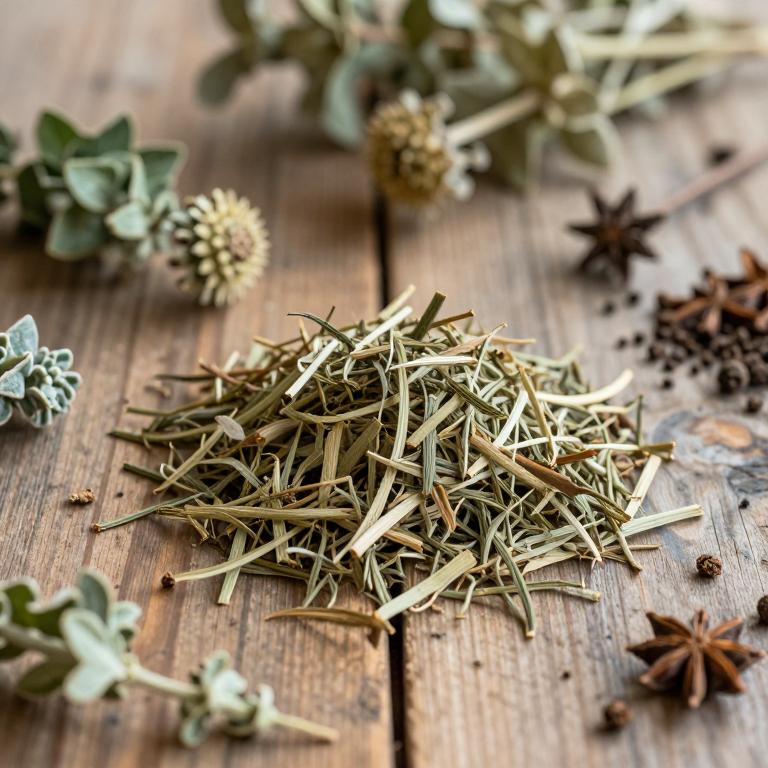
Chinese cimicifuga, scientifically known as Actaea cimicifuga, is a potent medicinal herb deeply rooted in traditional Chinese medicine. Renowned for its therapeutic properties, it is primarily utilized to alleviate pain, reduce inflammation, and treat various rheumatic conditions. This versatile plant serves as a vital component in holistic healing practices.
Names and Synonyms
Common Names
- Chinese cimicifuga
- bugbane
- foetid bugbane
Scientific Names
Accepted name
Actaea cimicifugaSynonyms
- Cimicifuga foetida
- Actaea cimicifuga var. racemosa
- Actaea podocarpa
- Actaea macropoda
- Cimicifuga foetida var. racemosa
- Cimicifuga mairei
- Actaea mairei
- Cimicifuga foetida var. velutina
- Actinospora wallichii
- Cimicifuga foetida var. mairei
Sources: Wikidata, Catalogue of Life
Taxonomical Classification
This plant belongs to the kingdom Plantae and the phylum Streptophyta, placing it within the class Equisetopsida and subclass Magnoliidae. It is further classified under the order Ranunculales and the family Ranunculaceae. Finally, its specific taxonomic designation falls under the genus Actaea.
| Rank | Classification |
|---|---|
| Kingdom | Plantae |
| Phylum | Streptophyta |
| Class | Equisetopsida |
| Subclass | Magnoliidae |
| Order | Ranunculales |
| Family | Ranunculaceae |
| Genus | Actaea |
Sources: The World Checklist of Vascular Plants (WCVP)
Distribution
This plant is primarily distributed across specific regions of Middle Europe and vast stretches of Siberia. In Middle Europe, its presence is documented within the borders of Germany. Moving eastward into the Siberian wilderness, the species can be found in the Altai region. It also inhabits the territories of Buryatia and Chita within the Siberian landscape. Finally, its geographical range extends to the Irkutsk region, completing its widespread distribution across these areas.
| Region | Area |
|---|---|
| Middle Europe | Germany |
| Siberia | Altay |
| Siberia | Buryatiya |
| Siberia | Chita |
| Siberia | Irkutsk |
| Siberia | Krasnoyarsk |
| Siberia | Tuva |
| Siberia | West Siberia |
| Siberia | Yakutiya |
| Central Asia | Kazakhstan |
Sources: The World Checklist of Vascular Plants (WCVP)
Botanical Identification
Ecology
The ecology of Actaea cimiciuga is characterized by its presence in diverse high-altitude landscapes, ranging from dense forests and forest edges to open meadows and mountainous terrain, including areas of cut-over forest. This species is specifically adapted to montane environments, occupying an elevational range that begins at 1,700 m AMSL and extends up to a maximum of 2,300 m AMSL. On average, the plant thrives at a mean elevation of approximately 2,000 m AMSL, reflecting its preference for the cool, specialized conditions found within these upper-altitude ecological niches.
- Elevational range max:
- 2300 m AMSL
- Elevational range mean:
- 2000 m AMSL
- Elevational range min:
- 1700 m AMSL
- Habitat :
- cut-over forest, forest, forest edges, meadows, mountains
Life history
The life history of Actaea cimiciuga is characterized by its status as a perennial plant, meaning it lives for several years and undergoes repeated growth cycles. As a long-lived herbaceous species, it establishes a robust root system that allows it to persist through seasonal changes and regrow each spring. Its developmental stages involve an initial establishment period followed by a vegetative growth phase where it develops its characteristic foliage, eventually transitioning into a reproductive phase marked by the production of flowering stalks and seeds. Because it is perennial, its life cycle is not limited to a single season of growth and reproduction, providing it with the capacity to thrive in its natural habitat over an extended duration.
- Lifecycle :
- perennial
Morphology
The morphology of Actaea cimicifuga is characterized by its growth form as a non-woody herb. This terrestrial plant exhibits a variable height, typically ranging from a minimum of 0.4 m to a maximum of 2 m, with an average plant height of approximately 1.5 m. As an independent organism, it does not function as a parasite, maintaining a structural composition that is entirely non-woody.
- Aquatic :
- terrestrial
- Growth form :
- herb
- Parasite :
- independent
- Plant height max:
- 2 m
- Plant height mean:
- 1.5 m
- Plant height min:
- 0.4 m
- Woodiness :
- non-woody
Reproduction
The reproduction of Actaea cimiciugaf is characterized by its sexual processes, as the species possesses bisexual flowers. The flowering period occurs during the summer months, specifically beginning in July and concluding in August.
- Flowering time :
- Jul
- Flowering time :
- Aug
- Reproduction sexual :
- bisexual
Sources: Global Inventory of Floras and Traits (GIFT)
Plant Parts
Actaea cimicifuga has 2 reported plant parts identified across 8 scientific publications and several other databases that are studied for medicinal purposes. The most consistently reported plant part include rhizome, root.
| Plant part | Supporting sources | Consensus |
|---|---|---|
| Rhizome | 6 supporting sources | ★★★☆☆ |
| Root | 2 supporting sources | ★☆☆☆☆ |
Rhizome
- Molecules (Basel, Switzerland)
- Natural product research
- Zhongguo Zhong yao za zhi = Zhongguo zhongyao zazhi = China journal of Chinese materia medica
- The Journal of organic chemistry
- Bioorganic & medicinal chemistry letters
View 1 additional sources
- Viruses
Root
- Journal of natural products
- Molecules (Basel, Switzerland)
Chemicals
Actaea cimicifuga has 20 reported phytochemicals identified across 8 scientific publications and several other databases. The most consistently reported chemicals include caffeic acid, ferulic acid, CHLOROFORM, Calycosin, Cimicifugin.
| Chemical | Supporting sources | Consensus |
|---|---|---|
| caffeic acid | 2 supporting sources | ★☆☆☆☆ |
| ferulic acid | 2 supporting sources | ★☆☆☆☆ |
| CHLOROFORM | 1 supporting sources | ★☆☆☆☆ |
| Calycosin | 1 supporting sources | ★☆☆☆☆ |
| Cimicifugin | 1 supporting sources | ★☆☆☆☆ |
| Cimimanol A | 1 supporting sources | ★☆☆☆☆ |
| Cimimanol B | 1 supporting sources | ★☆☆☆☆ |
| ETHYL ACETATE | 1 supporting sources | ★☆☆☆☆ |
| Foetidinol-3-o-beta-D-xylopyranoside | 1 supporting sources | ★☆☆☆☆ |
| Glucopyranose | 1 supporting sources | ★☆☆☆☆ |
caffeic acid
- Dr. Duke
- Viruses
ferulic acid
- Dr. Duke
- PloS one
CHLOROFORM
- Parasitology research
Calycosin
- PloS one
Cimicifugin
- The American journal of Chinese medicine
Cimimanol A
- Fitoterapia
Cimimanol B
- Fitoterapia
ETHYL ACETATE
- Parasitology research
Foetidinol-3-o-beta-D-xylopyranoside
- Molecules (Basel, Switzerland)
Glucopyranose
- Zhong yao cai = Zhongyaocai = Journal of Chinese medicinal materials
Activities
Actaea cimicifuga has 149 reported activities identified across 8 scientific publications and several other databases. The most consistently reported activities include Aldose-Reductase-Inhibitor, Allelopathic, Allergenic, Analgesic, Anthelmintic.
| Activity | Supporting sources | Consensus |
|---|---|---|
| Aldose-Reductase-Inhibitor | 1 supporting sources | ★☆☆☆☆ |
| Allelopathic | 1 supporting sources | ★☆☆☆☆ |
| Allergenic | 1 supporting sources | ★☆☆☆☆ |
| Analgesic | 1 supporting sources | ★☆☆☆☆ |
| Anthelmintic | 1 supporting sources | ★☆☆☆☆ |
| AntiHIV | 1 supporting sources | ★☆☆☆☆ |
| AntiLegionella | 1 supporting sources | ★☆☆☆☆ |
| Antiadenoviral | 1 supporting sources | ★☆☆☆☆ |
| Antiaggregant | 1 supporting sources | ★☆☆☆☆ |
| Antiaging | 1 supporting sources | ★☆☆☆☆ |
Aldose-Reductase-Inhibitor
- Dr. Duke
Allelopathic
- Dr. Duke
Allergenic
- Dr. Duke
Analgesic
- Dr. Duke
Anthelmintic
- Dr. Duke
AntiHIV
- Dr. Duke
AntiLegionella
- Dr. Duke
Antiadenoviral
- Dr. Duke
Antiaggregant
- Dr. Duke
Antiaging
- Dr. Duke
Preparations
Actaea cimicifuga has 4 reported preparations identified across 8 scientific publications and several other databases. The most consistently reported preparations include EtOAc fraction, Rhizoma, aerial part, rhizomes.
| Preparation | Supporting sources | Consensus |
|---|---|---|
| Etoac fraction | 1 supporting sources | ★☆☆☆☆ |
| Rhizoma | 1 supporting sources | ★☆☆☆☆ |
| Aerial part | 1 supporting sources | ★☆☆☆☆ |
| Rhizomes | 1 supporting sources | ★☆☆☆☆ |
Etoac fraction
- Fitoterapia
Rhizoma
- Zhongguo Zhong yao za zhi = Zhongguo zhongyao zazhi = China journal of Chinese materia medica
Aerial part
- Zhongguo Zhong yao za zhi = Zhongguo zhongyao zazhi = China journal of Chinese materia medica
Rhizomes
- Bioorganic & medicinal chemistry letters