Acrocomia totai
Acrocomia totai · Accepted scientific name
Scientific literature: Sparse (94 studies) · ★★☆☆☆
Acrocomia totai, scientifically known as Acrocomia totai, is a versatile palm species native to South American landscapes. Highly valued in ethnobotany, it serves multiple purposes: its fruit provides nutritious oil, while its fibrous leaves and sturdy trunk offer essential raw materials for traditional crafts and local medicinal applications.
- Family
- Not available
- Native range
- Southern America
- Parts used
- Not available
- Common names
- Not available
- Scientific synonyms
- Not available
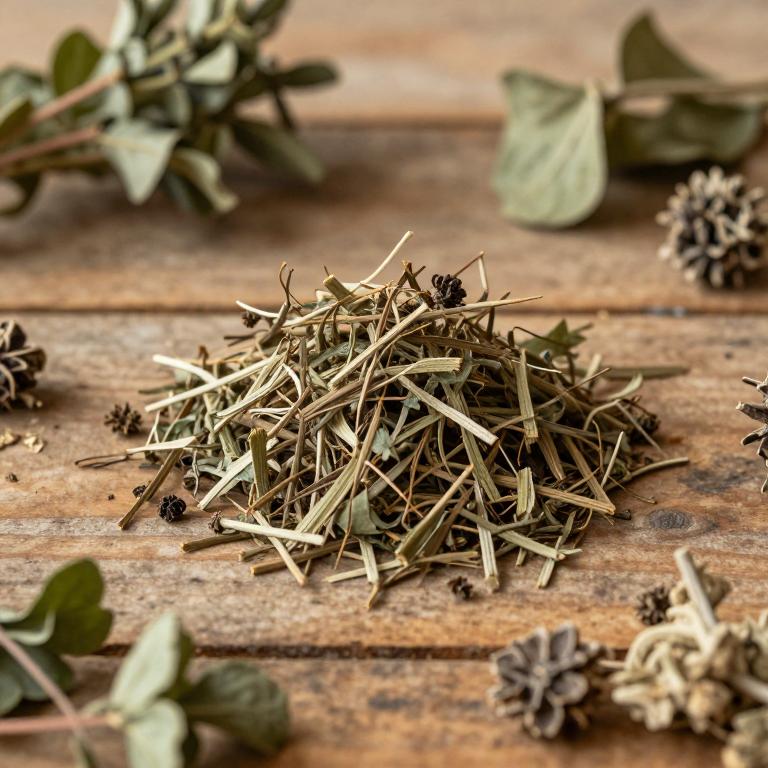
Names and Synonyms
Scientific Names
Accepted name
Acrocomia totaiDistribution
This plant is found across several distinct regions in Western and Southern South America. In Western South America, its presence is specifically noted in Bolivia. Within Brazil, the species is distributed throughout the West-Central and Southern regions. The plant also inhabits parts of Southern South America, covering the Northeast of Argentina. Additionally, its range extends into the Northwest territory of Argentina.
| Region | Area |
|---|---|
| Western South America | Bolivia |
| Brazil | Brazil West-Central |
| Brazil | Brazil South |
| Southern South America | Argentina Northeast |
| Southern South America | Argentina Northwest |
| Southern South America | Paraguay |
Sources: The World Checklist of Vascular Plants (WCVP)
Botanical Identification
Ecology
The ecology of Acrocomia totai is characterized by its ability to thrive within diverse Brazilian ecosystems, specifically occupying the Cerrado (latto sensu), as well as within Atlantic Forest (Floresta Ciliar) or Gallery Forest (Galeria) environments. This adaptability allows the species to integrate into both open, seasonal landscapes and more sheltered, riparian habitats. Furthermore, the plant possesses active defense mechanisms, a biological trait that helps it navigate environmental pressures and herbivory within its natural niches.
- Defense :
- yes
- Habitat :
- Cerrado (lato sensu), Floresta Ciliar ou Galeria
Life history
The life history of Acrocomia totai is characterized by its status as a perennial plant, allowing it to persist in its environment over many growing seasons. Structurally, it is classified as a phanerophyte, specifically a phanerophyte, meaning its perennating buds are elevated above the ground level on woody stems or trunks. This life form enables the species to maintain stability and protect its regenerative tissues throughout its long life cycle.
- Life form :
- phanerophyte
- Lifecycle :
- perennial
Morphology
The morphology of Acrocomia totai is characterized by its growth form as a tree, reaching a maximum plant height of 12 m. It exhibits a woody constitution and maintains an erect shoot orientation. As a terrestrial species, it is classified as an independent organism, functioning as a self-supporting plant rather than a climber, epiphyte, or parasite.
- Aquatic :
- terrestrial
- Climber :
- self-supporting
- Epiphyte :
- terrestrial
- Growth form :
- tree
- Parasite :
- independent
- Plant height max:
- 12 m
- Shoot orientation :
- erect
- Woodiness :
- woody
Physiology
The physiology of Acrocomia totai is characterized by specialized structural adaptations designed for survival in resource-limited environments, most notably through the development of defensive and protective integumentary structures. A key physiological and morphological feature is the presence of leaf spines (trait_1: yes), which serve as a critical mechanism for herbivory deterrence and physical protection of the developing meristematic tissues. These spines are integrated into the leaf architecture (trait_2: Leaf_spines_1), functioning as hardened, lignified extensions that reduce water loss and provide mechanical defense against environmental stressors. The metabolic processes of the plant are optimized for high-efficiency nutrient uptake and water management, supporting the growth of its robust, fibrous tissues. Through these physiological adaptations, including the strategic deployment of spines, the plant maintains structural integrity and protects its photosynthetic apparatus from biotic threats.
- Leaf spines :
- yes
Reproduction
The reproduction of Acrocomia totai is characterized by the production of fruits that exhibit significant morphological variation in size and appearance. The fruits typically manifest in a vibrant orange color, serving as a key visual trait during their development. In terms of dimensions, the fruit length varies, with a minimum measurement of 2.5 cm, a mean length of 3 cm, and a maximum reaching up to 3.5 cm. Similarly, the fruit width shows a range of variation, starting from a minimum of 2.5 cm, maintaining a mean width of 3 cm, and extending to a maximum width of 3.5 cm. This consistency between length and width measurements suggests a largely spherical or rounded fruit structure throughout its reproductive cycle.
- Fruit colour :
- orange
- Fruit length max:
- 3.5 cm
- Fruit length mean:
- 3 cm
- Fruit length min:
- 2.5 cm
- Fruit width max:
- 3.5 cm
- Fruit width mean:
- 3 cm
- Fruit width min:
- 2.5 cm
Sources: Global Inventory of Floras and Traits (GIFT)
Chemicals
Acrocomia totai has 11 reported phytochemicals identified across 0 scientific publications and several other databases. The most consistently reported chemicals include Ash, CALCIUM, FAT, Nitrogen, PHOSPHORUS.
| Chemical | Supporting sources | Consensus |
|---|---|---|
| Ash | 1 supporting sources | ★☆☆☆☆ |
| CALCIUM | 1 supporting sources | ★☆☆☆☆ |
| FAT | 1 supporting sources | ★☆☆☆☆ |
| Nitrogen | 1 supporting sources | ★☆☆☆☆ |
| PHOSPHORUS | 1 supporting sources | ★☆☆☆☆ |
| POTASSIUM | 1 supporting sources | ★☆☆☆☆ |
| SFA | 1 supporting sources | ★☆☆☆☆ |
| Sugars | 1 supporting sources | ★☆☆☆☆ |
| linoleic acid | 1 supporting sources | ★☆☆☆☆ |
| oleic acid | 1 supporting sources | ★☆☆☆☆ |
Ash
- Dr. Duke
CALCIUM
- Dr. Duke
FAT
- Dr. Duke
Nitrogen
- Dr. Duke
PHOSPHORUS
- Dr. Duke
POTASSIUM
- Dr. Duke
SFA
- Dr. Duke
Sugars
- Dr. Duke
linoleic acid
- Dr. Duke
oleic acid
- Dr. Duke
Activities
Acrocomia totai has 75 reported activities identified across 0 scientific publications and several other databases. The most consistently reported activities include 5-Alpha-Reductase-Inhibitor, Allergenic, Alpha-Reductase-Inhibitor, Anemiagenic, Angiotensin-Receptor-Blocker.
| Activity | Supporting sources | Consensus |
|---|---|---|
| 5-Alpha-Reductase-Inhibitor | 1 supporting sources | ★☆☆☆☆ |
| Allergenic | 1 supporting sources | ★☆☆☆☆ |
| Alpha-Reductase-Inhibitor | 1 supporting sources | ★☆☆☆☆ |
| Anemiagenic | 1 supporting sources | ★☆☆☆☆ |
| Angiotensin-Receptor-Blocker | 1 supporting sources | ★☆☆☆☆ |
| AntiMS | 1 supporting sources | ★☆☆☆☆ |
| AntiPMS | 1 supporting sources | ★☆☆☆☆ |
| Antiacne | 1 supporting sources | ★☆☆☆☆ |
| Antiallergic | 1 supporting sources | ★☆☆☆☆ |
| Antialopecic | 1 supporting sources | ★☆☆☆☆ |
5-Alpha-Reductase-Inhibitor
- Dr. Duke
Allergenic
- Dr. Duke
Alpha-Reductase-Inhibitor
- Dr. Duke
Anemiagenic
- Dr. Duke
Angiotensin-Receptor-Blocker
- Dr. Duke
AntiMS
- Dr. Duke
AntiPMS
- Dr. Duke
Antiacne
- Dr. Duke
Antiallergic
- Dr. Duke
Antialopecic
- Dr. Duke