Acridocarpus orientalis
Acridocarpus orientalis · Accepted scientific name
Scientific literature: Very Sparse (16 studies) · ★☆☆☆☆
, scientifically known as Acridocarpus orientalis, is a medicinal plant valued in traditional herbal practices. Belonging to the Fabaceae family, this species is recognized for its diverse pharmacological properties. Researchers explore its bioactive compounds for potential therapeutic uses, highlighting its significance in discovering natural remedies for various health conditions.
- Family
- Malpighiaceae
- Native range
- Africa
- Parts used
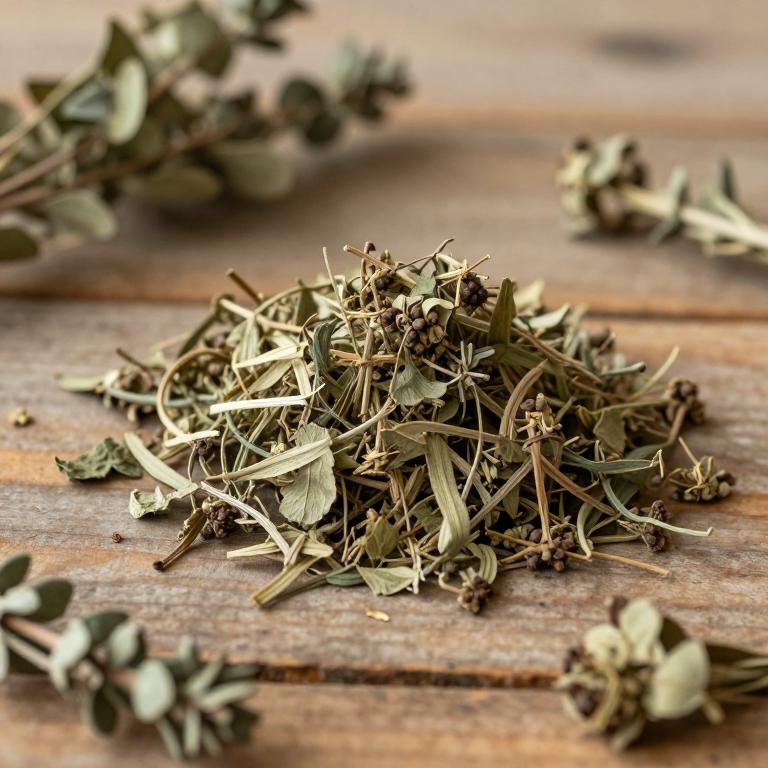
- Leaf · Stem
- Common names
- Not available
- Scientific synonyms
- Anomalopterys Orientalis
Names and Synonyms
Scientific Names
Accepted name
Acridocarpus orientalisSynonyms
- Anomalopterys orientalis
Sources: Wikidata
Taxonomical Classification
This plant belongs to the kingdom Plantae and is classified under the phylum Streptophyta and the class Equisetopsida. Within the subclass Magnoliidae, it is organized under the order Malpighiales and the family Malpighiaceae. Finally, its specific taxonomic designation is placed within the genus Acridocarpus.
| Rank | Classification |
|---|---|
| Kingdom | Plantae |
| Phylum | Streptophyta |
| Class | Equisetopsida |
| Subclass | Magnoliidae |
| Order | Malpighiales |
| Family | Malpighiaceae |
| Genus | Acridocarpus |
Sources: The World Checklist of Vascular Plants (WCVP)
Distribution
This plant exhibits a diverse geographical distribution spanning across several distinct regions. In Northeast Tropical Africa, its presence is specifically noted within the borders of Somalia. Moving toward Western Asia, the species can be found growing in the country of Iran. The Arabian Peninsula also serves as a significant habitat, where it is distributed throughout the various Gulf States. Furthermore, the plant is commonly located across the territories of both Oman and Saudi Arabia.
| Region | Area |
|---|---|
| Northeast Tropical Africa | Somalia |
| Western Asia | Iran |
| Arabian Peninsula | Gulf States |
| Arabian Peninsula | Oman |
| Arabian Peninsula | Saudi Arabia |
| Arabian Peninsula | Yemen |
Sources: The World Checklist of Vascular Plants (WCVP)
Botanical Identification
Morphology
The morphology of Acridocarpus orientalis is characterized by a woody growth habit, primarily manifesting as a shrub or a self-supporting shrubby form. It is an independent plant that does not function as a parasite or an epiphyte, maintaining a terrestrial existence rather than an aquatic or semiaquatic lifestyle. While its structure can exhibit climbing tendencies, it is categorized as a self-supporting entity rather than an obligatory liana or vine.
- Aquatic :
- terrestrial
- Climber :
- self-supporting
- Epiphyte :
- terrestrial
- Growth form :
- shrub
- Parasite :
- independent
- Woodiness :
- woody
Sources: Global Inventory of Floras and Traits (GIFT)
Plant Parts
Acridocarpus orientalis has 2 reported plant parts identified across 4 scientific publications and several other databases that are studied for medicinal purposes. The most consistently reported plant part include leaf, stem.
| Plant part | Supporting sources | Consensus |
|---|---|---|
| Leaf | 2 supporting sources | ★☆☆☆☆ |
| Stem | 2 supporting sources | ★☆☆☆☆ |
Leaf
- Molecules (Basel, Switzerland)
- Molecular biology reports
Stem
- Molecules (Basel, Switzerland)
- Molecular biology reports
Chemicals
Acridocarpus orientalis has 1 reported phytochemicals identified across 4 scientific publications and several other databases. The most consistently reported chemicals include morin.
| Chemical | Supporting sources | Consensus |
|---|---|---|
| morin | 2 supporting sources | ★☆☆☆☆ |
morin
- Molecular biology reports
- Molecules (Basel, Switzerland)
Activities
Acridocarpus orientalis has 2 reported activities identified across 4 scientific publications and several other databases. The most consistently reported activities include Anticancer, Antioxidant.
| Activity | Supporting sources | Consensus |
|---|---|---|
| Anticancer | 1 supporting sources | ★☆☆☆☆ |
| Antioxidant | 1 supporting sources | ★☆☆☆☆ |
Anticancer
- Molecules (Basel, Switzerland)
Antioxidant
- Molecules (Basel, Switzerland)
Conditions
Acridocarpus orientalis has 4 reported investigations on conditions identified across 4 scientific publications and several other databases. The most consistently reported conditions include cancer, breast cancer, cervical cancer, pain.
| Condition | Supporting sources | Consensus |
|---|---|---|
| Cancer | 2 supporting sources | ★☆☆☆☆ |
| Breast cancer | 1 supporting sources | ★☆☆☆☆ |
| Cervical cancer | 1 supporting sources | ★☆☆☆☆ |
| Pain | 1 supporting sources | ★☆☆☆☆ |
Cancer
- Molecules (Basel, Switzerland)
- Molecular biology reports
Breast cancer
- Molecules (Basel, Switzerland)
Cervical cancer
- Molecules (Basel, Switzerland)
Pain
- Molecules (Basel, Switzerland)
Preparations
Acridocarpus orientalis has 5 reported preparations identified across 4 scientific publications and several other databases. The most consistently reported preparations include crude methanolic extract, dichloromethane fraction from leaves, leaf and stem extracts, methanolic extracts of its leaves and stems, n-butanol fraction from the stems.
| Preparation | Supporting sources | Consensus |
|---|---|---|
| Crude methanolic extract | 1 supporting sources | ★☆☆☆☆ |
| Dichloromethane fraction from leaves | 1 supporting sources | ★☆☆☆☆ |
| Leaf and stem extracts | 1 supporting sources | ★☆☆☆☆ |
| Methanolic extracts of its leaves and stems | 1 supporting sources | ★☆☆☆☆ |
| N-butanol fraction from the stems | 1 supporting sources | ★☆☆☆☆ |
Crude methanolic extract
- Molecules (Basel, Switzerland)
Dichloromethane fraction from leaves
- Molecules (Basel, Switzerland)
Leaf and stem extracts
- Molecular biology reports
Methanolic extracts of its leaves and stems
- Molecules (Basel, Switzerland)
N-butanol fraction from the stems
- Molecules (Basel, Switzerland)