Aconitum legendrei
Aconitum legendrei · Accepted scientific name
Scientific literature: Very Sparse (1 studies) · ★☆☆☆☆
Aconitum legendrei, scientifically known as Aconitum legendrei, is a potent medicinal plant belonging to the Ranunculaceae family. Found in high-altitude regions, it contains complex alkaloids used in traditional medicine. While offering significant therapeutic potential for pain and inflammation, its extreme toxicity requires precise processing and expert handling.
- Family
- Not available
- Native range
- Asia-Temperate
- Parts used
- Root
- Common names
- Not available
- Scientific synonyms
- Not available
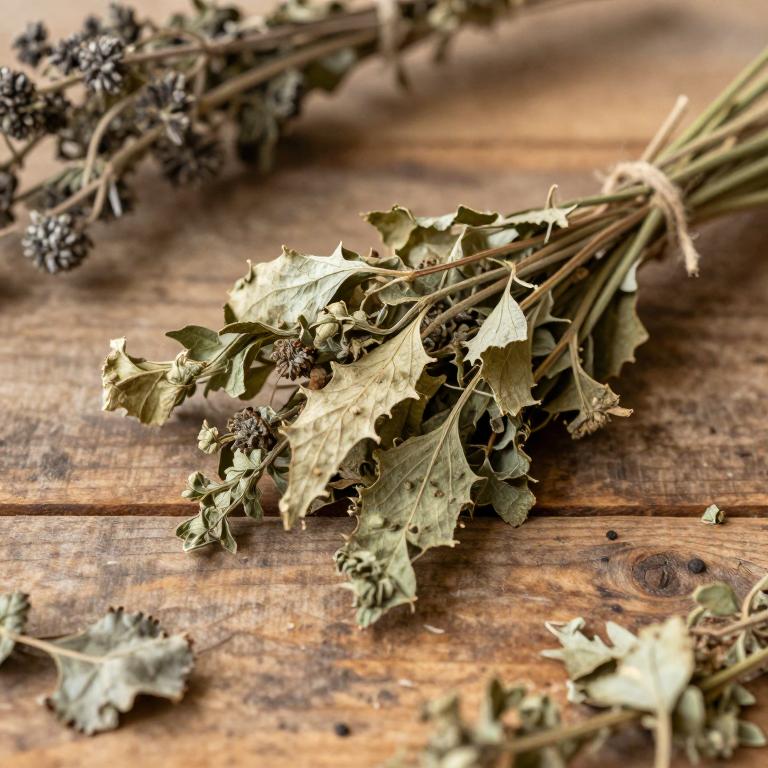
Names and Synonyms
Scientific Names
Accepted name
Aconitum legendreiDistribution
This plant is specifically native to a limited region within the country of China. Its documented geographical distribution is restricted to the South-Central parts of the nation. Within these particular areas, it thrives according to its specific ecological requirements. Because its range is so localized, it is considered an endemic species to this territory. Consequently, understanding its presence in South-Central China is essential for its conservation.
| Region | Area |
|---|---|
| China | China South-Central |
Sources: The World Checklist of Vascular Plants (WCVP)
Botanical Identification
Ecology
The ecology of Aconitum legendrei is strictly defined by its preference for high-altitude environments, where it occupies a specific vertical niche within its native habitat. This species is primarily found in montane or subalpine zones, maintaining a specialized distribution characterized by a narrow elevational range. It thrives at a minimum altitude of 2500 m AMSL, with a mean elevation of approximately 2650 m AMSL, and reaches its upper limit at 2800 m AMSL. This specialized altitudinal positioning suggests that the plant is adapted to the specific climatic conditions, such as lower temperatures, increased ultraviolet exposure, and unique soil compositions, that are characteristic of these high-elevation mountain ecosystems.
- Elevational range max:
- 2800 m AMSL
- Elevational range mean:
- 2650 m AMSL
- Elevational range min:
- 2500 m AMSL
Morphology
The morphology of Aconitum legendrei is characterized by its growth form as a herb, presenting as a non-woody organism. It does not exhibit any climbing tendencies, functioning instead as a self-supporting plant rather than an obligatory or facultative climber.
- Climber :
- self-supporting
- Growth form :
- herb
- Woodiness :
- non-woody
Physiology
The physiological development of the foliage in Aconitum legendrei is characterized by specific morphological dimensions that define its photosynthetic surface area. The leaves exhibit a distinct range of longitudinal growth, with a mean leaf length of 9 cm, while individual specimens vary from a minimum length of 8 cm to a maximum extent of 10 cm. Complementing this longitudinal profile is a relatively narrow transverse development, where the leaf width fluctuates between a minimum of 0.2 cm and a maximum of 0.35 cm. These precise measurements in leaf length and width reflect the plant's structural adaptation and its specialized physiological capacity for light interception and gas exchange within its natural habitat.
- Leaf length max:
- 10 cm
- Leaf length mean:
- 9 cm
- Leaf length min:
- 8 cm
- Leaf width max:
- 0.35 cm
- Leaf width min:
- 0.2 cm
Sources: Global Inventory of Floras and Traits (GIFT)
Plant Parts
Aconitum legendrei has 1 reported plant parts identified across 1 scientific publications and several other databases that are studied for medicinal purposes. The most consistently reported plant part include root.
| Plant part | Supporting sources | Consensus |
|---|---|---|
| Root | 1 supporting sources | ★☆☆☆☆ |
Root
- Zhongguo Zhong yao za zhi = Zhongguo zhongyao zazhi = China journal of Chinese materia medica