Aconitum barbatum var. puberulum
Aconitum barbatum var. puberulum · Accepted scientific name
Scientific literature: Very Sparse (9 studies) · ★☆☆☆☆
scientifically known as Aconiutum barbaatum var. pubeRELUM, is a potent medicinal plant belonging to the Ranunculaceae family. Renowned for its complex alkaloid profile, it is utilized in traditional medicine for its profound analgesic and sedative properties. However, extreme caution is essential due to its highly toxic nature when mishandled.
- Family
- Ranunculaceae
- Native range
- Asia-Temperate
- Parts used
- Not available
- Common names
- Not available
- Scientific synonyms
- Lycoctonum Ochranthum · Aconitum Lycoctonum Var. Ochranthum · 6 more
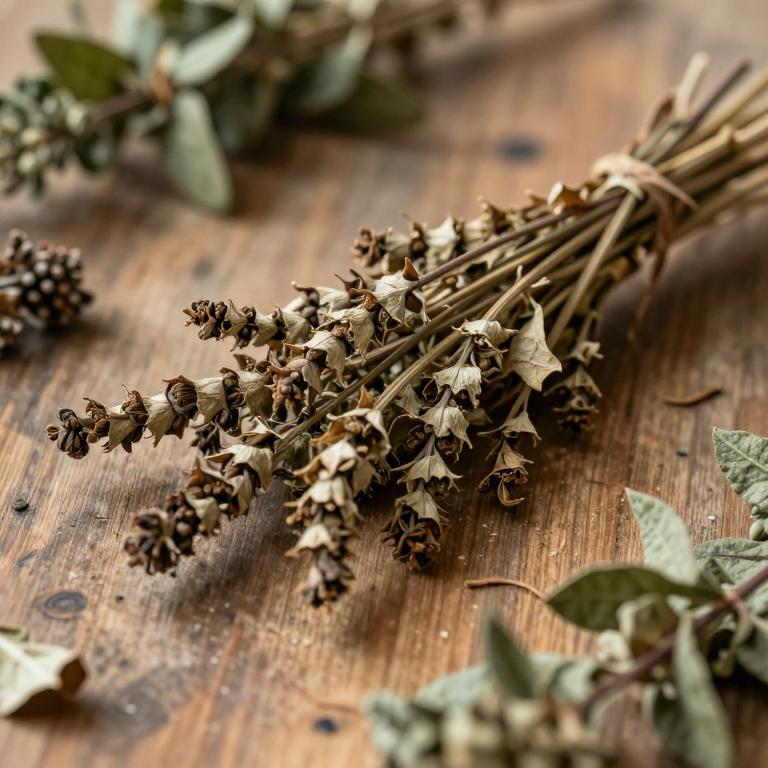
Names and Synonyms
Scientific Names
Accepted name
Aconitum barbatum var. puberulumSynonyms
- Lycoctonum ochranthum
- Aconitum lycoctonum var. ochranthum
- Aconitum barbatum subsp. pekinense
- Aconitum pekinense
- Aconitum ochranthum
- Aconitum luteum
- Aconitum lycoctonum lusus glabriusculum
- Aconitum lycoctonum lusus hirsutum
Sources: Wikidata, Catalogue of Life
Taxonomical Classification
This plant belongs to the kingdom Plantae within the phylum Streptophyta and the class Equisetopsida. As a member of the subclass Magnoliidae and the order Ranunculales, it is classified under the family Ranunculaceae. Specifically, it is identified by the genus Aconitum as the variety Aconitum barbaatum var. puberulum.
| Rank | Classification |
|---|---|
| Kingdom | Plantae |
| Phylum | Streptophyta |
| Class | Equisetopsida |
| Subclass | Magnoliidae |
| Order | Ranunculales |
| Family | Ranunculaceae |
| Genus | Aconitum |
Sources: The World Checklist of Vascular Plants (WCVP)
Distribution
This plant exhibits a wide geographical range across several key regions of Northern and Central Asia. In the Russian territory of Siberia, it can be found specifically within the Altay region. Its distribution extends significantly into China, where it is present in Inner Mongolia and Manchuria. Furthermore, the species is located throughout the China North-Central area. Finally, its habitat includes the remote and expansive landscapes of Xinjiang.
| Region | Area |
|---|---|
| Siberia | Altay |
| China | Inner Mongolia |
| China | Manchuria |
| China | China North-Central |
| China | Xinjiang |
| Mongolia | Mongolia |
Sources: The World Checklist of Vascular Plants (WCVP)
Chemicals
Aconitum barbatum var. puberulum has 7 reported phytochemicals identified across 0 scientific publications and several other databases. The most consistently reported chemicals include (+)-N-Methyllaurotetanine, 3-hydroxy-1,2-dimethoxy-5-methyl-5h-dibenzoindol-4-one, Crispine B, Imperialine, Magnoflorine.
| Chemical | Supporting sources | Consensus |
|---|---|---|
| (+)-N-Methyllaurotetanine | 1 supporting sources | ★☆☆☆☆ |
| 3-hydroxy-1,2-dimethoxy-5-methyl-5h-dibenzoindol-4-one | 1 supporting sources | ★☆☆☆☆ |
| Crispine B | 1 supporting sources | ★☆☆☆☆ |
| Imperialine | 1 supporting sources | ★☆☆☆☆ |
| Magnoflorine | 1 supporting sources | ★☆☆☆☆ |
| N-Methylcorydaldine | 1 supporting sources | ★☆☆☆☆ |
| O-Methylarmepavine | 1 supporting sources | ★☆☆☆☆ |
(+)-N-Methyllaurotetanine
- Natural product research
3-hydroxy-1,2-dimethoxy-5-methyl-5h-dibenzoindol-4-one
- Natural product research
Crispine B
- Natural product research
Imperialine
- Natural product research
Magnoflorine
- Natural product research
N-Methylcorydaldine
- Natural product research
O-Methylarmepavine
- Natural product research
Activities
Aconitum barbatum var. puberulum has 2 reported activities identified across 0 scientific publications and several other databases. The most consistently reported activities include Antibacterial, Cytotoxic.
| Activity | Supporting sources | Consensus |
|---|---|---|
| Antibacterial | 1 supporting sources | ★☆☆☆☆ |
| Cytotoxic | 1 supporting sources | ★☆☆☆☆ |
Antibacterial
- Natural product research
Cytotoxic
- Natural product research