Achillea pseudoaleppica
Achillea pseudoaleppica · Accepted scientific name
Scientific literature: Very Sparse (1 studies) · ★☆☆☆☆
Achillea pseudoaleppica, scientifically known as Achillea pseudoaleppica, is a distinctive perennial herb belonging to the Asteraceae family. Native to specific Mediterranean regions, this plant is valued for its unique phytochemical profile. Researchers study its bioactive compounds for potential therapeutic applications, particularly in exploring its diverse medicinal properties.
- Family
- Asteraceae
- Native range
- Asia-Temperate
- Parts used
- Not available
- Common names
- Not available
- Scientific synonyms
- Not available
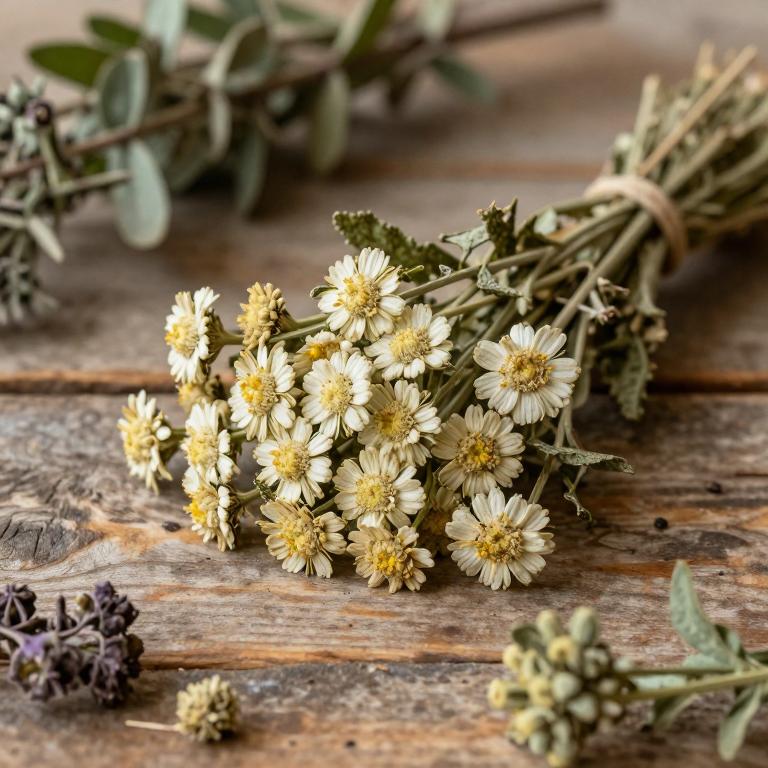
Names and Synonyms
Scientific Names
Accepted name
Achillea pseudoaleppicaSources: Wikidata, Catalogue of Life
Taxonomical Classification
This plant belongs to the kingdom Plantae and the phylum Streptophyta, falling under the class Equisetopsida and subclass Magnoliidae. Within the order Asterales, it is classified under the family Asteraceae and the genus Achillea.
| Rank | Classification |
|---|---|
| Kingdom | Plantae |
| Phylum | Streptophyta |
| Class | Equisetopsida |
| Subclass | Magnoliidae |
| Order | Asterales |
| Family | Asteraceae |
| Genus | Achillea |
Sources: The World Checklist of Vascular Plants (WCVP)
Distribution
This plant is characterized by a very specific and limited geographical range. It is primarily documented as being native to the region of Western Asia. Within this vast area, its occurrence is specifically localized to the country of Türkiye. Due to this narrow distribution, it is considered an endemic species to this particular territory. Consequently, its natural habitat is restricted to the unique environmental conditions found within the Turkish landscape.
| Region | Area |
|---|---|
| Western Asia | Türkiye |
Sources: The World Checklist of Vascular Plants (WCVP)
Chemicals
Achillea pseudoaleppica has 1 reported phytochemicals identified across 0 scientific publications and several other databases. The most consistently reported chemicals include quinic acid.
| Chemical | Supporting sources | Consensus |
|---|---|---|
| quinic acid | 1 supporting sources | ★☆☆☆☆ |
quinic acid
- Biotechnology & genetic engineering reviews