Achillea nobilis subsp. nobilis
Achillea nobilis subsp. nobilis · Accepted scientific name
Scientific literature: Very Sparse (2 studies) · ★☆☆☆☆
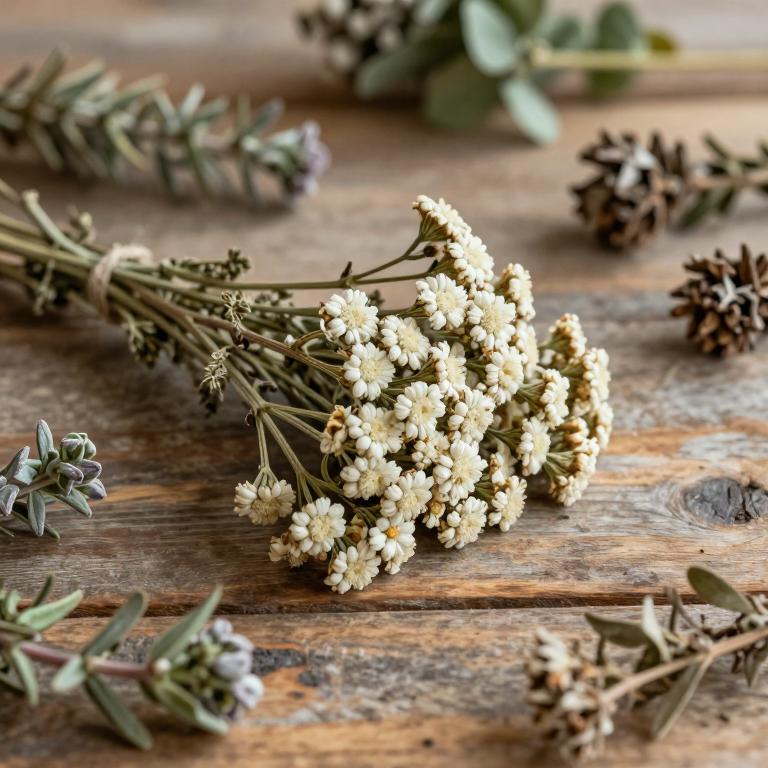
Achillea nobilis subsp. nobilis is a distinguished botanical species recognized for its significant therapeutic potential. Recent scientific studies have focused on the leaf of this plant to uncover its diverse medicinal properties. Specifically, researchers have investigated the use of aqueous extracts to harness its natural biological effects. These investigations have highlighted the plant's notable antioxidant activity, which helps combat oxidative stress. Furthermore, the species shows great promise in pharmacological applications due to its documented antidiabetic activities.
- Synonyms
- Achillea Nobilis Var. Delphinensis · Achillea Grata · 11 more
- Common names
- Not available
- Family
- Asteraceae
- Distribution
- Not available
- Plant Parts
- Leaf
Classification
Common Names
Achillea nobilis subsp. nobilis is a versatile plant known by several distinct regional names across different cultures. In many English-speaking contexts, it is simply referred to by its common name, Achillée noble. When looking toward Germany, the species is frequently called Edle Schafgarbe or Gewöhnliche Edel-Schafgarbe. It also carries the name Ayvadana in certain traditions, reflecting its diverse botanical identity. Finally, in Finnish, this particular subspecies is recognized as Jalokärsämö.
Sources: Catalogue of Life (COL)
Synonyms
Achillea nobilis subsp. nobilis is a botanical subject characterized by a complex network of taxonomic synonyms. Within scientific literature, this specific subspecies is frequently identified by various alternative names to ensure clarity in different contexts. For instance, it is recognized under the synonyms Achillea corymbifera and Achillea cylindrica. Furthermore, the plant has been cataloged as Achillea decipiens and Achillea eridania in various historical records. The diversity of its nomenclature is further expanded by its association with the name Achillea gerberi.
Sources: The World Checklist of Vascular Plants (WCVP)
Taxonomy
Achillea nobilis subsp. nobilis belongs to the vast kingdom Plantae, representing the diverse life found in the natural world. Within this biological hierarchy, it is classified under the class Equisetopsida and the order Asterales. This specific plant is a distinguished member of the family Asteraceae, which is known for its complex floral structures. It is further categorized under the genus Achillea, highlighting its unique botanical identity. Together, these scientific classifications provide a clear roadmap of the plant's evolutionary lineage.
| Rank | Classification |
|---|---|
| Kingdom | Plantae |
| Phylum | Streptophyta |
| Class | Equisetopsida |
| Subclass | Magnoliidae |
| Order | Asterales |
| Family | Asteraceae |
| Genus | Achillea |
Sources: The World Checklist of Vascular Plants (WCVP)
Distribution
Geographic Regions
Achillea nobilis subsp. nobilis is a resilient plant primarily distributed throughout the Asia-Temperate regions. Its natural habitat encompasses the diverse landscapes of the Caucasus and the Transcaucasus. Furthermore, this subspecies stretches deep into Central Asia, establishing itself across vast territories. It can be found flourishing in the specific environments of Kazakhstan, Tajikistan, and Uzbekistan. This wide distribution highlights the plant's ability to adapt to various climates within these interconnected Asian regions.
Sources: The World Checklist of Vascular Plants (WCVP)
Identification
Biological Activities
Achillea nobilis subsp. nobilis is a plant species recognized for its significant therapeutic potential in various health applications. Research indicates that this specific subspecies possesses notable antioxidant activity, which helps combat oxidative stress in biological systems. Furthermore, it demonstrates effective antidiabetic properties by aiding in the management of blood sugar regulation. These dual capabilities suggest that the plant could serve as a valuable natural ingredient in functional food development. Integrating such medicinal extracts into dietary products like yogurt may enhance their overall nutritional and health-promoting benefits.
Compounds
Conditions
Achillea nobilis subsp. nobilis possesses significant medicinal properties that contribute to various health-promoting functions. This specific plant is recognized for its ability to treat antidiabetic activity within biological systems. Additionally, it serves to treat antioxidant activity, helping to neutralize harmful free radicals. Its therapeutic profile further includes the capacity to treat α-amylase and α-glucosidase activity. These combined effects demonstrate the plant's potential role in managing metabolic and oxidative processes.
Preparations
Achillea nobilis subsp. nobilis is_prepared_as aqueous extracts, though the provided abstract specifically focuses on the properties of Achillea odorata. The study investigates how these aqueous extracts influence the antioxidant and antidiabetic potency of yogurt during storage. By adding these plant extracts, researchers observed a significant increase in the total phenolic content of the enriched yogurt. Furthermore, the fortified yogurt exhibited enhanced DPPH radical scavenging capacity and higher reducing power compared to plain varieties. Ultimately, the research suggests that such extracts can serve as natural ingredients to improve the functional benefits of dairy products.
Parts used
Achillea nobilis subsp. nobilis contains specific morphological features, such as the leaf, which are central to its biological profile. While related species like Achillea odorata are studied for their medicinal properties, the importance of plant parts remains a key focus in botanical research. Recent studies have highlighted how aqueous extracts from certain Achillea leaves can significantly enhance the nutritional value of food products. For instance, incorporating these extracts into yogurt can boost polyphenol content and improve antioxidant capacity. Such findings underscore the potential of utilizing specific plant components to create functional foods with antidiabetic benefits.