Achillea lingulata
Achillea lingulata · Accepted scientific name
Scientific literature: Very Sparse (7 studies) · ★☆☆☆☆
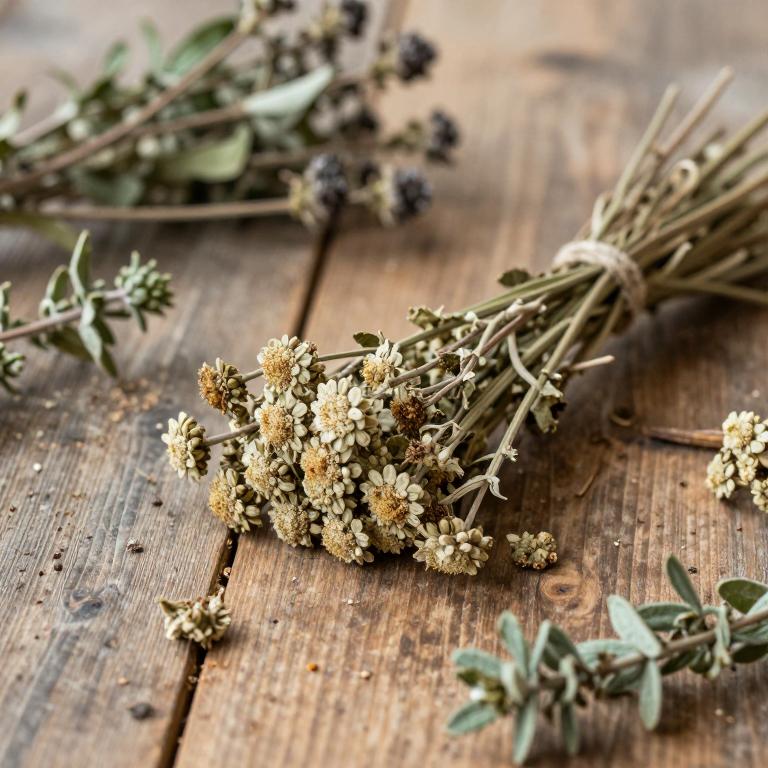
, scientifically known as Achillea linguatra, is a resilient perennial herb native to specific Mediterranean landscapes. Characterized by its unique, tongue-shaped leaves and delicate white flowers, this botanical specimen is valued in traditional herbalism for its soothing properties and potential therapeutic applications in supporting skin and digestive health.
- Family
- Asteraceae
- Native range
- Europe
- Parts used
- Not available
- Common names
- Not available
- Scientific synonyms
- Ptarmica Lingulata Var. Calva · Ptarmica Lingulata · 4 more
Names and Synonyms
Scientific Names
Accepted name
Achillea lingulataSynonyms
- Ptarmica lingulata var. calva
- Ptarmica lingulata
- Achillea lingulata var. vulgaris
- Achillea buglossis
- Achillea lingulata var. buglossis
- Achillea lingulata var. acutifolia
Sources: Wikidata, Catalogue of Life
Taxonomical Classification
This plant belongs to the kingdom Plantae and the phylum Streptophyta within the class Equisetopsida. It is further classified under the subclass Magnoliidae and the order Asterales. Finally, it is a member of the family Asteraceae and is categorized under the genus Achillea.
| Rank | Classification |
|---|---|
| Kingdom | Plantae |
| Phylum | Streptophyta |
| Class | Equisetopsida |
| Subclass | Magnoliidae |
| Order | Asterales |
| Family | Asteraceae |
| Genus | Achillea |
Sources: The World Checklist of Vascular Plants (WCVP)
Distribution
This plant exhibits a specific geographical range across various regions of the continent. In Middle Europe, its presence is notably documented within Germany. Moving toward the southern regions, it is widely distributed throughout Southeastern Europe. Specifically, it can be found growing in the landscapes of Albania and Bulgaria. Additionally, its habitat extends further south and east to include Greece and Romania.
| Region | Area |
|---|---|
| Middle Europe | Germany |
| Southeastern Europe | Albania |
| Southeastern Europe | Bulgaria |
| Southeastern Europe | Greece |
| Southeastern Europe | Romania |
| Southeastern Europe | NW. Balkan Pen. |
| Eastern Europe | Ukraine |
Sources: The World Checklist of Vascular Plants (WCVP)
Botanical Identification
Ecology
The ecology of Achillea linguolata is characterized by its preference for specific topographical and vegetative environments, primarily occurring within forest ecosystems and mountainous regions. Within these habitats, the species thrives in the complex microclimates provided by montane landscapes, where it often occupies transitional zones between dense woodland and open mountain clearings. Its presence in forest settings suggests an adaptation to varying levels of light availability and soil moisture typical of understory or edge environments, while its occurrence in mountains indicates a tolerance for the cooler temperatures and potentially steeper gradients associated with higher elevations. This distribution pattern suggests that the plant plays a role in the structural diversity of mountain forest communities, relying on the specific soil compositions and climatic stability found in these high-altitude wooded zones.
- Habitat :
- forest, mountains
Life history
The life history of Achillea linguata is characterized by its status as a perennial species, allowing it to persist through multiple growing seasons. Structurally, the plant follows a hemicryptophyte life form, meaning its perennating buds are located at the soil surface, protected by leaf litter or minimal organic matter during unfavorable conditions. This specific growth strategy, categorized under both hemi-cryptophytic classifications, ensures the plant's ability to survive seasonal changes and re-emerge to complete its reproductive cycle annually.
- Life form :
- hemicryptophyte
- Lifecycle :
- perennial
Morphology
The morphology of Achillea linguata is characterized by a herbaceous growth form that is distinctly non-woody in structure. This plant typically occupies a range of habitats, functioning as an aquatic, semiaquatic, or terrestrial species depending on environmental conditions. In terms of physical stature, it is a relatively low-growing herb, with a plant height that ranges from a minimum of 0.2 meters to a maximum of 1 meter.
- Aquatic :
- terrestrial
- Growth form :
- herb
- Plant height max:
- 1 m
- Plant height min:
- 0.2 m
- Woodiness :
- non-woody
Reproduction
The reproduction of Achillea linguata is characterized by a specific seasonal flowering cycle that facilitates its pollination and seed production. The plant begins its flowering period in June, marking the onset of its reproductive phase. This blooming stage continues steadily through the summer months until the flowering period concludes in August. This defined window of activity is essential for the plant's life cycle, ensuring that it utilizes the peak seasonal conditions to complete its reproductive processes.
- Flowering time :
- Jun
- Flowering time :
- Aug
Sources: Global Inventory of Floras and Traits (GIFT)
Chemicals
Achillea lingulata has 5 reported phytochemicals identified across 0 scientific publications and several other databases. The most consistently reported chemicals include morin, naringenin, p-Hydroxybenzoic, rosmarinic acid, salicylic.
| Chemical | Supporting sources | Consensus |
|---|---|---|
| morin | 1 supporting sources | ★☆☆☆☆ |
| naringenin | 1 supporting sources | ★☆☆☆☆ |
| p-Hydroxybenzoic | 1 supporting sources | ★☆☆☆☆ |
| rosmarinic acid | 1 supporting sources | ★☆☆☆☆ |
| salicylic | 1 supporting sources | ★☆☆☆☆ |
morin
- Molecules (Basel, Switzerland)
naringenin
- Molecules (Basel, Switzerland)
p-Hydroxybenzoic
- Molecules (Basel, Switzerland)
rosmarinic acid
- Molecules (Basel, Switzerland)
salicylic
- Molecules (Basel, Switzerland)
Activities
Achillea lingulata has 2 reported activities identified across 0 scientific publications and several other databases. The most consistently reported activities include Antimicrobial, Antioxidant.
| Activity | Supporting sources | Consensus |
|---|---|---|
| Antimicrobial | 1 supporting sources | ★☆☆☆☆ |
| Antioxidant | 1 supporting sources | ★☆☆☆☆ |
Antimicrobial
- Molecules (Basel, Switzerland)
Antioxidant
- Molecules (Basel, Switzerland)