Achillea grandifolia
Achillea grandifolia · Accepted scientific name
Scientific literature: Very Sparse (30 studies) · ★☆☆☆☆
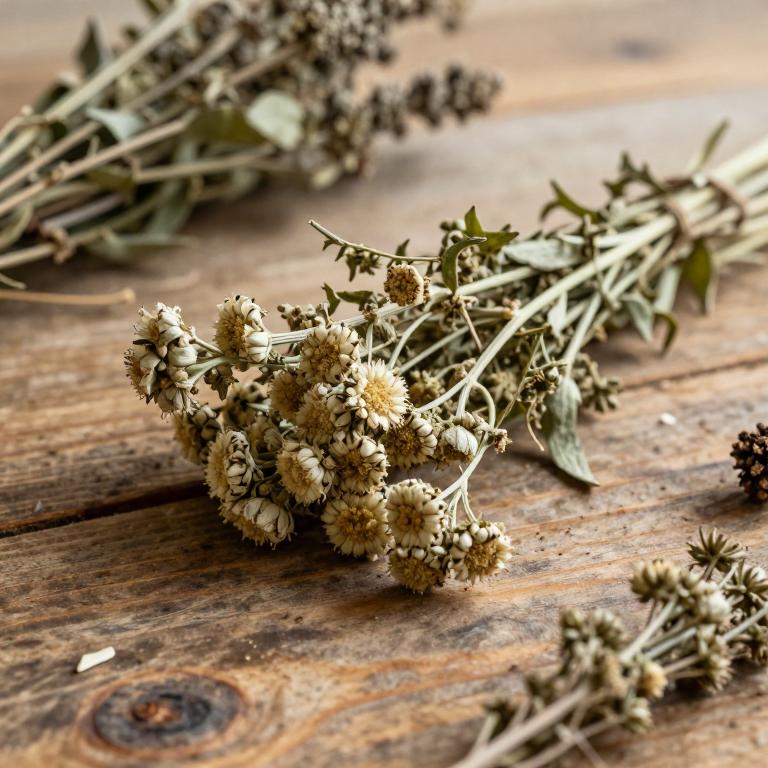
, scientifically known as Achillea grandifolia, is a robust perennial herb celebrated for its large, fern-like foliage and healing properties. Commonly referred to as large-leaf yarrow, this botanical powerhouse contains bioactive compounds used traditionally to support skin health, reduce inflammation, and promote wound healing through its potent medicinal qualities.
- Family
- Asteraceae
- Native range
- Europe
- Parts used
- Leaf
- Common names
- Not available
- Scientific synonyms
- Not available
Names and Synonyms
Scientific Names
Accepted name
Achillea grandifoliaSources: Wikidata, Catalogue of Life
Taxonomical Classification
This plant belongs to the kingdom Plantae and is classified within the phylum Streptophyta and class Equisetopsida. As a member of the subclass Magnoliidae and order Asterales, it falls under the family Asteraceae. Finally, it is identified by its genus name, Achillea.
| Rank | Classification |
|---|---|
| Kingdom | Plantae |
| Phylum | Streptophyta |
| Class | Equisetopsida |
| Subclass | Magnoliidae |
| Order | Asterales |
| Family | Asteraceae |
| Genus | Achillea |
Sources: The World Checklist of Vascular Plants (WCVP)
Distribution
This plant exhibits a broad presence across several distinct regions of the European continent. In Middle Europe, it can be found growing within the borders of Germany. Its distribution extends significantly into Southeastern Europe, where it inhabits the landscapes of Albania and Bulgaria. Furthermore, the species is widely established throughout the diverse terrain of Greece. Finally, the plant is also located in the European portion of Türkiye.
| Region | Area |
|---|---|
| Middle Europe | Germany |
| Southeastern Europe | Albania |
| Southeastern Europe | Bulgaria |
| Southeastern Europe | Greece |
| Southeastern Europe | Türkiye-in-Europe |
| Southeastern Europe | NW. Balkan Pen. |
| Western Asia | Türkiye |
Sources: The World Checklist of Vascular Plants (WCVP)
Botanical Identification
Life history
The life history of Achillea grandifolia is characterized by its status as a perennial plant, allowing it to persist through multiple growing seasons and establish a stable presence in its habitat. As a hemicryptophyte, its perennating buds are located at the soil surface, protected by leaf litter or the upper layer of the earth during unfavorable conditions. This life form, categorized under both hemicryptophyte classifications, ensures that the plant can effectively regenerate its aerial parts each year from these protected buds, facilitating a robust and continuous lifecycle.
- Life form :
- hemicryptophyte
- Lifecycle :
- perennial
Morphology
The morphology of Achillea grandifolia is characterized by its classification as a terrestrial plant, typically inhabiting well-drained soils rather than aquatic or semiaquatic environments. As a herbaceous species, its growth form is identified as an herb and specifically a forb, lacking any significant structural complexity found in woody taxa. The plant is entirely non-woody in its construction, possessing soft, succulent, or fibrous stems that do not undergo secondary thickening, distinguishing it from shrubs or trees.
- Aquatic :
- terrestrial
- Growth form :
- herb
- Woodiness :
- non-woody
Sources: Global Inventory of Floras and Traits (GIFT)
Plant Parts
Achillea grandifolia has 1 reported plant parts identified across 1 scientific publications and several other databases that are studied for medicinal purposes. The most consistently reported plant part include leaf.
| Plant part | Supporting sources | Consensus |
|---|---|---|
| Leaf | 1 supporting sources | ★☆☆☆☆ |
Leaf
- Plants (Basel, Switzerland)
Chemicals
Achillea grandifolia has 11 reported phytochemicals identified across 1 scientific publications and several other databases. The most consistently reported chemicals include ASCARIDOLE, Borneol, camphor, (Z)-Jasmone, 1,8-Cineole.
| Chemical | Supporting sources | Consensus |
|---|---|---|
| ASCARIDOLE | 2 supporting sources | ★☆☆☆☆ |
| Borneol | 2 supporting sources | ★☆☆☆☆ |
| camphor | 2 supporting sources | ★☆☆☆☆ |
| (Z)-Jasmone | 1 supporting sources | ★☆☆☆☆ |
| 1,8-Cineole | 1 supporting sources | ★☆☆☆☆ |
| BORNYL ACETATE | 1 supporting sources | ★☆☆☆☆ |
| CAMPHENE | 1 supporting sources | ★☆☆☆☆ |
| alpha-Thujone | 1 supporting sources | ★☆☆☆☆ |
| cis-Jasmone | 1 supporting sources | ★☆☆☆☆ |
| cis-Thujone | 1 supporting sources | ★☆☆☆☆ |
ASCARIDOLE
- Plants (Basel, Switzerland)
- Natural product communications
Borneol
- Plants (Basel, Switzerland)
- Natural product communications
camphor
- Plants (Basel, Switzerland)
- Natural product communications
(Z)-Jasmone
- Natural product communications
1,8-Cineole
- Plants (Basel, Switzerland)
BORNYL ACETATE
- Plants (Basel, Switzerland)
CAMPHENE
- Plants (Basel, Switzerland)
alpha-Thujone
- Natural product communications
cis-Jasmone
- Plants (Basel, Switzerland)
cis-Thujone
- Plants (Basel, Switzerland)
Activities
Achillea grandifolia has 1 reported activities identified across 1 scientific publications and several other databases. The most consistently reported activities include Antioxidant.
| Activity | Supporting sources | Consensus |
|---|---|---|
| Antioxidant | 1 supporting sources | ★☆☆☆☆ |
Antioxidant
- Plants (Basel, Switzerland)
Conditions
Achillea grandifolia has 4 reported investigations on conditions identified across 1 scientific publications and several other databases. The most consistently reported conditions include abdominal pains, diarrhea, flatulence, wound healing.
| Condition | Supporting sources | Consensus |
|---|---|---|
| Abdominal pains | 1 supporting sources | ★☆☆☆☆ |
| Diarrhea | 1 supporting sources | ★☆☆☆☆ |
| Flatulence | 1 supporting sources | ★☆☆☆☆ |
| Wound healing | 1 supporting sources | ★☆☆☆☆ |
Abdominal pains
- Plants (Basel, Switzerland)
Diarrhea
- Plants (Basel, Switzerland)
Flatulence
- Plants (Basel, Switzerland)
Wound healing
- Plants (Basel, Switzerland)
Preparations
Achillea grandifolia has 3 reported preparations identified across 1 scientific publications and several other databases. The most consistently reported preparations include EO of inflorescences, EO of leaves, essential oils (EOs) obtained separately from the leaves and inflorescences.
| Preparation | Supporting sources | Consensus |
|---|---|---|
| Eo of inflorescences | 1 supporting sources | ★☆☆☆☆ |
| Eo of leaves | 1 supporting sources | ★☆☆☆☆ |
| Essential oils (eos) obtained separately from the leaves and inflorescences | 1 supporting sources | ★☆☆☆☆ |
Eo of inflorescences
- Plants (Basel, Switzerland)
Eo of leaves
- Plants (Basel, Switzerland)
Essential oils (eos) obtained separately from the leaves and inflorescences
- Plants (Basel, Switzerland)