Achillea filipendulina
Achillea filipendulina · Accepted scientific name
Scientific literature: Very Sparse (0 studies) · ★☆☆☆☆
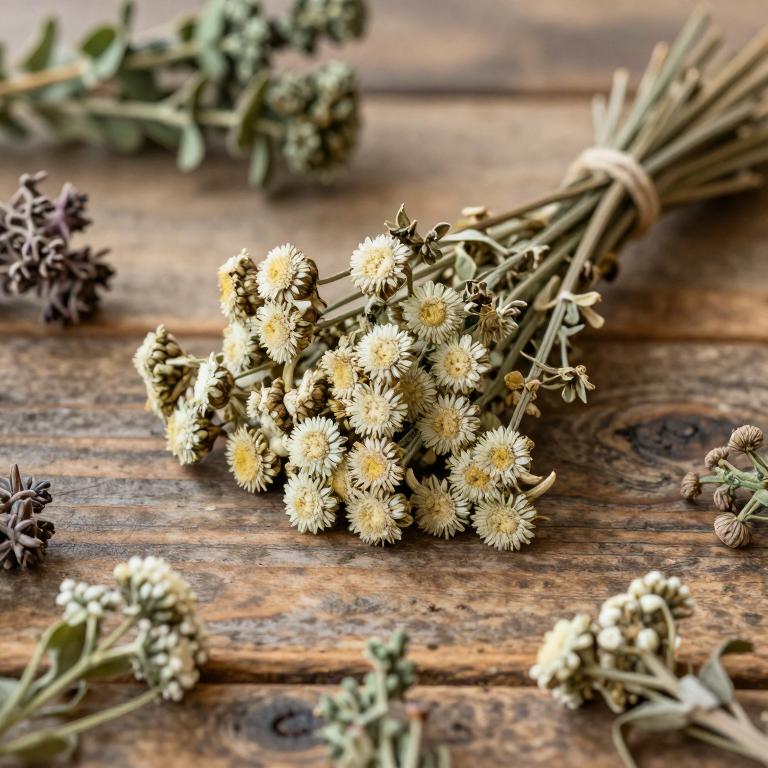
Achillea filipendulina is a striking perennial herb known for its large, flat-topped clusters of golden-yellow flowers. When cultivated within maize-based conditions, this plant can be effectively processed to create potent botanical preparations. These specialized extracts are highly valued for their concentrated bioactive compounds and therapeutic potential. Researchers often utilize these specific preparations to study the plant's complex chemical profile in detail. Understanding the synergy between its growth environment and extract quality is essential for maximizing its medicinal utility.
- Synonyms
- Achillea Eupatorium · Achillea Filicifolia · 1 more
- Common names
- Not available
- Family
- Asteraceae
- Distribution
- Not available
- Plant Parts
- Not available
Classification
Common Names
Achillea filipendulina is a versatile plant known by a wide variety of names across different languages and cultures. In English-speaking regions, it is most commonly referred to as Fern Leaf Yarrow due to its distinctive foliage. The plant also carries the Dutch name Duizendblad and the German name Farn-Schafgarbe. Moving into French, it is identified as Achillée à feuilles de fougère, while in Turkish, it is known as Eğrelti yapraklı civanperçemi. These diverse common names highlight the global recognition and botanical diversity of this beautiful species.
Sources: Catalogue of Life (COL)
Synonyms
Achillea filipendulina is a versatile plant known by several different botanical names throughout history. Within various scientific databases, you may encounter it listed under the synonym Achillea eupatorium. It is also frequently identified as Achillea filicifolia in certain taxonomic contexts. Furthermore, the name Tanacetum angulatum serves as another valid synonym for this specific species. Understanding these overlapping relationships is essential for accurate identification in botanical studies.
Sources: The World Checklist of Vascular Plants (WCVP)
Taxonomy
Achillea filipendulina belongs to the vast kingdom Plantae, marking its place among the world's diverse plant life. Within this kingdom, the species is classified under the class Equisetopsida. It further resides in the order Asterales, a group that defines its evolutionary lineage. This plant is a distinguished member of the genus Achillea, showcasing unique botanical characteristics. Ultimately, it finds its botanical home within the expansive family Asteraceae.
| Rank | Classification |
|---|---|
| Kingdom | Plantae |
| Phylum | Streptophyta |
| Class | Equisetopsida |
| Subclass | Magnoliidae |
| Order | Asterales |
| Family | Asteraceae |
| Genus | Achillea |
Sources: The World Checklist of Vascular Plants (WCVP)
Distribution
Geographic Regions
Achillea filipendulina is a resilient species primarily distributed across the Asia-Temperate regions. Its natural range extends through the diverse landscapes of the Caucasus and the Transcaucasus. Furthermore, the plant is well-established within Central Asia, specifically flourishing in the territories of Kazakhstan. It also maintains a significant presence in the mountainous areas of Kirgizstan. Finally, its distribution reaches into Tadzhikistan, showcasing its adaptability across these varied Asian terrains.
Sources: The World Checklist of Vascular Plants (WCVP)
Identification
Morphology
Achillea filipendulina is a hardy herb characterized by its robust and self-supporting growth form. This perennial plant adds dynamic texture to any landscape, reaching a maximum height of approximately 1.2 meters. Depending on the growing conditions, it can also maintain a more compact stature as low as 0.25 meters. Its versatile size and sturdy structure make it an excellent choice for various garden designs.
Sources: Global Inventory of Floras and Traits (GIFT)
Biological Activities
Compounds
Conditions
Achillea filipendulina demonstrates significant biological potential through its ability to treat matrix metalloproteinases (MMPs) via inhibitory activity. Research indicates that the plant's extracts exhibit an MMP inhibitory effect ranging from 57.73% to 92.73% at various concentrations. Furthermore, this species serves as a host for endophytic fungi that possess the ability to treat maize by promoting its growth. Specifically, fungi isolated from Achillea filipendulina were found to improve seed germination and enhance the development of the ZP684 maize hybrid-cultivar. These dual roles highlight the plant's importance in both medicinal inhibition and agricultural biofertilization.
Preparations
Achillea filipendulina is prepared as extracts to facilitate the study of its medicinal biological activities. These extracts are analyzed through phytomics to evaluate their specific inhibitory effects on matrix metalloproteinases. By utilizing these preparations, researchers can investigate how various metabolites within the plant work together to produce a biological response. The metabolomic profiling of the Achillea filipendulina extracts allows for the identification of chemical components responsible for these activities. Ultimately, the use of these extracts provides a comprehensive view of the plant's synergistic potential rather than focusing on a single metabolite.