Achillea erba-rotta subsp. moschata
Achillea erba-rotta subsp. moschata · Accepted scientific name
Scientific literature: Very Sparse (3 studies) · ★☆☆☆☆
Achillea erba-rotta subsp. moschata is a distinctive botanical specimen known for its complex pharmacological profile. Scientific investigations have highlighted its significant antioxidant properties, which help combat oxidative stress within biological systems. Furthermore, the plant exhibits notable cardiovascular effects through its (-)-chronotropic and (-)-inotropic activities. It also serves as a potential 5-alpha-reductase inhibitor, suggesting applications in hormonal regulation research. These diverse therapeutic activities position this subspecies as a subject of great interest in ethnopharmacological studies.
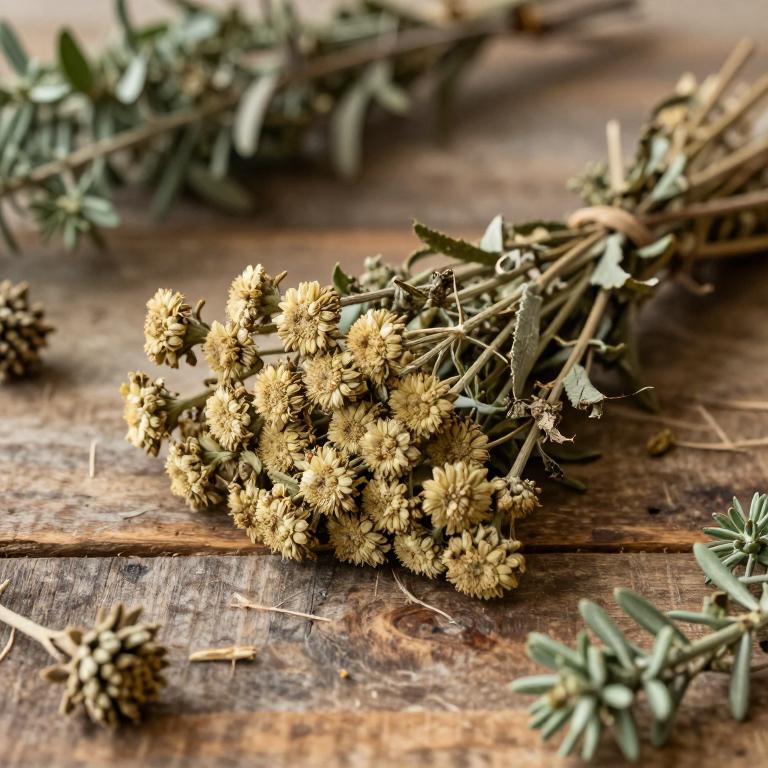
- Synonyms
- Achillea Erba-Rotta Subsp. Ambigua · Achillea Erba-Rotta Var. Ctenophylla · 11 more
- Common names
- Not available
- Family
- Asteraceae
- Distribution
- Southern America
- Plant Parts
- Not available
Classification
Common Names
Achillea erba-rotta subsp. moschata is a versatile plant recognized by a diverse array of common names across different regions. It is frequently referred to as Bisam-Schafgarbe or Moschus-Schafgarbe, reflecting its unique aromatic qualities. In certain contexts, it is also known by the names genipi and genépi blanc. Additionally, the plant is sometimes identified simply as iva. These varied designations highlight the botanical variety and cultural significance associated with this specific subspecies.
Sources: Catalogue of Life (COL)
Synonyms
Achillea erba-rotta subsp. moschata is a botanical subject characterized by a complex web of taxonomic synonyms. Researchers have identified several alternative names for this subspecies, including Achillea erba-rotta subsp. ambigua and Achillea erba-rotta var. ambigua. Its classification also encompasses the variety known as Achillea erba-rotta var. ctenophylla. Furthermore, the plant has historically been referred to by the names Achillea genipi and Achillea impunctata. Understanding these diverse nomenclatural relationships is essential for accurate botanical identification and study.
Sources: The World Checklist of Vascular Plants (WCVP)
Taxonomy
Achillea erba-rotta subsp. moschata is a distinct biological entity that belongs to the vast kingdom Plantae. Within this classification, it is categorized under the class Equisetopsida, marking its place among the flowering plants. It further descends through the order Asterales, showcasing its specialized evolutionary path. As a member of the diverse Asteraceae family, it shares structural similarities with many well-known composite flowers. Ultimately, this subspecies is defined by its specific placement within the genus Achillea.
| Rank | Classification |
|---|---|
| Kingdom | Plantae |
| Phylum | Streptophyta |
| Class | Equisetopsida |
| Subclass | Magnoliidae |
| Order | Asterales |
| Family | Asteraceae |
| Genus | Achillea |
Sources: The World Checklist of Vascular Plants (WCVP)
Distribution
Geographic Regions
Achillea erba-rotta subsp. moschata is a distinctive plant with a widespread presence across the European continent. Its range extends through Middle Europe, where it can be found flourishing in the landscapes of Austria and Switzerland. The subspecies also establishes itself in Southeastern Europe, making notable appearances throughout Italy. Moving toward the coast, it continues its distribution into Southwestern Europe, particularly within the borders of France. This broad geographical reach highlights the plant's adaptability to various European environments.
Sources: The World Checklist of Vascular Plants (WCVP)
Identification
Biological Activities
Achillea erba-rotta subsp. moschata is a medicinal plant found in the Alps that possesses a diverse range of therapeutic properties. Scientific investigations have confirmed that its extracts exhibit significant antioxidant activity, with scavenger capacity increasing alongside extract polarity. Furthermore, the plant demonstrates notable antimicrobial effects against various Gram-positive and Gram-negative bacterial species. Traditional ethnobotanical knowledge also highlights its long-standing use as a digestive aid in local communities. These biological activities are largely attributed to its high content of polyphenols, particularly the flavonoids luteolin and apigenin.
Compounds
Achillea erba-rotta subsp. moschata is a plant species native to the Italian and Swiss Alps that has long been valued for its medicinal properties. Chemical analyses of its aerial parts reveal that flavonoids serve as the predominant bioactive compounds within its methanolic extracts. Specifically, researchers identified luteolin and apigenin as the primary aglycones present in the plant, appearing in both free and glycosylated forms. The concentration of these compounds varied by region, with apigenin acting as the main constituent in the Valchiavenna samples. Ultimately, these flavonoid-rich extracts demonstrate significant antioxidant capacity and potent antibacterial activity against various Gram-positive and Gram-negative species.
Conditions
Achillea erba-rotta subsp. moschata is traditionally utilized for its digestive properties. The therapeutic activity of this specific plant is attributed to its chemical compounds, namely luteolin and apigenin. These bioactive substances are part of a broader study of medicinal plants found in the Valmalenco region of the Italian Alps. Scientific research seeks to validate such traditional uses through the investigation of these specific polyphenols and terpenoids. Consequently, the plant serves as a key example of how ethnobotanical traditions can be supported by phytochemical evidence.