Yarrow
Achillea crithmifolia · Accepted scientific name
Scientific literature: Very Sparse (16 studies) · ★☆☆☆☆
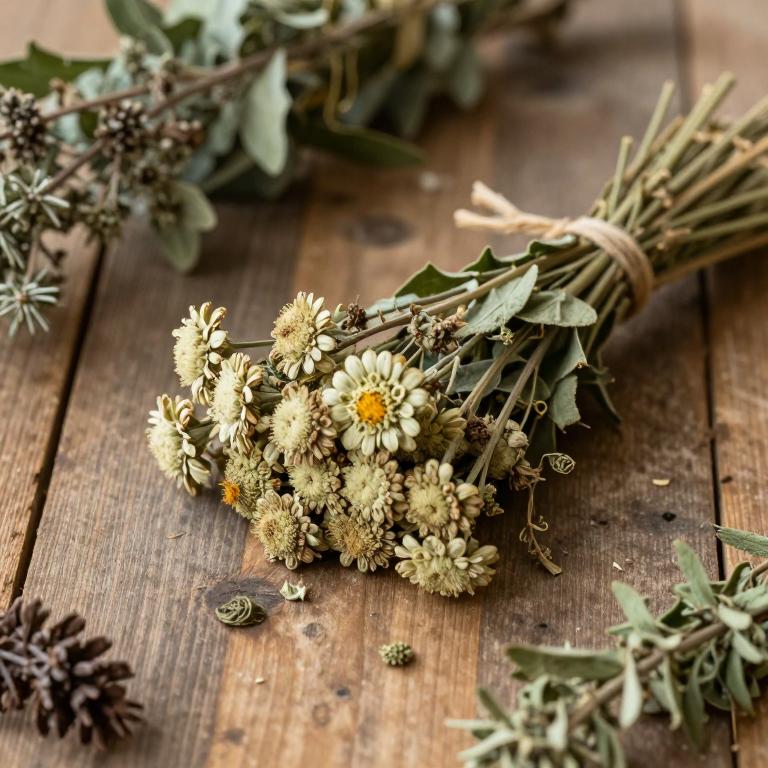
Yarrow, scientifically known as Achillea crithmifolia, is a resilient perennial herb celebrated for its aromatic foliage and delicate white blooms. Often found in rocky terrains, this medicinal plant has a long history of use in traditional healing to support wound recovery, reduce inflammation, and promote overall skin health.
- Family
- Asteraceae
- Native range
- Europe
- Parts used
- Leaf · Root
- Common names
- Yarrow
- Scientific synonyms
- Achillea Bulgarica · Achillea Crithmifolia Var. Alsatica · 8 more
Names and Synonyms
Common Names
- Yarrow
Scientific Names
Accepted name
Achillea crithmifoliaSynonyms
- Achillea bulgarica
- Achillea crithmifolia var. alsatica
- Achillea doerfleri
- Achillea bannatica
- Achillea crithmifolia var. bulgarica
- Achillea crithmifolia var. doerfleri
- Achillea crithmifolia var. gubinensis
- Achillea diversifolia
- Chamaemelum crithmifolium
- Achillea smithii
Regional and Traditional Names
German:
- Meerfenchelblättrige Schafgarbe
- meerfenchelblättrige Schafgarbe
- Meerfenchelblaettrige Schafgarbe
French:
- Achillee a feuilles de criste marine
Sources: Wikidata, Catalogue of Life
Taxonomical Classification
This plant belongs to the kingdom Plantae and the phylum Streptophyta, falling under the class Equisetopsida and subclass Magnoliidae. Within the order Asterales, it is classified under the family Asteraceae and the genus Achillea.
| Rank | Classification |
|---|---|
| Kingdom | Plantae |
| Phylum | Streptophyta |
| Class | Equisetopsida |
| Subclass | Magnoliidae |
| Order | Asterales |
| Family | Asteraceae |
| Genus | Achillea |
Sources: The World Checklist of Vascular Plants (WCVP)
Distribution
This plant exhibits a specific distribution across several regions of the European continent. In Northern Europe, its presence is recorded within the borders of Sweden. Moving into Middle Europe, it can be found growing in the landscapes of Germany and Austria. The species also inhabits the territories of Hungary within the same central region. Finally, its geographical range extends through the areas of Czechia and Slovakia.
| Region | Area |
|---|---|
| Northern Europe | Sweden |
| Middle Europe | Austria |
| Middle Europe | Czechia-Slovakia |
| Middle Europe | Germany |
| Middle Europe | Hungary |
| Middle Europe | Poland |
| Middle Europe | Switzerland |
| Southwestern Europe | France |
| Southeastern Europe | Albania |
| Southeastern Europe | Bulgaria |
Sources: The World Checklist of Vascular Plants (WCVP)
Botanical Identification
Life history
The life history of Achillea crithmifolia is characterized by a flexible reproductive strategy and a distinct growth habit. Its lifecycle is considered variable, as it can manifest as an annual, biennial, or perennial plant depending on environmental conditions and resource availability. In terms of its structural growth pattern, the species is classified as a hemicryptophyte, a life form where the perennating buds are located at the soil surface, typically protected by leaf litter or soil. This hemicryptophytic nature allows the plant to survive unfavorable seasons by maintaining its vital organs at the ground level, ensuring its persistence across various ecological niches.
- Life form :
- hemicryptophyte
- Lifecycle :
- variable
Morphology
The morphology of Achillea crithmifolia is characterized by a growth form of a herb that exhibits a non-woody structure. This plant typically reaches a height ranging from a minimum of 0.2 m to a maximum of 0.6 m. Regarding its ecological habitat and moisture preference, the species can be found across a spectrum of environments, transitioning from aquatic and semiaquatic conditions to terrestrial habitats.
- Aquatic :
- terrestrial
- Growth form :
- herb
- Plant height max:
- 0.6 m
- Plant height min:
- 0.2 m
- Woodiness :
- non-woody
Physiology
The physiology of Achillea crithmifolia is characterized by a C3 photosynthetic pathway, a metabolic strategy common among many members of the Asteraceae family that allows the plant to fix atmospheric carbon dioxide through the Calvin cycle. This C3 mechanism involves the initial fixation of CO2 by the enzyme RuBisCO to form a three-carbon compound, which is efficient in the temperate and cool-to-moderate environments where this species typically thrives. To support this metabolic process, the plant manages gas exchange and water loss through specialized stomatal regulation, balancing the uptake of carbon dioxide with the prevention of excessive transpiration. The plant's physiological efficiency is further integrated with its secondary metabolism, where the energy captured through its C3 photosynthesis is channeled into the synthesis of various bioactive phytochemicals, contributing to its overall resilience and medicinal properties.
- Photosynthetic pathway :
- C3
Reproduction
The reproduction of Achillea crithmifolia is characterized by a specific seasonal flowering cycle that facilitates its pollination and subsequent seed production. The flowering period typically commences in May and continues through the early summer months, reaching its conclusion in July. This temporal window is essential for the plant's reproductive success, as it aligns with the activity of various pollinators required for fertilization.
- Flowering time :
- May
- Flowering time :
- Jul
Sources: Global Inventory of Floras and Traits (GIFT)
Plant Parts
Achillea crithmifolia has 2 reported plant parts identified across 2 scientific publications and several other databases that are studied for medicinal purposes. The most consistently reported plant part include leaf, root.
| Plant part | Supporting sources | Consensus |
|---|---|---|
| Leaf | 1 supporting sources | ★☆☆☆☆ |
| Root | 1 supporting sources | ★☆☆☆☆ |
Leaf
- Natural product research
Root
- Molecules (Basel, Switzerland)
Chemicals
Achillea crithmifolia has 11 reported phytochemicals identified across 2 scientific publications and several other databases. The most consistently reported chemicals include 1,8-Cineole, 6-Tetradecyne, Alcohols, Borneol, E,Z-1,3,12-Nonadecatriene.
| Chemical | Supporting sources | Consensus |
|---|---|---|
| 1,8-Cineole | 1 supporting sources | ★☆☆☆☆ |
| 6-Tetradecyne | 1 supporting sources | ★☆☆☆☆ |
| Alcohols | 1 supporting sources | ★☆☆☆☆ |
| Borneol | 1 supporting sources | ★☆☆☆☆ |
| E,Z-1,3,12-Nonadecatriene | 1 supporting sources | ★☆☆☆☆ |
| Flavonoids | 1 supporting sources | ★☆☆☆☆ |
| Isopropyl linoleate | 1 supporting sources | ★☆☆☆☆ |
| Sterols | 1 supporting sources | ★☆☆☆☆ |
| Terpenoids | 1 supporting sources | ★☆☆☆☆ |
| camphor | 1 supporting sources | ★☆☆☆☆ |
1,8-Cineole
- Natural product research
6-Tetradecyne
- Molecules (Basel, Switzerland)
Alcohols
- Molecules (Basel, Switzerland)
Borneol
- Natural product research
E,Z-1,3,12-Nonadecatriene
- Molecules (Basel, Switzerland)
Flavonoids
- Molecules (Basel, Switzerland)
Isopropyl linoleate
- Molecules (Basel, Switzerland)
Sterols
- Molecules (Basel, Switzerland)
Terpenoids
- Molecules (Basel, Switzerland)
camphor
- Natural product research
Activities
Achillea crithmifolia has 1 reported activities identified across 2 scientific publications and several other databases. The most consistently reported activities include Inflammatory.
| Activity | Supporting sources | Consensus |
|---|---|---|
| Inflammatory | 1 supporting sources | ★☆☆☆☆ |
Inflammatory
- Molecules (Basel, Switzerland)
Preparations
Achillea crithmifolia has 5 reported preparations identified across 2 scientific publications and several other databases. The most consistently reported preparations include aerial ethanol extract, aerial oil extract, essential oils from leaves, ethanol extracts derived from both the aerial and root segments, root ethanol extract.
| Preparation | Supporting sources | Consensus |
|---|---|---|
| Aerial ethanol extract | 1 supporting sources | ★☆☆☆☆ |
| Aerial oil extract | 1 supporting sources | ★☆☆☆☆ |
| Essential oils from leaves | 1 supporting sources | ★☆☆☆☆ |
| Ethanol extracts derived from both the aerial and root segments | 1 supporting sources | ★☆☆☆☆ |
| Root ethanol extract | 1 supporting sources | ★☆☆☆☆ |
Aerial ethanol extract
- Molecules (Basel, Switzerland)
Aerial oil extract
- Molecules (Basel, Switzerland)
Essential oils from leaves
- Natural product research
Ethanol extracts derived from both the aerial and root segments
- Molecules (Basel, Switzerland)
Root ethanol extract
- Molecules (Basel, Switzerland)