Achillea conferta
Achillea conferta · Accepted scientific name
Scientific literature: Very Sparse (15 studies) · ★☆☆☆☆
, scientifically known as Achillea conferta, is a resilient perennial herb belonging to the Asteraceae family. Often found in diverse habitats, this medicinal plant is valued for its unique phytochemical properties. It holds significant potential in traditional healing practices, offering various therapeutic benefits for skin health and inflammatory conditions.
- Family
- Asteraceae
- Native range
- Asia-Temperate
- Parts used
- Leaf
- Common names
- Not available
- Scientific synonyms
- Not available
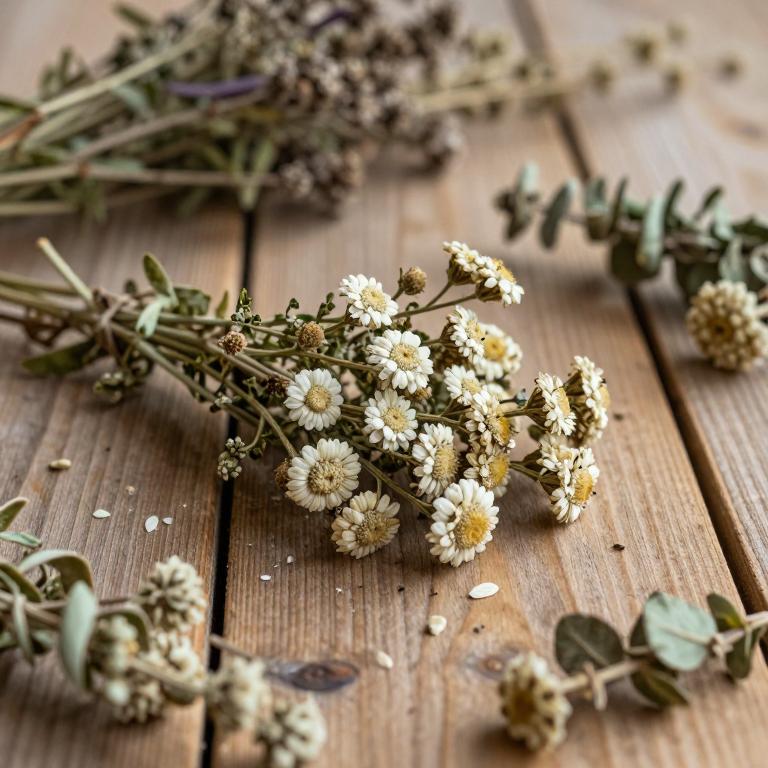
Names and Synonyms
Scientific Names
Accepted name
Achillea confertaSources: Wikidata, Catalogue of Life
Taxonomical Classification
This plant belongs to the kingdom Plantae and is classified under the phylum Streptophyta and class Equisetopsida. Within the subclass Magnoliidae and order Asterales, it is a member of the family Asteraceae. Finally, it is categorized under the genus Achillea.
| Rank | Classification |
|---|---|
| Kingdom | Plantae |
| Phylum | Streptophyta |
| Class | Equisetopsida |
| Subclass | Magnoliidae |
| Order | Asterales |
| Family | Asteraceae |
| Genus | Achillea |
Sources: The World Checklist of Vascular Plants (WCVP)
Distribution
This plant, known as Achillea conferta, exhibits a specific geographical range within the Middle East. Its distribution is primarily concentrated in the region of Western Asia. Specifically, it can be found growing across the landscapes of Iran. The species also inhabits various parts of Iraq. Furthermore, its presence extends to the territories of Lebanon and Syria.
| Region | Area |
|---|---|
| Western Asia | Iran |
| Western Asia | Iraq |
| Western Asia | Lebanon-Syria |
Sources: The World Checklist of Vascular Plants (WCVP)
Plant Parts
Achillea conferta has 1 reported plant parts identified across 1 scientific publications and several other databases that are studied for medicinal purposes. The most consistently reported plant part include leaf.
| Plant part | Supporting sources | Consensus |
|---|---|---|
| Leaf | 1 supporting sources | ★☆☆☆☆ |
Leaf
- Chemistry & biodiversity
Chemicals
Achillea conferta has 9 reported phytochemicals identified across 1 scientific publications and several other databases. The most consistently reported chemicals include CATECHIN, Epigallocatechin, Flavonoids, Isorhamnetin, RUTIN.
| Chemical | Supporting sources | Consensus |
|---|---|---|
| CATECHIN | 1 supporting sources | ★☆☆☆☆ |
| Epigallocatechin | 1 supporting sources | ★☆☆☆☆ |
| Flavonoids | 1 supporting sources | ★☆☆☆☆ |
| Isorhamnetin | 1 supporting sources | ★☆☆☆☆ |
| RUTIN | 1 supporting sources | ★☆☆☆☆ |
| Tannins | 1 supporting sources | ★☆☆☆☆ |
| hesperidin | 1 supporting sources | ★☆☆☆☆ |
| luteolin | 1 supporting sources | ★☆☆☆☆ |
| myricetin | 1 supporting sources | ★☆☆☆☆ |
CATECHIN
- Chemistry & biodiversity
Epigallocatechin
- Chemistry & biodiversity
Flavonoids
- Chemistry & biodiversity
Isorhamnetin
- Chemistry & biodiversity
RUTIN
- Chemistry & biodiversity
Tannins
- Chemistry & biodiversity
hesperidin
- Chemistry & biodiversity
luteolin
- Chemistry & biodiversity
myricetin
- Chemistry & biodiversity
Activities
Achillea conferta has 2 reported activities identified across 1 scientific publications and several other databases. The most consistently reported activities include Antioxidant, Antiproliferative.
| Activity | Supporting sources | Consensus |
|---|---|---|
| Antioxidant | 1 supporting sources | ★☆☆☆☆ |
| Antiproliferative | 1 supporting sources | ★☆☆☆☆ |
Antioxidant
- Chemistry & biodiversity
Antiproliferative
- Chemistry & biodiversity
Conditions
Achillea conferta has 3 reported investigations on conditions identified across 1 scientific publications and several other databases. The most consistently reported conditions include breast cancer, esophageal cancer, redroot pigweed.
| Condition | Supporting sources | Consensus |
|---|---|---|
| Breast cancer | 1 supporting sources | ★☆☆☆☆ |
| Esophageal cancer | 1 supporting sources | ★☆☆☆☆ |
| Redroot pigweed | 1 supporting sources | ★☆☆☆☆ |
Breast cancer
- Chemistry & biodiversity
Esophageal cancer
- Chemistry & biodiversity
Redroot pigweed
- Heliyon