silvery yarrow
Achillea clavennae · Accepted scientific name
Scientific literature: Very Sparse (6 studies) · ★☆☆☆☆
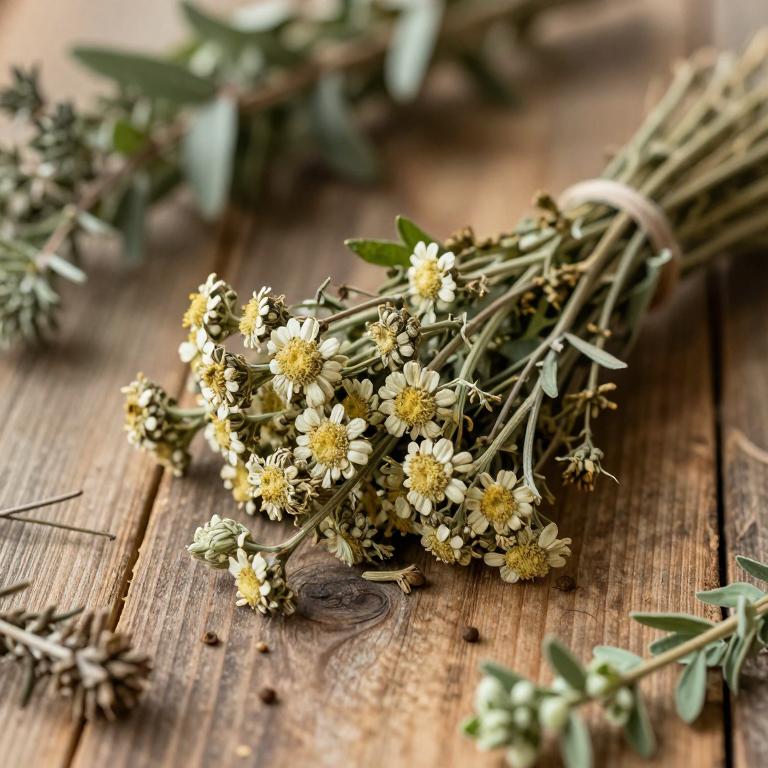
Silvery yarrow, scientifically known as Achillea clavennae, is a resilient perennial native to coastal regions. Characterized by its distinctive silvery-gray foliage and delicate white flower clusters, this medicinal herb is valued for its soothing properties. It is traditionally used to support skin healing and promote overall wellness through its bioactive compounds.
- Family
- Asteraceae
- Native range
- Europe
- Parts used
- Not available
- Common names
- Silvery Yarrow
- Scientific synonyms
- Achillea Clavennae Var. Capitata · Achillea Capitata · 11 more
Names and Synonyms
Common Names
- Silvery Yarrow
Scientific Names
Accepted name
Achillea clavennaeSynonyms
- Achillea clavennae var. capitata
- Achillea capitata
- Achillea clavennae var. glabrata
- Achillea clavennae f. velebitica
- Achillea clavennae f. volujakensis
- Achillea clavennae var. intercedens
- Achillea intercedens
- Achillea millii
- Achillea sericea
- Achillea tyrolensis
- Achillea visianii
- Chamaemelum clavennae
- Ptarmica clavennae
Regional and Traditional Names
German:
- Bittere Schafgarbe
- Achillea clavenae
- Steinraute
- Weißer Speik
- Weiße Schafgarbe
- Almwermut
- Steinraute
- bittere Schafgarbe
- weißer Speik
- Clavenas Schafgarbe
- Almwermut
- Weiße Schafgarbe
French:
- Achillee de Clavena
- Achillée amère
- Achillée de Clavena
Sources: Wikidata, Catalogue of Life
Taxonomical Classification
This plant belongs to the kingdom Plantae and the phylum Streptophyta, falling under the class Equisetopsida and subclass Magnoliidae. Within the order Asterales, it is a member of the family Asteraceae and is classified under the genus Achillea.
| Rank | Classification |
|---|---|
| Kingdom | Plantae |
| Phylum | Streptophyta |
| Class | Equisetopsida |
| Subclass | Magnoliidae |
| Order | Asterales |
| Family | Asteraceae |
| Genus | Achillea |
Sources: The World Checklist of Vascular Plants (WCVP)
Distribution
This plant exhibits a specific distribution across several regions of the European continent. In Middle Europe, its presence is documented in Austria, Germany, and Switzerland. Moving toward the southern part of the continent, it can also be found in Southeastern Europe. Specifically, this region includes the countries of Albania and Italy. Consequently, the species occupies a diverse range of habitats stretching from central to southern Europe.
| Region | Area |
|---|---|
| Middle Europe | Austria |
| Middle Europe | Germany |
| Middle Europe | Switzerland |
| Southeastern Europe | Albania |
| Southeastern Europe | Italy |
| Southeastern Europe | NW. Balkan Pen. |
Sources: The World Checklist of Vascular Plants (WCVP)
Botanical Identification
Life history
The life history of Achillea clavennae is characterized by a perennial lifecycle, allowing the plant to persist through multiple growing seasons. It functions as a hemicryptophyte, a life form where the perennating buds are located at the soil surface, protected by leaf litter or organic matter during unfavorable periods. Furthermore, this species maintains an evergreen deciduousness, retaining its foliage to facilitate continuous metabolic processes and survival across varying environmental conditions.
- Deciduousness :
- evergreen
- Life form :
- hemicryptophyte
- Lifecycle :
- perennial
Morphology
Morphologically, Achillea clavennae is characterized as a non-woody herb that exhibits a self-supporting growth habit. This species maintains a relatively low stature, with plant heights ranging from a minimum of 0.05 m to a maximum of 0.3 m, resulting in a mean height of approximately 0.115 m. As a terrestrial plant, it grows independently of other organisms, functioning as a non-parasitic and non-epiphytic organism within its habitat.
- Aquatic :
- terrestrial
- Climber :
- self-supporting
- Epiphyte :
- terrestrial
- Growth form :
- herb
- Parasite :
- independent
- Plant height max:
- 0.3 m
- Plant height mean:
- 0.115 m
- Plant height min:
- 0.05 m
- Woodiness :
- non-woody
Physiology
The physiology of Achillea clavennae is characterized by a specialized metabolic framework adapted to its specific environmental niches, most notably through its photosynthetic pathway. This plant utilizes the C3 photosynthetic pathway, a process where carbon dioxide is fixed directly from the atmosphere into a three-carbon compound during the first stage of the Calvin cycle. This mechanism involves the enzyme RuBisCO, which facilitates the carboxylation of ribulose-1,5-bisphosphate, making it highly efficient in temperate conditions where moisture is available. Beyond its carbon fixation strategy, the physiological profile of the species includes complex secondary metabolic processes, specifically the biosynthesis of volatile terpenoids and phenolic compounds, which serve as essential defense mechanisms against herbivory and environmental stressors. These metabolic activities are closely integrated with the plant's water-use efficiency and transpiration rates, which are regulated by stomatal conductance to balance gas exchange with the prevention of desiccation.
- Photosynthetic pathway :
- C3
Reproduction
The reproduction of Achillea clavennae is characterized by a specific seasonal flowering window and the production of minute seeds. The flowering period typically begins in July and extends through September, though the timing can be variable depending on environmental conditions. During this reproductive phase, the plant produces seeds with a very small mass; the mean seed mass is recorded at 0.000442 g, while the documented minimum and maximum values for seed mass are both recorded at 0.00039 g.
- Flowering time :
- Jul
- Flowering time :
- Sep
- Seed mass max:
- 0.00039 g
- Seed mass mean:
- 0.000442 g
Sources: Global Inventory of Floras and Traits (GIFT)
Chemicals
Achillea clavennae has 6 reported phytochemicals identified across 0 scientific publications and several other databases. The most consistently reported chemicals include Al, As, BA, CA, CD.
| Chemical | Supporting sources | Consensus |
|---|---|---|
| Al | 1 supporting sources | ★☆☆☆☆ |
| As | 1 supporting sources | ★☆☆☆☆ |
| BA | 1 supporting sources | ★☆☆☆☆ |
| CA | 1 supporting sources | ★☆☆☆☆ |
| CD | 1 supporting sources | ★☆☆☆☆ |
| CO | 1 supporting sources | ★☆☆☆☆ |
Al
- Journal of pharmaceutical and biomedical analysis
As
- Journal of pharmaceutical and biomedical analysis
BA
- Journal of pharmaceutical and biomedical analysis
CA
- Journal of pharmaceutical and biomedical analysis
CD
- Journal of pharmaceutical and biomedical analysis
CO
- Journal of pharmaceutical and biomedical analysis