Achillea chamaemelifolia
Achillea chamaemelifolia · Accepted scientific name
Scientific literature: Very Sparse (2 studies) · ★☆☆☆☆
Achillea chamaemelifolia is a botanical species that has garnered significant scientific interest due to its diverse therapeutic potential. Recent research has focused on exploring its potent anticancer and antitumor activities within various biological models. Specifically, studies have highlighted the effectiveness of this plant in addressing the complexities of colon cancer. By utilizing concentrated extracts, researchers aim to isolate the bioactive compounds responsible for these medicinal effects. Understanding these properties offers promising pathways for developing new natural interventions in oncology.
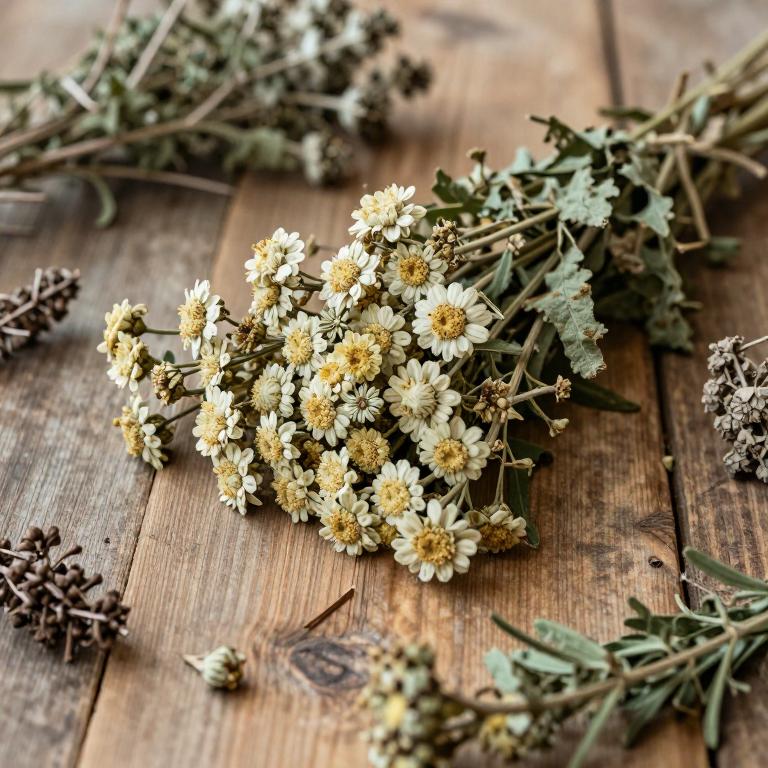
- Synonyms
- Achillea Capillata · Achillea Chamaemelifolia Var. Falcata · 2 more
- Common names
- Not available
- Family
- Asteraceae
- Distribution
- Not available
- Plant Parts
- Not available
Classification
Common Names
Achillea chamaemelifolia is a distinctive plant recognized by several different names depending on the region. It is frequently referred to by its French common name, Achillée à feuilles de camomille. In certain English-speaking contexts, it is also widely known as Andorran Milfoil. These various designations help botanists and enthusiasts identify the species across diverse linguistic landscapes. Understanding these naming relationships is essential for anyone studying the plant's unique characteristics and natural habitats.
Sources: Catalogue of Life (COL)
Synonyms
Achillea chamaemelifolia is a complex species that is frequently identified by several different botanical synonyms. In many scientific records, it is referred to simply as Achillea capillata. The plant's taxonomic classification also includes specific variations, such as Achillea chamaemelifolia var. falcata and Achillea chamaemelifolia var. recurvifolia. Additionally, the name Achillea recurvifolia is often used interchangeably to describe this particular taxon. Understanding these various nomenclatures is essential for accurate identification within the genus.
Sources: The World Checklist of Vascular Plants (WCVP)
Taxonomy
Achillea chamaemelifolia belongs to the vast kingdom Plantae, marking its place among the diverse life forms on Earth. As a member of the class Equisetopsida, it follows a fundamental evolutionary lineage shared by many flowering plants. This species is further classified under the order Asterales, a group known for its distinctive botanical structures. Within this order, it falls into the prominent family Asteraceae, which is characterized by complex flower heads. Ultimately, its specific identity is defined by its placement within the genus Achillea.
| Rank | Classification |
|---|---|
| Kingdom | Plantae |
| Phylum | Streptophyta |
| Class | Equisetopsida |
| Subclass | Magnoliidae |
| Order | Asterales |
| Family | Asteraceae |
| Genus | Achillea |
Sources: The World Checklist of Vascular Plants (WCVP)
Distribution
Geographic Regions
Achillea chamaemelifolia is a distinctive plant species with a specific geographic footprint across the European continent. Its natural distribution is primarily concentrated within the regions of Southwestern Europe. Within this territory, the species can be found growing throughout the diverse landscapes of France. It also maintains a notable presence across the varied terrain of Spain. Together, these locations define the core environmental range where this plant thrives.
Sources: The World Checklist of Vascular Plants (WCVP)
Identification
Biological Activities
Achillea chamaemelifolia is a plant species that has demonstrated significant potential in the field of oncology. Scientific investigations into related species within the Achillea genus have highlighted the presence of sesquiterpene lactones with potent therapeutic properties. These specific plant-derived compounds have shown promising anticancer activity, particularly when targeting colorectal cancer cell lines. Furthermore, research indicates that these substances possess distinct antitumor effects that may be enhanced through synergistic combinations. Such findings underscore the importance of exploring this plant's chemical constituents for the development of new cancer treatments.
Compounds
Achillea chamaemelifolia serves as a significant source of several complex chemical compounds. Within its biological makeup, the plant contains the specific secotanapartholide known as 8-Hydroxy-3-methoxyisosecotanapartholide. It also hosts isosecotanapartholide, which contributes to its diverse chemical profile. Furthermore, the presence of Chrysartemin B highlights the plant's rich secondary metabolite content. Finally, the inclusion of Rupin A further distinguishes the unique phytochemical characteristics of this species.
Conditions
Achillea chamaemelifolia, through its related species such as Achillea falcata, contains bioactive compounds that demonstrate significant potential in treating colorectal cancer. Specifically, sesquiterpene lactones like iso-seco-tanapartholide isolated from these plants exhibit promising anticancer effects against HCT-116 colorectal cancer cells. Research indicates that these plant-derived compounds can effectively reduce cell viability in human colon cancer cell lines. When combined with other sesquiterpene lactones, these substances show a synergistic ability to treat colon cancer by triggering apoptosis. These findings highlight the therapeutic value of the plant's chemical constituents in targeting HCT-116 and other colon cancer cells.
Preparations
Achillea chamaemelifolia is prepared as extracts to facilitate the isolation of bioactive compounds. These extracts undergo bioassay-guided fractionation to identify specific chemical constituents like sesquiterpene lactones. Through this extraction process, researchers can study the potential medicinal properties of the plant against various cell lines. The resulting extracts serve as the primary source for discovering novel guaianolides and other secondary metabolites. Consequently, the preparation of these extracts is a fundamental step in evaluating the plant's therapeutic efficacy.