Achillea abrotanoides
Achillea abrotanoides · Accepted scientific name
Scientific literature: Very Sparse (7 studies) · ★☆☆☆☆
, scientifically known as Achillea abrotanoides, is a distinctive perennial herb belonging to the Asteraceae family. Native to various temperate regions, this plant is valued in traditional herbalism for its aromatic properties. Its unique floral structures and therapeutic potential make it a subject of interest for botanical and medicinal studies.
- Family
- Asteraceae
- Native range
- Europe
- Parts used
- Not available
- Common names
- Not available
- Scientific synonyms
- Achillea Montenegrina · Achillea Atrata Subsp. Carvifolia · 2 more
Names and Synonyms
Scientific Names
Accepted name
Achillea abrotanoidesSynonyms
- Achillea montenegrina
- Achillea atrata subsp. carvifolia
- Achillea abrotanoides var. montenegrina
- Ptarmica abrotanoides
Sources: Wikidata, Catalogue of Life
Taxonomical Classification
This plant belongs to the kingdom Plantae and is classified within the phylum Streptophyta and the class Equisetopsida. Following the subclass Magnoliidae, it falls under the order Asterales and is a member of the family Asteraceae. Finally, it is specifically identified by the genus Achillea.
| Rank | Classification |
|---|---|
| Kingdom | Plantae |
| Phylum | Streptophyta |
| Class | Equisetopsida |
| Subclass | Magnoliidae |
| Order | Asterales |
| Family | Asteraceae |
| Genus | Achillea |
Sources: The World Checklist of Vascular Plants (WCVP)
Distribution
This plant is found primarily within the specific regions of Southeastern Europe. Its presence is documented across the country of Albania, where it grows in suitable habitats. It also maintains a distribution within the territories of Greece. Furthermore, the species can be located throughout the northwestern Balkan Peninsula. These locations highlight its concentrated range within this particular corner of the continent.
| Region | Area |
|---|---|
| Southeastern Europe | Albania |
| Southeastern Europe | Greece |
| Southeastern Europe | NW. Balkan Pen. |
Sources: The World Checklist of Vascular Plants (WCVP)
Botanical Identification
Life history
The life history of Achillea abrotanoides is characterized by its classification as a chamaephyte, a life form that dictates its survival strategy through low-growing perennial structures. Specifically, it functions as a chamaephyte in both its primary categorization and its secondary botanical description, meaning its perennating buds are located close to the soil surface, protected by a layer of substrate or leaf litter. This growth habit allows the plant to endure varying environmental conditions by maintaining a compact stature that minimizes exposure to harsh elements while facilitating efficient nutrient uptake from the soil. As a perennial species, it undergoes seasonal cycles of vegetative growth and flowering, utilizing its protected buds to re-emerge following periods of dormancy, thereby ensuring long-term persistence in its natural habitat.
- Life form :
- chamaephyte
Morphology
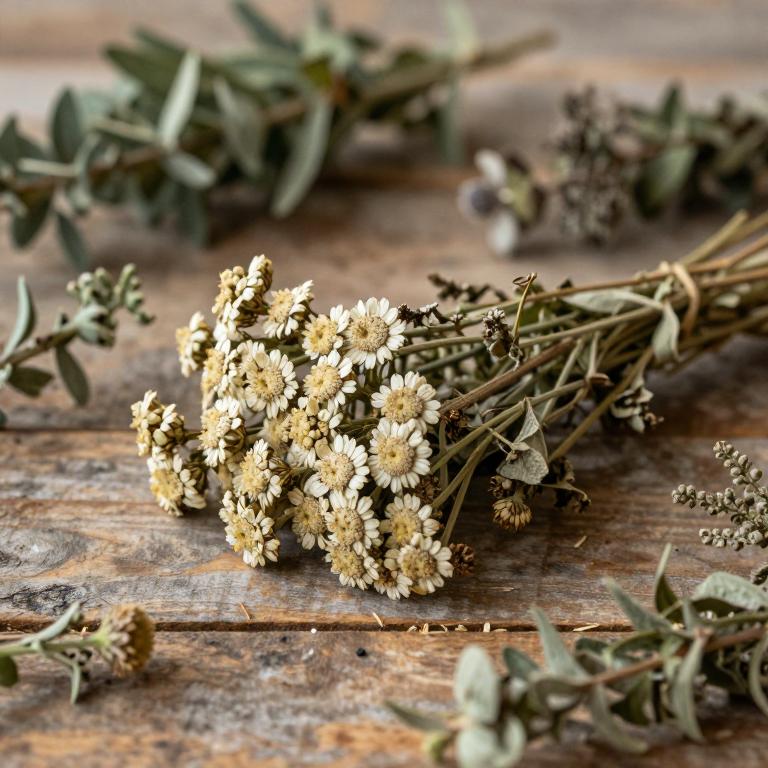
The morphology of Achillea abrotanoides is characterized by its versatile growth habit, as it can be found in aquatic, semiaquatic, or terrestrial environments. The plant typically features a perennial life cycle with a robust root system capable of anchoring it in various substrates, ranging from moist soil to shallow water margins. Its stems are generally erect, often branched, and may exhibit varying degrees of pubescence depending on the specific microhabitat. The leaves are typically divided or pinnatifid, presenting a fine, feathery texture that is characteristic of the genus. The inflorescence consists of numerous small, flower heads arranged in corymb-like clusters, featuring rayless or sparsely rayed capitula with tubular florets. These floral structures are often white or pale in color, providing a delicate appearance against the dense foliage. The plant's ability to transition between aquatic, semiaquatic, and terrestrial states reflects a highly adaptable morphological structure suited for diverse hydrological conditions.
- Aquatic :
- terrestrial
Sources: Global Inventory of Floras and Traits (GIFT)
Chemicals
Achillea abrotanoides has 5 reported phytochemicals identified across 0 scientific publications and several other databases. The most consistently reported chemicals include morin, naringenin, p-Hydroxybenzoic, rosmarinic acid, salicylic.
| Chemical | Supporting sources | Consensus |
|---|---|---|
| morin | 1 supporting sources | ★☆☆☆☆ |
| naringenin | 1 supporting sources | ★☆☆☆☆ |
| p-Hydroxybenzoic | 1 supporting sources | ★☆☆☆☆ |
| rosmarinic acid | 1 supporting sources | ★☆☆☆☆ |
| salicylic | 1 supporting sources | ★☆☆☆☆ |
morin
- Molecules (Basel, Switzerland)
naringenin
- Molecules (Basel, Switzerland)
p-Hydroxybenzoic
- Molecules (Basel, Switzerland)
rosmarinic acid
- Molecules (Basel, Switzerland)
salicylic
- Molecules (Basel, Switzerland)
Activities
Achillea abrotanoides has 2 reported activities identified across 0 scientific publications and several other databases. The most consistently reported activities include Antimicrobial, Antioxidant.
| Activity | Supporting sources | Consensus |
|---|---|---|
| Antimicrobial | 1 supporting sources | ★☆☆☆☆ |
| Antioxidant | 1 supporting sources | ★☆☆☆☆ |
Antimicrobial
- Molecules (Basel, Switzerland)
Antioxidant
- Molecules (Basel, Switzerland)