Acer ginnala
Acer tataricum subsp. ginnala · Accepted scientific name
Scientific literature: Very Sparse (5 studies) · ★☆☆☆☆
Acer ginnala, scientifically known as Acer tataricum subsp. ginnala, is a versatile deciduous shrub prized in traditional medicine. Renowned for its antioxidant properties, its bark and fruits are utilized to support circulatory health and reduce inflammation. This resilient species offers significant therapeutic potential in various holistic healing practices.
- Family
- Sapindaceae
- Native range
- Europe
- Parts used
- Leaf
- Common names
- Amur Maple · Ginnala Maple
- Scientific synonyms
- Acer Ginnala F. Coccineum · Acer Ginnala · 7 more
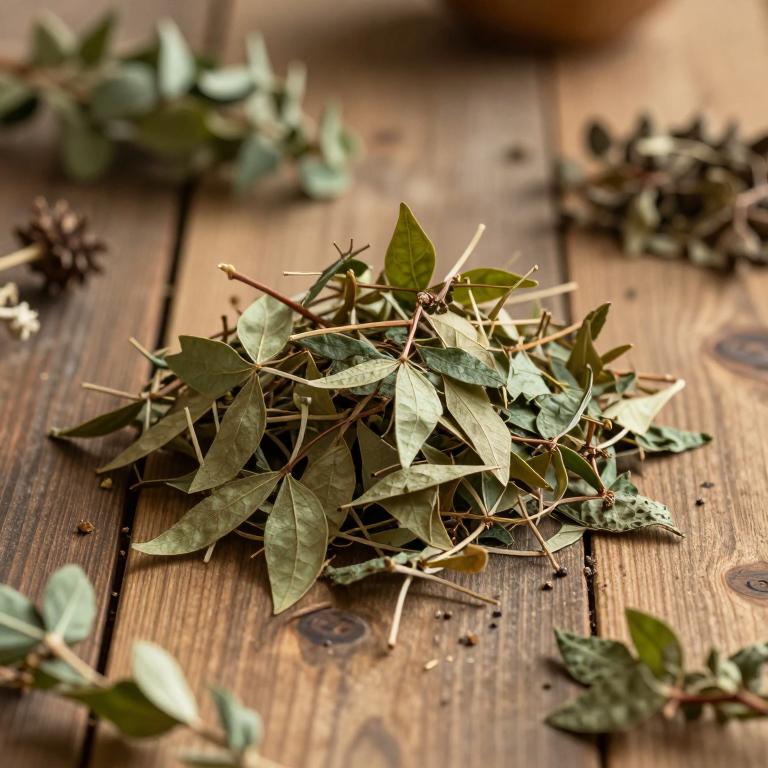
Names and Synonyms
Common Names
- Amur maple
- ginnala maple
Scientific Names
Accepted name
Acer tataricum subsp. ginnalaSynonyms
- Acer ginnala f. coccineum
- Acer ginnala
- Acer acinatum
- Acer ginnala f. aureovariegatum
- Acer ginnala f. angustilobum
- Acer ginnala f. pulverulentum
- Acer tataricum var. ginnala
- Acer tataricum var. laciniatum
- Acer ginnala f. jeonjuana
Regional and Traditional Names
Spanish:
- Arce de Manchuria
German:
- Feuer-Ahorn
- Feuer-Ahorn
- Mongolischer Steppen-Ahorn
French:
- Acer tataricum ginnala
- érable du fleuve Amour
- Érable de l'Amour
Sources: Wikidata, Catalogue of Life
Taxonomical Classification
This plant belongs to the kingdom Plantae and the phylum Streptophyta, falling under the class Equisetopsida and subclass Magnoliidae. Within the order Sapindales, it is classified under the family Sapindaceae and the genus Acer. As a subspecies of Acer tataricum, it represents a specific taxonomic lineage within the maple group.
| Rank | Classification |
|---|---|
| Kingdom | Plantae |
| Phylum | Streptophyta |
| Class | Equisetopsida |
| Subclass | Magnoliidae |
| Order | Sapindales |
| Family | Sapindaceae |
| Genus | Acer |
Sources: The World Checklist of Vascular Plants (WCVP)
Distribution
This plant exhibits a broad distribution across various regions of the European continent. In Middle Europe, it can be found spanning from Germany through Hungary to the area of Czechia-Slovakia. Moving toward the Mediterranean region, its presence extends into Southeastern Europe within Italy. Additionally, the species reaches further north into the Eastern European territories of the Baltic States. Together, these locations highlight the diverse environmental range inhabited by this medicinal species.
| Region | Area |
|---|---|
| Middle Europe | Czechia-Slovakia |
| Middle Europe | Germany |
| Middle Europe | Hungary |
| Southeastern Europe | Italy |
| Eastern Europe | Baltic States |
| Eastern Europe | East European Russia |
| Siberia | Altay |
| Russian Far East | Amur |
| Russian Far East | Khabarovsk |
| Russian Far East | Primorye |
Sources: The World Checklist of Vascular Plants (WCVP)
Plant Parts
Acer tataricum subsp. ginnala has 1 reported plant parts identified across 1 scientific publications and several other databases that are studied for medicinal purposes. The most consistently reported plant part include leaf.
| Plant part | Supporting sources | Consensus |
|---|---|---|
| Leaf | 1 supporting sources | ★☆☆☆☆ |
Leaf
- Scientific reports
Chemicals
Acer tataricum subsp. ginnala has 1 reported phytochemicals identified across 1 scientific publications and several other databases. The most consistently reported chemicals include polyphenols.
| Chemical | Supporting sources | Consensus |
|---|---|---|
| polyphenols | 1 supporting sources | ★☆☆☆☆ |
polyphenols
- Acta pharmaceutica Sinica. B
Activities
Acer tataricum subsp. ginnala has 1 reported activities identified across 1 scientific publications and several other databases. The most consistently reported activities include Chemopreventive.
| Activity | Supporting sources | Consensus |
|---|---|---|
| Chemopreventive | 1 supporting sources | ★☆☆☆☆ |
Chemopreventive
- Scientific reports
Conditions
Acer tataricum subsp. ginnala has 2 reported investigations on conditions identified across 1 scientific publications and several other databases. The most consistently reported conditions include aging, chronic diseases.
| Condition | Supporting sources | Consensus |
|---|---|---|
| Aging | 1 supporting sources | ★☆☆☆☆ |
| Chronic diseases | 1 supporting sources | ★☆☆☆☆ |
Aging
- Acta pharmaceutica Sinica. B
Chronic diseases
- Acta pharmaceutica Sinica. B
Preparations
Acer tataricum subsp. ginnala has 3 reported preparations identified across 1 scientific publications and several other databases. The most consistently reported preparations include Ku-jin tea, ethanol extracts, methanolic extract.
| Preparation | Supporting sources | Consensus |
|---|---|---|
| Ku-jin tea | 1 supporting sources | ★☆☆☆☆ |
| Ethanol extracts | 1 supporting sources | ★☆☆☆☆ |
| Methanolic extract | 1 supporting sources | ★☆☆☆☆ |
Ku-jin tea
- Scientific reports
Ethanol extracts
- Bioscience, biotechnology, and biochemistry
Methanolic extract
- Journal of food science