The Painted Maple
Acer pictum · Accepted scientific name
Scientific literature: Very Sparse (19 studies) · ★☆☆☆☆
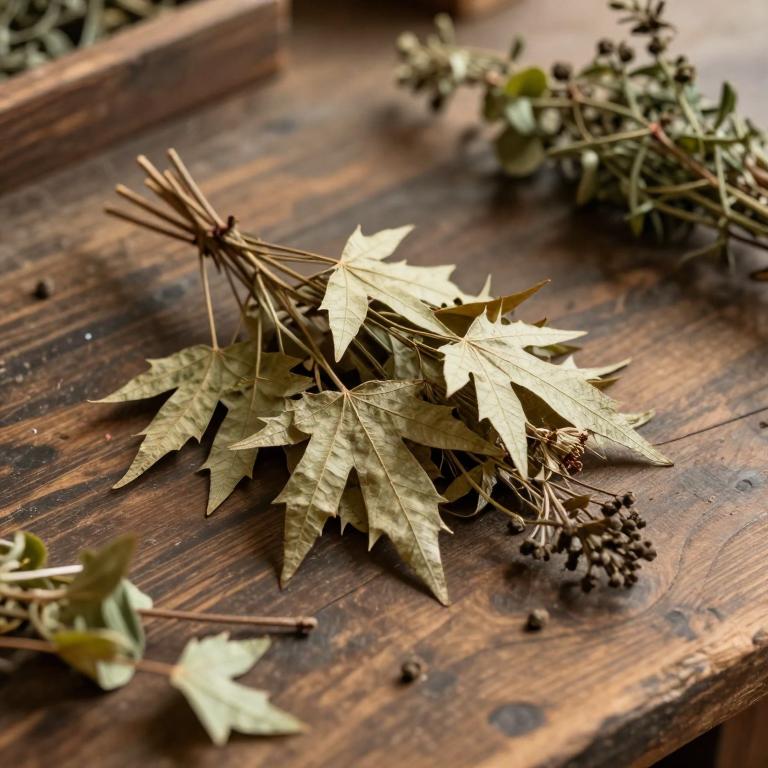
The Painted Maple, scientifically known as Acer pictum, is a remarkable medicinal plant prized for its diverse therapeutic properties. Renowned in traditional healing practices, its various parts are utilized to treat ailments ranging from skin inflammations to digestive issues. This resilient species offers a rich source of bioactive compounds.
Names and Synonyms
Common Names
- The Painted Maple
- painted maple
- Mono Maple
Scientific Names
Accepted name
Acer pictumSynonyms
- Kalopanax pictus
- Acer lobelii subsp. pictum
- Acer platanoides subsp. pictum
Regional and Traditional Names
French:
- Érable coloré
Sources: Wikidata, Catalogue of Life
Taxonomical Classification
This plant belongs to the kingdom Plantae and is classified within the phylum Streptophyta and the class Equisetopsida. It falls under the subclass Magnoliidae and the order Sapindales, specifically within the family Sapindaceae. Finally, its taxonomic identification is completed by the genus Acer.
| Rank | Classification |
|---|---|
| Kingdom | Plantae |
| Phylum | Streptophyta |
| Class | Equisetopsida |
| Subclass | Magnoliidae |
| Order | Sapindales |
| Family | Sapindaceae |
| Genus | Acer |
Sources: The World Checklist of Vascular Plants (WCVP)
Distribution
This plant exhibits a wide geographical range that spans across both Eastern Europe and the Russian Far East. In the western portion of its distribution, it can be found within the Baltic States. Moving eastward, the species is well-established in the Amur region of the Russian Far East. It also inhabits the Khabarovsk and Primorye territories within the same vast eastern expanse. Additionally, the plant's reach extends to the Kuril Islands, completing its diverse distribution pattern.
| Region | Area |
|---|---|
| Eastern Europe | Baltic States |
| Russian Far East | Amur |
| Russian Far East | Khabarovsk |
| Russian Far East | Kuril Is. |
| Russian Far East | Primorye |
| Russian Far East | Sakhalin |
| China | China South-Central |
| China | Inner Mongolia |
| China | Manchuria |
| China | China North-Central |
Sources: The World Checklist of Vascular Plants (WCVP)
Botanical Identification
Ecology
The ecology of Acer pictum is primarily defined by its preference for forest environments, where it integrates into the complex structural layers of woodland ecosystems. Within these forested habitats, the species thrives in shaded to semi-shaded conditions, benefiting from the buffered microclimate provided by a dense canopy. The soil composition in these areas, typically rich in organic matter from decaying leaf litter, provides the necessary nutrient cycling and moisture retention required for its development. By occupying specific niches within the forest, Acer pictum contributes to the local biodiversity and plays a role in the stability of the woodland ecosystem through its interactions with soil microbiota and local fauna.
- Habitat :
- forest
Life history
The life history of Acer pictum is characterized by its existence as a perennial organism, allowing it to persist through multiple growing seasons. As a phanerophyte, the plant maintains its photosynthetic organs on elevated branches above the ground level, a structural adaptation that defines its growth habit. Furthermore, it exhibits a deciduous nature, meaning it undergoes a seasonal shedding of its leaves, a process typically synchronized with environmental changes such as temperature shifts or moisture availability.
- Deciduousness :
- deciduous
- Life form :
- phanerophyte
- Lifecycle :
- perennial
Morphology
The morphology of Acer pictum is characterized by a growth form primarily classified as a tree, exhibiting a robust and woody structure. As a terrestrial species, it is neither aquatic nor semiaquatic, nor does it function as an epiphyte, maintaining an independent existence without being a parasite. The plant is self-supporting, lacking any climbing or liana-like tendencies, and it can reach a significant maximum height of approximately 20 m.
- Aquatic :
- terrestrial
- Climber :
- self-supporting
- Epiphyte :
- terrestrial
- Growth form :
- tree
- Parasite :
- independent
- Plant height max:
- 20 m
- Woodiness :
- woody
Physiology
The physiology of Acer pictum is characterized by a C3 photosynthetic pathway, which dictates its carbon fixation processes and metabolic efficiency. Morphologically, the plant features deltoid leaf forms with crenate margins, and it lacks both leaf thorns and leaf spines. The structural integrity and resource allocation of the plant are reflected in its stem specific density (SSD), which has a mean value of 709 mg/cm³. Furthermore, its leaf morphology is further defined by its Specific Leaf Area (SLA) parameters, which exhibit a minimum value of 195.8553271 cm²/g, a maximum value of 374.4419643 cm²/g, and a mean value of 322.86506752 cm²/g, indicating a specific range of leaf thickness and surface area relative to dry mass.
- Leaf form :
- deltoid
- Leaf margin :
- crenate
- Leaf spines :
- no
- Leaf thorns :
- no
- Photosynthetic pathway :
- C3
- Specific Leaf Area (SLA) max:
- 374.4419643 cm²/g
- Specific Leaf Area (SLA) mean:
- 322.86506752 cm²/g
- Specific Leaf Area (SLA) min:
- 195.8553271 cm²/g
- Stem specific density (SSD) mean:
- 709 mg/cm³
Reproduction
The reproduction of Acer pictum is characterized by a specific phenological window and distinct seed morphology. The flowering period is concentrated primarily in May, though the timing can be variable across different environmental conditions. Following pollination, the plant produces seeds that exhibit significant variation in size and weight. The seed mass typically averages approximately 0.03376 g, but individual seeds can range from a minimum of 0.002 g to a maximum of 0.166 g, reflecting a wide spectrum of developmental outcomes within the reproductive cycle.
- Flowering time :
- May
- Seed mass max:
- 0.166 g
- Seed mass mean:
- 0.03376233325 g
- Seed mass min:
- 0.002 g
Sources: Global Inventory of Floras and Traits (GIFT)
Plant Parts
Acer pictum has 2 reported plant parts identified across 3 scientific publications and several other databases that are studied for medicinal purposes. The most consistently reported plant part include stem, leaf.
| Plant part | Supporting sources | Consensus |
|---|---|---|
| Stem | 2 supporting sources | ★☆☆☆☆ |
| Leaf | 1 supporting sources | ★☆☆☆☆ |
Stem
- Archives of pharmacal research
- Planta medica
Leaf
- Plants (Basel, Switzerland)
Chemicals
Acer pictum has 10 reported phytochemicals identified across 3 scientific publications and several other databases. The most consistently reported chemicals include Kalopanaxsaponin A, Hederagenin, Kalopanaxsaponin B, Kalopanaxsaponin H, Kalopanaxsaponin I.
| Chemical | Supporting sources | Consensus |
|---|---|---|
| Kalopanaxsaponin A | 2 supporting sources | ★☆☆☆☆ |
| Hederagenin | 1 supporting sources | ★☆☆☆☆ |
| Kalopanaxsaponin B | 1 supporting sources | ★☆☆☆☆ |
| Kalopanaxsaponin H | 1 supporting sources | ★☆☆☆☆ |
| Kalopanaxsaponin I | 1 supporting sources | ★☆☆☆☆ |
| S- | 1 supporting sources | ★☆☆☆☆ |
| SAPONIN | 1 supporting sources | ★☆☆☆☆ |
| Sapindoside C | 1 supporting sources | ★☆☆☆☆ |
| Saponins | 1 supporting sources | ★☆☆☆☆ |
| na | 1 supporting sources | ★☆☆☆☆ |
Kalopanaxsaponin A
- Archives of pharmacal research
- Planta medica
Hederagenin
- Planta medica
Kalopanaxsaponin B
- Planta medica
Kalopanaxsaponin H
- Planta medica
Kalopanaxsaponin I
- Planta medica
S-
- Plants (Basel, Switzerland)
SAPONIN
- Plants (Basel, Switzerland)
Sapindoside C
- Archives of pharmacal research
Saponins
- Archives of pharmacal research
na
- Plants (Basel, Switzerland)
Activities
Acer pictum has 3 reported activities identified across 3 scientific publications and several other databases. The most consistently reported activities include Antimutagenic, Antioxidant, Cytotoxic.
| Activity | Supporting sources | Consensus |
|---|---|---|
| Antimutagenic | 1 supporting sources | ★☆☆☆☆ |
| Antioxidant | 1 supporting sources | ★☆☆☆☆ |
| Cytotoxic | 1 supporting sources | ★☆☆☆☆ |
Antimutagenic
- Planta medica
Antioxidant
- Archives of pharmacal research
Cytotoxic
- Planta medica
Preparations
Acer pictum has 6 reported preparations identified across 3 scientific publications and several other databases. The most consistently reported preparations include stem bark, EtOAc extracts, SMCB-II, methanol extract, standardized extract (KBH-JP-040).
| Preparation | Supporting sources | Consensus |
|---|---|---|
| Stem bark | 2 supporting sources | ★☆☆☆☆ |
| Etoac extracts | 1 supporting sources | ★☆☆☆☆ |
| Smcb-ii | 1 supporting sources | ★☆☆☆☆ |
| Methanol extract | 1 supporting sources | ★☆☆☆☆ |
| Standardized extract (kbh-jp-040) | 1 supporting sources | ★☆☆☆☆ |
| Water extract | 1 supporting sources | ★☆☆☆☆ |
Stem bark
- Archives of pharmacal research
- Planta medica
Etoac extracts
- Journal of ethnopharmacology
Smcb-ii
- Food science and biotechnology
Methanol extract
- Archives of pharmacal research
Standardized extract (kbh-jp-040)
- Nutrients
Water extract
- Journal of ethnopharmacology