Manchurian maple
Acer mandshuricum · Accepted scientific name
Scientific literature: Very Sparse (12 studies) · ★☆☆☆☆
Manchurian maple, scientifically known as Acer mandshuricum, is a deciduous tree native to East Asia. Valued in traditional medicine, its bark and leaves possess significant therapeutic properties, including anti-inflammatory and antioxidant effects. This versatile plant offers promising potential for treating various ailments through its unique bioactive chemical compounds.
- Family
- Sapindaceae
- Native range
- Asia-Temperate
- Parts used
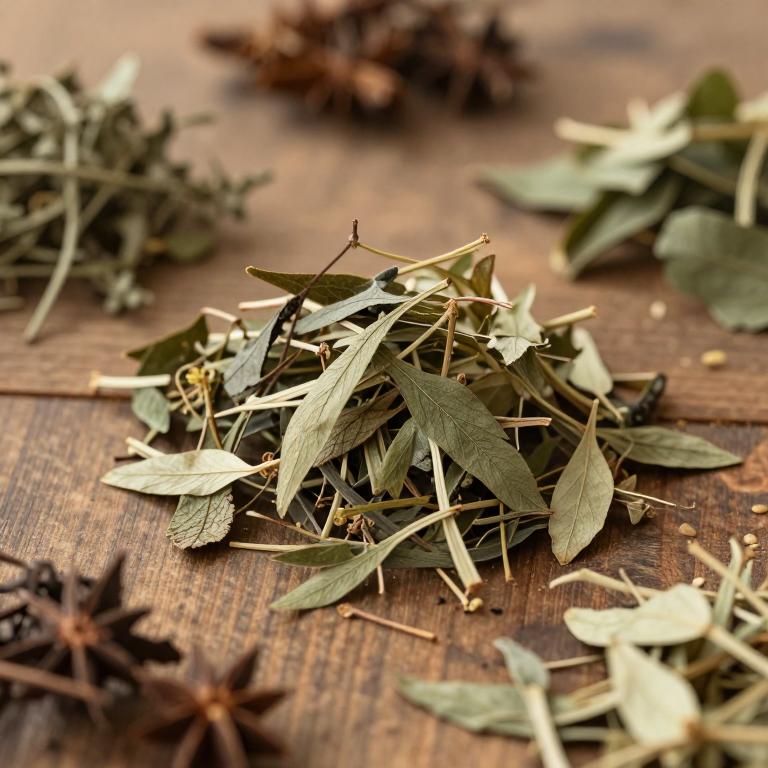
- Leaf · Stem
- Common names
- Manchurian Maple
- Scientific synonyms
- Crula Mandshurica · Negundo Mandshuricum · 2 more
Names and Synonyms
Common Names
- Manchurian maple
Scientific Names
Accepted name
Acer mandshuricumSynonyms
- Crula mandshurica
- Negundo mandshuricum
- Acer kansuense
- Acer mandshuricum subsp. kansuense
Regional and Traditional Names
Spanish:
- Acer mandshuricum subsp. mandshruicum
- Arce manchuriano
German:
- Mandschurischer Ahorn
- Mandschurischer Ahorn
French:
- Acer mandshuricum subsp. mandshruicum
Sources: Wikidata, Catalogue of Life
Taxonomical Classification
This plant belongs to the kingdom Plantae and is classified within the phylum Streptophyta and the class Equisetopsida. As a member of the subclass Magnoliidae and the order Sapindales, it falls under the family Sapindaceae. Finally, its taxonomic identity is defined by its placement within the genus Acer.
| Rank | Classification |
|---|---|
| Kingdom | Plantae |
| Phylum | Streptophyta |
| Class | Equisetopsida |
| Subclass | Magnoliidae |
| Order | Sapindales |
| Family | Sapindaceae |
| Genus | Acer |
Sources: The World Checklist of Vascular Plants (WCVP)
Distribution
This plant is primarily found throughout specific regions of Eastern Asia. In the Russian Far East, its presence is specifically noted within the Primorye territory. Its range extends significantly into China, where it inhabits the Manchuria region. Additionally, the species can be located within China North-Central. Finally, the geographical distribution of this medicinal plant includes the Korean Peninsula.
| Region | Area |
|---|---|
| Russian Far East | Primorye |
| China | Manchuria |
| China | China North-Central |
| Eastern Asia | Korea |
Sources: The World Checklist of Vascular Plants (WCVP)
Botanical Identification
Ecology
The ecology of Acer mandshuricum is characterized by its preference for forest environments and forest edges, where it thrives within diverse woodland structures. It typically inhabits specific altitudinal zones, occupying an elevational range that begins at 500 m AMSL and extends up to a maximum of 1000 m AMSL. Within this vertical distribution, the species maintains a mean elevation of approximately 750 m AMSL, suggesting a specialized niche within temperate or montane forest ecosystems.
- Elevational range max:
- 1000 m AMSL
- Elevational range mean:
- 750 m AMSL
- Elevational range min:
- 500 m AMSL
- Habitat :
- forest, forest edges
Life history
The life history of Acer mandshuricum is characterized by its nature as a perennial species, meaning it persists through multiple growing seasons and lives for many years. As part of its seasonal rhythm, the plant exhibits a deciduous growth habit, undergoing a distinct period of dormancy where it sheds its foliage annually before regrowing in the subsequent spring.
- Deciduousness :
- deciduous
- Lifecycle :
- perennial
Morphology
The morphology of Acer mandshuricum is characterized by a woody growth form, specifically categorized as a tree. As a self-supporting plant, it does not function as a climber or a liana, nor does it exhibit parasitic or epiphytic behavior, maintaining an independent and terrestrial existence. The structural stature of the species is substantial, with a plant height that typically ranges from a minimum of 20 m to a maximum of 30 m, resulting in an average height of approximately 25 m.
- Aquatic :
- terrestrial
- Climber :
- self-supporting
- Epiphyte :
- terrestrial
- Growth form :
- tree
- Parasite :
- independent
- Plant height max:
- 30 m
- Plant height mean:
- 25 m
- Plant height min:
- 20 m
- Woodiness :
- woody
Physiology
The physiology of Acer mandshuricum is characterized by a C3 photosynthetic pathway, which governs its carbon fixation processes and energy conversion efficiency. Its vegetative structure is defined by lanceolate leaves that feature entirely smooth margins, notably lacking any leaf thorns or spines. The leaf dimensions vary according to developmental stages, with a minimum length of 5 cm and a maximum reaching 10 cm, maintaining a mean length of 7.5 cm. The width of these leaves ranges from a minimum of 1.5 cm to a maximum of 3 cm. Supporting the plant's structural integrity and hydraulic conductivity, the stem exhibits a mean specific density (SSD) of 680 mg/cm³.
- Leaf form :
- lanceolate
- Leaf length max:
- 10 cm
- Leaf length mean:
- 7.5 cm
- Leaf length min:
- 5 cm
- Leaf margin :
- entire
- Leaf spines :
- no
- Leaf thorns :
- no
- Leaf width max:
- 3 cm
- Leaf width min:
- 1.5 cm
- Photosynthetic pathway :
- C3
- Stem specific density (SSD) mean:
- 680 mg/cm³
Reproduction
The reproduction of Acer mandshuricum is characterized by a specific phenological cycle centered around its flowering period. The flowering process is relatively concentrated within a brief window, with the flowering start occurring in June. This reproductive phase concludes within the same month, as the flowering end is also recorded in June. This synchronized timing indicates a highly seasonal reproductive strategy, where the emergence and maturation of flowers are tightly regulated by the environmental conditions of the early summer period.
- Flowering time :
- Jun
Sources: Global Inventory of Floras and Traits (GIFT)
Plant Parts
Acer mandshuricum has 2 reported plant parts identified across 2 scientific publications and several other databases that are studied for medicinal purposes. The most consistently reported plant part include leaf, stem.
| Plant part | Supporting sources | Consensus |
|---|---|---|
| Leaf | 1 supporting sources | ★☆☆☆☆ |
| Stem | 1 supporting sources | ★☆☆☆☆ |
Leaf
- Bioorganic & medicinal chemistry letters
Stem
- Bioorganic & medicinal chemistry letters
Chemicals
Acer mandshuricum has 5 reported phytochemicals identified across 2 scientific publications and several other databases. The most consistently reported chemicals include Aceranol acetate, Friedelin, Glutinol Acetate, beta-Amyrin acetate, glutinol.
| Chemical | Supporting sources | Consensus |
|---|---|---|
| Aceranol acetate | 1 supporting sources | ★☆☆☆☆ |
| Friedelin | 1 supporting sources | ★☆☆☆☆ |
| Glutinol Acetate | 1 supporting sources | ★☆☆☆☆ |
| beta-Amyrin acetate | 1 supporting sources | ★☆☆☆☆ |
| glutinol | 1 supporting sources | ★☆☆☆☆ |
Aceranol acetate
- Bioorganic & medicinal chemistry letters
Friedelin
- Bioorganic & medicinal chemistry letters
Glutinol Acetate
- Bioorganic & medicinal chemistry letters
beta-Amyrin acetate
- Bioorganic & medicinal chemistry letters
glutinol
- Bioorganic & medicinal chemistry letters