Bear's Breeches
Acanthus polystachyus · Accepted scientific name
Scientific literature: Very Sparse (6 studies) · ★☆☆☆☆
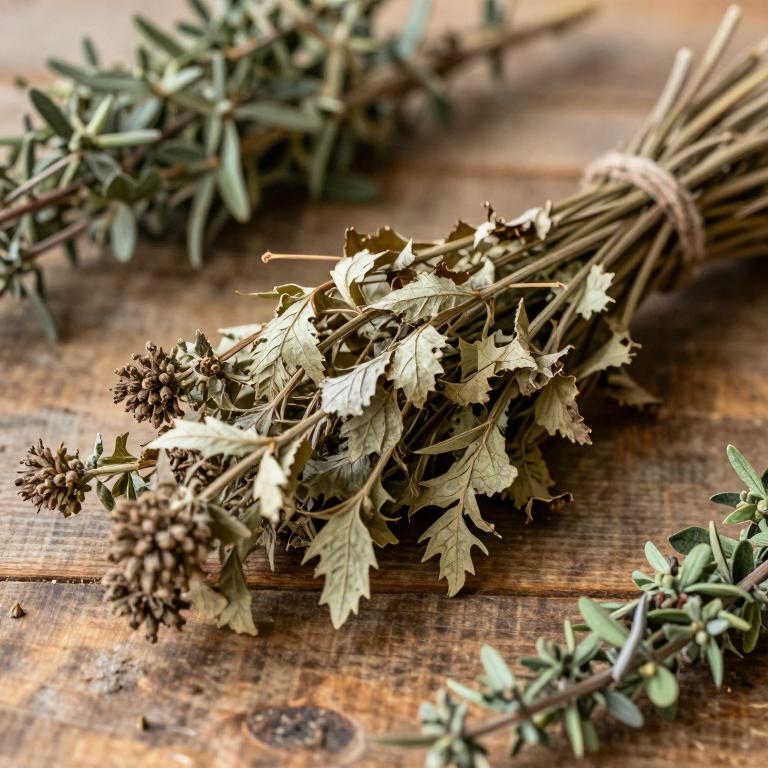
Bear's Breeches, scientifically known as Acanthus polystachyus, is a striking perennial prized for its architectural foliage and spiked blooms. Beyond its ornamental appeal, this plant holds significant traditional value in herbal medicine, long utilized in various cultures for its purported anti-inflammatory, diuretic, and restorative therapeutic properties.
Names and Synonyms
Common Names
- Bear's Breeches
- Prickly Acanthus
- Prickly Bear's Breeches
- Tree Bear's Breeches
Scientific Names
Accepted name
Acanthus polystachyusSynonyms
- Dilivaria polystachya
- Acanthus arboreus var. pubescens
- Zonablephis polystachyus
- Acanthus arboreus f. albiflorus
- Acanthus arboreus var. pubescens
- Acanthus flamandii
- Acanthus ugandensis
- Acanthus pubescens
Sources: Wikidata, Catalogue of Life
Taxonomical Classification
This plant, Acanthus polystachyus, belongs to the kingdom Plantae and the phylum Streptophyta. It is classified under the class Equisetopsida and the subclass Magnoliidae within the order Lamiales. Furthermore, it is a member of the family Acanthaceae and falls under the genus Acanthus.
| Rank | Classification |
|---|---|
| Kingdom | Plantae |
| Phylum | Streptophyta |
| Class | Equisetopsida |
| Subclass | Magnoliidae |
| Order | Lamiales |
| Family | Acanthaceae |
| Genus | Acanthus |
Sources: The World Checklist of Vascular Plants (WCVP)
Distribution
This plant exhibits a specific geographical distribution concentrated within the tropical regions of the African continent. In West-Central Tropical Africa, it can be found inhabiting the landscapes of Burundi, Rwanda, and the Democratic Republic of the Congo. Moving toward the northeast, its presence extends into the diverse environments of Ethiopia. Additionally, the species is documented to grow within the territories of both Sudan and South Sudan. Collectively, these locations highlight a distribution pattern that spans both West-Central and Northeast Tropical Africa.
| Region | Area |
|---|---|
| West-Central Tropical Africa | Burundi |
| West-Central Tropical Africa | Rwanda |
| West-Central Tropical Africa | DR Congo |
| Northeast Tropical Africa | Ethiopia |
| Northeast Tropical Africa | Sudan-South Sudan |
| East Tropical Africa | Kenya |
| East Tropical Africa | Tanzania |
| East Tropical Africa | Uganda |
Sources: The World Checklist of Vascular Plants (WCVP)
Botanical Identification
Ecology
The ecology of Acanthus polystachyuus is characterized by its adaptation to specific montane and sub-montane environments, where it thrives within diverse forest ecosystems. This species is distributed across varying altitudinal gradients, showing a notable capacity to inhabit diverse topographical niches. Its environmental tolerance allows it to persist within an elevational range that extends up to a maximum of 2500 m AMSL (meters above sea level). Within these habitats, the plant typically interacts with moist, shaded understories or forest edges, where soil composition and moisture availability play critical roles in its survival and reproductive success. The presence of this species is often indicative of specific microclimatic conditions found within these high-altitude vegetation zones.
- Elevational range max:
- 2500 m AMSL
Life history
The life history of Acanthus polystachyus is characterized by its status as a perennial plant, allowing it to persist through multiple growing seasons. In terms of its structural classification and growth habit, it is categorized as a phanerophyte, specifically exhibiting traits consistent with both phanerophyte and nanophanerophyte life forms, which indicates that its perennating buds are located on aerial parts of the plant above the soil surface.
- Life form :
- phanerophyte
- Lifecycle :
- perennial
Morphology
The morphology of Acanthus polystachyus is characterized by its growth form as a shrubby herb, exhibiting a non-woody structure. It functions as an independent organism, neither acting as a parasite nor as an epiphyte, maintaining a strictly terrestrial existence. In terms of stature, the plant is self-supporting rather than acting as a liana or vine, with a height that typically ranges from a minimum of 1 meter to a maximum of 3 meters, though it can reach an average height of approximately 5 meters under certain conditions.
- Aquatic :
- terrestrial
- Climber :
- self-supporting
- Epiphyte :
- terrestrial
- Growth form :
- herb
- Growth form :
- shrub
- Parasite :
- independent
- Plant height max:
- 3 m
- Plant height mean:
- 5 m
- Plant height min:
- 1 m
- Woodiness :
- non-woody
Reproduction
The reproduction of Acanthus polystachyus is characterized by specific seed morphology and specialized dispersal mechanisms. The plant produces seeds with a highly consistent mass, showing no variation between the minimum, mean, and maximum recorded values, which are all documented at 0.04518 g. In terms of its dispersal strategy, the species primarily exhibits an autochorous syndrome, meaning it relies on mechanisms for self-dispersal to spread its seeds. This dispersal method is categorized within a broader ecological context that includes potential involvement in anemochorous, zoochorous, hydrochorous, and unspecialized modes, though the primary driver remains its autochorous nature.
- Dispersal syndrome :
- autochorous
- Seed mass mean:
- 0.04518 g
Sources: Global Inventory of Floras and Traits (GIFT)
Plant Parts
Acanthus polystachyus has 2 reported plant parts identified across 2 scientific publications and several other databases that are studied for medicinal purposes. The most consistently reported plant part include leaf, root.
| Plant part | Supporting sources | Consensus |
|---|---|---|
| Leaf | 1 supporting sources | ★☆☆☆☆ |
| Root | 1 supporting sources | ★☆☆☆☆ |
Leaf
- Evidence-based complementary and alternative medicine : eCAM
Root
- Clinical pharmacology : advances and applications
Activities
Acanthus polystachyus has 2 reported activities identified across 2 scientific publications and several other databases. The most consistently reported activities include Antihyperglycemic, Hypoglycemic.
| Activity | Supporting sources | Consensus |
|---|---|---|
| Antihyperglycemic | 1 supporting sources | ★☆☆☆☆ |
| Hypoglycemic | 1 supporting sources | ★☆☆☆☆ |
Antihyperglycemic
- Clinical pharmacology : advances and applications
Hypoglycemic
- Clinical pharmacology : advances and applications
Conditions
Acanthus polystachyus has 2 reported investigations on conditions identified across 2 scientific publications and several other databases. The most consistently reported conditions include diabetes mellitus, wounds.
| Condition | Supporting sources | Consensus |
|---|---|---|
| Diabetes mellitus | 1 supporting sources | ★☆☆☆☆ |
| Wounds | 1 supporting sources | ★☆☆☆☆ |
Diabetes mellitus
- Clinical pharmacology : advances and applications
Wounds
- Evidence-based complementary and alternative medicine : eCAM
Preparations
Acanthus polystachyus has 3 reported preparations identified across 2 scientific publications and several other databases. The most consistently reported preparations include 80% Methanol Root Extract, crude extracts, root extract.
| Preparation | Supporting sources | Consensus |
|---|---|---|
| 80% methanol root extract | 1 supporting sources | ★☆☆☆☆ |
| Crude extracts | 1 supporting sources | ★☆☆☆☆ |
| Root extract | 1 supporting sources | ★☆☆☆☆ |
80% methanol root extract
- Clinical pharmacology : advances and applications
Crude extracts
- Clinical pharmacology : advances and applications
Root extract
- Clinical pharmacology : advances and applications