bristly starburr
Acanthospermum hispidum · Accepted scientific name
Scientific literature: Very Sparse (37 studies) · ★☆☆☆☆
Bristly starburr, scientifically known as Acanthospermum hispidum, is a resilient herbaceous plant widely recognized for its hooked, prickly seeds. Primarily found in tropical regions, this botanical species is valued in traditional medicine for its diverse therapeutic properties, including its potential uses in treating inflammation, skin ailments, and digestive issues.
- Family
- Asteraceae
- Native range
- Europe
- Parts used
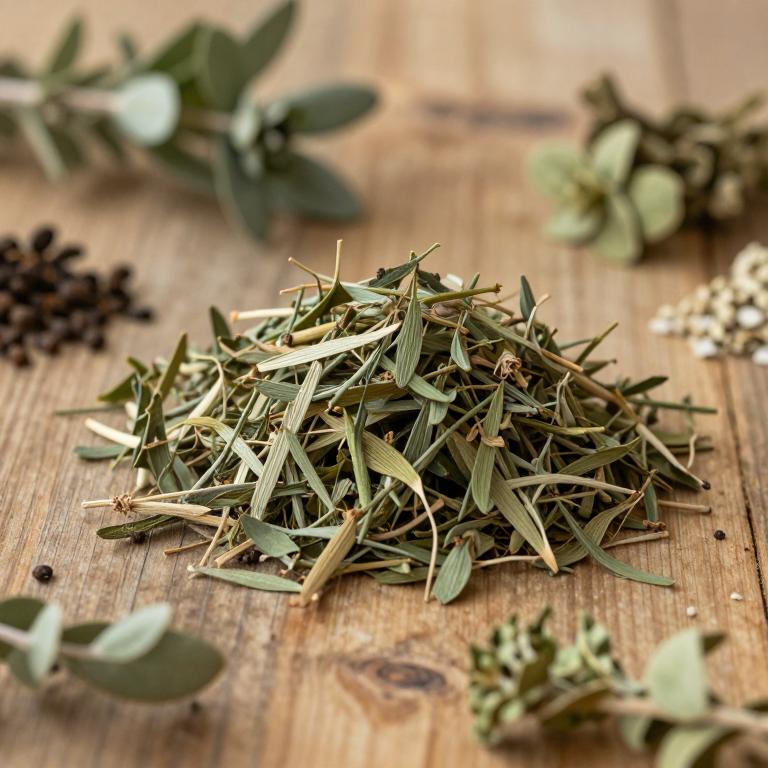
- Leaf
- Common names
- Bristly Starburr · Hispid Starburr · 5 more
- Scientific synonyms
- Acanthospermum Humile Var. Hispidum
Names and Synonyms
Common Names
- bristly starburr
- hispid starburr
- bristly starbur
- goat's-head
- starbur
- Bindii
- Upright Star Bur
Scientific Names
Accepted name
Acanthospermum hispidumSynonyms
- Acanthospermum humile var. hispidum
Regional and Traditional Names
Spanish:
- corona de la reina
- cuagrilla
French:
- herbe tricorne
- herbe-savane
Sources: Wikidata, Catalogue of Life
Taxonomical Classification
This plant belongs to the kingdom Plantae and is classified under the phylum Streptophyta and class Equisetopsida. Within the subclass Magnoliidae, it is further organized into the order Asterales and the family Asteraceae. Finally, its taxonomic identity is defined by the genus Acanthospermum.
| Rank | Classification |
|---|---|
| Kingdom | Plantae |
| Phylum | Streptophyta |
| Class | Equisetopsida |
| Subclass | Magnoliidae |
| Order | Asterales |
| Family | Asteraceae |
| Genus | Acanthospermum |
Sources: The World Checklist of Vascular Plants (WCVP)
Distribution
This plant exhibits a widespread geographical distribution that spans across multiple continents and climate zones. In Middle Europe, its presence can be documented in Belgium. Moving toward the African continent, it is found in Egypt within Northern Africa. Its range extends to the Macaronesian islands, specifically reaching Cape Verde. Finally, the species is established in West Tropical Africa, occurring in both Benin and Burkina.
| Region | Area |
|---|---|
| Middle Europe | Belgium |
| Northern Africa | Egypt |
| Macaronesia | Cape Verde |
| West Tropical Africa | Benin |
| West Tropical Africa | Burkina |
| West Tropical Africa | Guinea-Bissau |
| West Tropical Africa | Guinea |
| West Tropical Africa | Ivory Coast |
| West Tropical Africa | Liberia |
| West Tropical Africa | Mali |
Sources: The World Checklist of Vascular Plants (WCVP)
Botanical Identification
Ecology
The ecology of Acanthospermum hispidum is characterized by its significant adaptability to diverse environmental conditions, spanning a broad vertical distribution. This species can be found across a wide elevational range, starting from sea level at 0 m AMSL and extending up to a maximum altitude of 2500 m AMSL. Its habitat preference is notably linked to anthropogenic environments (Área Antrópica), where it often thrives in disturbed landscapes, roadsides, and areas modified by human activity.
- Elevational range max:
- 2500 m AMSL
- Elevational range min:
- 0 m AMSL
- Habitat :
- Área Antrópica
Genetics
The genetics of Acanthospermum hispidum are characterized by a complex chromosomal architecture and varying levels of genomic composition. The species exhibits significant chromosomal polymorphism, with documented chromosome numbers including 22, 40, and 48. Furthermore, the plant typically maintains a ploidy level of 2, indicating a diploid state within its genetic structure.
- Chromosome number :
- 22, 40, 48
- Ploidy :
- 2
Life history
The life history of Acanthospermum hispidum is characterized by its classification as an annual plant, meaning it completes its entire developmental cycle—from germination to seed production—within a single growing season. As a therophyte, its life strategy focuses on rapid growth and the production of a large number of seeds to ensure survival, typically retreating into a dormant seed stage during unfavorable environmental conditions. This life form dictates that the plant survives the non-growing season solely through its seeds, which remain in the soil until the onset of favorable moisture and temperature conditions. Consequently, its presence in an ecosystem is highly dependent on seasonal cycles and successful seed dispersal.
- Life form :
- therophyte
- Lifecycle :
- annual
Morphology
The morphology of Acanthospermum hispidum is characterized by its growth form as a non-woody herb and forb. This terrestrial plant is self-supporting and does not function as a climber or an epiphyte, nor does it exhibit parasitic behavior, maintaining an independent lifestyle. The shoots exhibit an erect orientation, supporting a stature that varies depending on environmental conditions; the plant typically reaches a minimum height of 0.2 m, with a mean height of approximately 0.5 m, and can attain a maximum height of up to 1.3 m.
- Aquatic :
- terrestrial
- Climber :
- self-supporting
- Epiphyte :
- terrestrial
- Growth form :
- herb
- Growth form :
- forb
- Parasite :
- independent
- Plant height max:
- 1.3 m
- Plant height mean:
- 0.5 m
- Plant height min:
- 0.2 m
- Shoot orientation :
- erect
- Woodiness :
- non-woody
Physiology
The physiology of Acanthospermum hispidum is characterized by a C3 photosynthetic pathway, which dictates its carbon fixation processes and metabolic efficiency under standard environmental conditions. Morphologically, its foliar structures exhibit significant variability in dimensions, with leaf lengths ranging from a minimum of 2 cm to a maximum of 12.5 cm, while the leaf width fluctuates between 1 cm and 7 cm. Furthermore, this species does not function as a nitrogen fixer, meaning it lacks the symbiotic relationship with nitrogen-fixing bacteria necessary to convert atmospheric nitrogen into a usable form, relying instead on available soil nutrients for its nutritional requirements.
- Leaf length max:
- 12.5 cm
- Leaf length min:
- 2 cm
- Leaf width max:
- 7 cm
- Leaf width min:
- 1 cm
- Nitrogen fixer :
- no
- Photosynthetic pathway :
- C3
Reproduction
The reproduction of Acanthospermum hispidum is characterized by the production of specialized fruits classified as achenes. These fruits are indehiscent, meaning they do not spontaneously split open at maturity to release their contents. The dimensions of the fruit vary, with lengths ranging from a minimum of 0.4 cm to a maximum of 0.7 cm. Within these fruits, the seeds exhibit a relatively consistent mass; the individual seed mass typically averages approximately 0.007405 g, with recorded values fluctuating between a minimum of 0.00725 g and a maximum of 0.00756 g.
- Dehiscence :
- indehiscent
- Fruit length max:
- 0.7 cm
- Fruit length min:
- 0.4 cm
- Fruit type :
- achene
- Seed mass max:
- 0.00756 g
- Seed mass mean:
- 0.007405 g
- Seed mass min:
- 0.00725 g
Sources: Global Inventory of Floras and Traits (GIFT)
Plant Parts
Acanthospermum hispidum has 1 reported plant parts identified across 2 scientific publications and several other databases that are studied for medicinal purposes. The most consistently reported plant part include leaf.
| Plant part | Supporting sources | Consensus |
|---|---|---|
| Leaf | 2 supporting sources | ★☆☆☆☆ |
Leaf
- International journal of immunopharmacology
- Antiviral research
Chemicals
Acanthospermum hispidum has 8 reported phytochemicals identified across 2 scientific publications and several other databases. The most consistently reported chemicals include EO, Flavonoids, Hydrolyzable Tannins, Steroids, Tannins.
| Chemical | Supporting sources | Consensus |
|---|---|---|
| EO | 1 supporting sources | ★☆☆☆☆ |
| Flavonoids | 1 supporting sources | ★☆☆☆☆ |
| Hydrolyzable Tannins | 1 supporting sources | ★☆☆☆☆ |
| Steroids | 1 supporting sources | ★☆☆☆☆ |
| Tannins | 1 supporting sources | ★☆☆☆☆ |
| Terpenes | 1 supporting sources | ★☆☆☆☆ |
| quercetin glucoside | 1 supporting sources | ★☆☆☆☆ |
| tridecapentaynene | 1 supporting sources | ★☆☆☆☆ |
EO
- Dr. Duke
Flavonoids
- Mini reviews in medicinal chemistry
Hydrolyzable Tannins
- Mini reviews in medicinal chemistry
Steroids
- Mini reviews in medicinal chemistry
Tannins
- Mini reviews in medicinal chemistry
Terpenes
- Mini reviews in medicinal chemistry
quercetin glucoside
- Journal of ethnopharmacology
tridecapentaynene
- Dr. Duke
Activities
Acanthospermum hispidum has 9 reported activities identified across 2 scientific publications and several other databases. The most consistently reported activities include Antiparasitic, Anticholinesterase, Antimalarial, Antioxidant, Antiplasmodial.
| Activity | Supporting sources | Consensus |
|---|---|---|
| Antiparasitic | 2 supporting sources | ★☆☆☆☆ |
| Anticholinesterase | 1 supporting sources | ★☆☆☆☆ |
| Antimalarial | 1 supporting sources | ★☆☆☆☆ |
| Antioxidant | 1 supporting sources | ★☆☆☆☆ |
| Antiplasmodial | 1 supporting sources | ★☆☆☆☆ |
| Diuretic | 1 supporting sources | ★☆☆☆☆ |
| Hepatoprotective | 1 supporting sources | ★☆☆☆☆ |
| Hypoglycemic | 1 supporting sources | ★☆☆☆☆ |
| Hypotensive | 1 supporting sources | ★☆☆☆☆ |
Antiparasitic
- Mini reviews in medicinal chemistry
- Journal of ethnopharmacology
Anticholinesterase
- Mini reviews in medicinal chemistry
Antimalarial
- Journal of ethnopharmacology
Antioxidant
- Mini reviews in medicinal chemistry
Antiplasmodial
- Journal of ethnopharmacology
Diuretic
- Journal of ethnopharmacology
Hepatoprotective
- Mini reviews in medicinal chemistry
Hypoglycemic
- Mini reviews in medicinal chemistry
Hypotensive
- Journal of ethnopharmacology
Conditions
Acanthospermum hispidum has 10 reported investigations on conditions identified across 2 scientific publications and several other databases. The most consistently reported conditions include Plasmodium falciparum, malaria, Leishmania mexicana mexicana, Trypanosoma brucei brucei, antimalarial.
| Condition | Supporting sources | Consensus |
|---|---|---|
| Plasmodium falciparum | 2 supporting sources | ★☆☆☆☆ |
| Malaria | 2 supporting sources | ★☆☆☆☆ |
| Leishmania mexicana mexicana | 1 supporting sources | ★☆☆☆☆ |
| Trypanosoma brucei brucei | 1 supporting sources | ★☆☆☆☆ |
| Antimalarial | 1 supporting sources | ★☆☆☆☆ |
| Bovine herpesvirus 1 | 1 supporting sources | ★☆☆☆☆ |
| Cancer | 1 supporting sources | ★☆☆☆☆ |
| Diuretic | 1 supporting sources | ★☆☆☆☆ |
| Gastrointestinal disorders | 1 supporting sources | ★☆☆☆☆ |
| Infectious diseases | 1 supporting sources | ★☆☆☆☆ |
Plasmodium falciparum
- Journal of ethnopharmacology
- African journal of traditional, complementary, and alternative medicines : AJTCAM
Malaria
- Pharmacognosy research
- Journal of ethnopharmacology
Leishmania mexicana mexicana
- Journal of ethnopharmacology
Trypanosoma brucei brucei
- Journal of ethnopharmacology
Antimalarial
- African journal of traditional, complementary, and alternative medicines : AJTCAM
Bovine herpesvirus 1
- Antiviral research
Cancer
- Journal of ethnopharmacology
Diuretic
- Journal of ethnopharmacology
Gastrointestinal disorders
- Mini reviews in medicinal chemistry
Infectious diseases
- International journal of immunopharmacology
Preparations
Acanthospermum hispidum has 5 reported preparations identified across 2 scientific publications and several other databases. The most consistently reported preparations include Methanolic extract, crude acidic water extract, extract from the leaves of Acanthospermum hispidum, extract prepared from the leaves of Acanthospermum hispidum, methanol extracts.
| Preparation | Supporting sources | Consensus |
|---|---|---|
| Methanolic extract | 1 supporting sources | ★☆☆☆☆ |
| Crude acidic water extract | 1 supporting sources | ★☆☆☆☆ |
| Extract from the leaves of acanthospermum hispidum | 1 supporting sources | ★☆☆☆☆ |
| Extract prepared from the leaves of acanthospermum hispidum | 1 supporting sources | ★☆☆☆☆ |
| Methanol extracts | 1 supporting sources | ★☆☆☆☆ |
Methanolic extract
- African journal of traditional, complementary, and alternative medicines : AJTCAM
Crude acidic water extract
- Journal of ethnopharmacology
Extract from the leaves of acanthospermum hispidum
- International journal of immunopharmacology
Extract prepared from the leaves of acanthospermum hispidum
- Antiviral research
Methanol extracts
- BMC complementary and alternative medicine