copperleaf
Acalypha · Accepted scientific name
Scientific literature: Very Sparse (16 studies) · ★☆☆☆☆
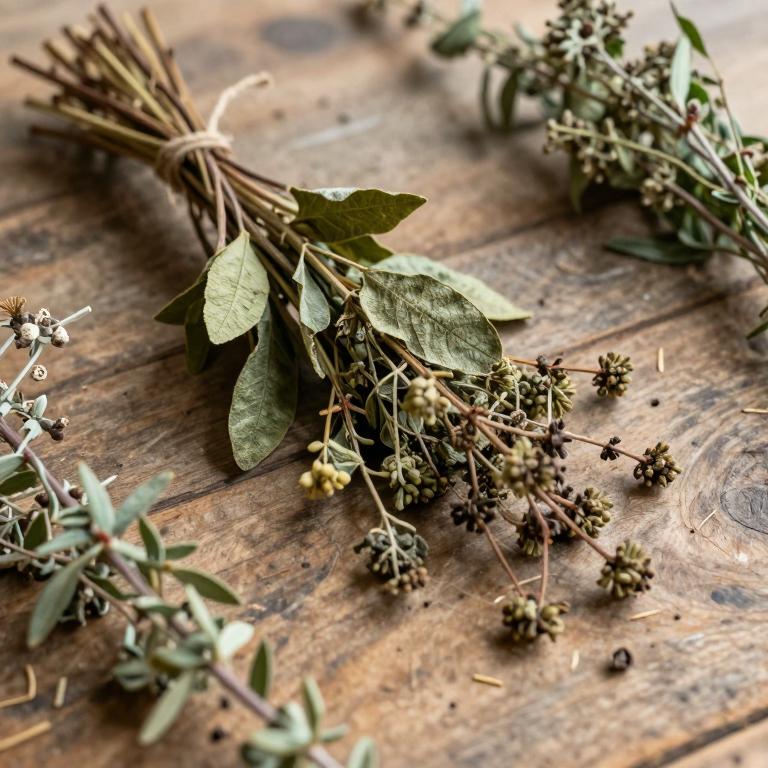
Copperleaf, scientifically known as Acalypha, is a versatile genus of flowering plants valued for its medicinal and ornamental properties. Found across tropical regions, various species are utilized in traditional medicine to treat skin ailments, inflammation, and digestive issues, offering a rich source of bioactive compounds for therapeutic use.
Names and Synonyms
Common Names
- copperleaf
- three-seeded mercury
- Brooms and Brushes
- copperleafs
- three-seeded mercuries
Scientific Names
Accepted name
AcalyphaSynonyms
- Gymnalypha
- Acalyphopsis
- Corythea
- Mercuriastrum
- Linostachys
- Cupameni
- Odonteilema
- Calyptrospatha
- Cupamenis
Regional and Traditional Names
Spanish:
- Linostachys
- Ricinocarpus
- Acalyphes
- Odonteilema
- Mercuriastrum
- Gymnalypha
- Corythea
- Calyptrospatha
- Acalyphinae
- Acalyphopsis
- Usteria
- Cupamenis
- Caturus
- Paracelsea
- Cupameni
- Calytrospatha
- Hojas de cobre
German:
- Nesselblatt
French:
- Ricinocarpus
- Ricinelles
Sources: Wikidata, Catalogue of Life
Taxonomical Classification
This plant belongs to the kingdom Plantae and is classified under the phylum Streptophyta and class Equisetopsida. Within the subclass Magnoliidae, it is further categorized under the order Malpighiales and the family Euphorbiaceae. Finally, its taxonomic identity is defined by the genus Acalypha.
| Rank | Classification |
|---|---|
| Kingdom | Plantae |
| Phylum | Streptophyta |
| Class | Equisetopsida |
| Subclass | Magnoliidae |
| Order | Malpighiales |
| Family | Euphorbiaceae |
| Genus | Acalypha |
Sources: The World Checklist of Vascular Plants (WCVP)
Distribution
This plant exhibits a diverse geographical range spanning several distinct regions of the world. In Southeastern Europe, its presence is documented across Bulgaria, Italy, and Romania. The distribution extends further into Eastern Europe, where it can be found in Ukraine. Additionally, the species reaches the Macaronesian islands, specifically documented in the Canary Is. These varied locations highlight the wide environmental adaptability of the Acalypha species.
| Region | Area |
|---|---|
| Southeastern Europe | Bulgaria |
| Southeastern Europe | Italy |
| Southeastern Europe | Romania |
| Eastern Europe | Ukraine |
| Macaronesia | Canary Is. |
| Macaronesia | Cape Verde |
| Macaronesia | Madeira |
| West Tropical Africa | Benin |
| West Tropical Africa | Burkina |
| West Tropical Africa | Gambia |
Sources: The World Checklist of Vascular Plants (WCVP)
Plant Parts
Acalypha has 3 reported plant parts identified across 3 scientific publications and several other databases that are studied for medicinal purposes. The most consistently reported plant part include leaf, root, stem.
| Plant part | Supporting sources | Consensus |
|---|---|---|
| Leaf | 1 supporting sources | ★☆☆☆☆ |
| Root | 1 supporting sources | ★☆☆☆☆ |
| Stem | 1 supporting sources | ★☆☆☆☆ |
Leaf
- Journal of ethnopharmacology
Root
- Journal of ethnopharmacology
Stem
- Journal of ethnopharmacology
Activities
Acalypha has 3 reported activities identified across 3 scientific publications and several other databases. The most consistently reported activities include Antibacterial, Antifungal, Antioxidant.
| Activity | Supporting sources | Consensus |
|---|---|---|
| Antibacterial | 1 supporting sources | ★☆☆☆☆ |
| Antifungal | 1 supporting sources | ★☆☆☆☆ |
| Antioxidant | 1 supporting sources | ★☆☆☆☆ |
Antibacterial
- PhytoKeys
Antifungal
- PhytoKeys
Antioxidant
- PhytoKeys
Conditions
Acalypha has 10 reported investigations on conditions identified across 3 scientific publications and several other databases. The most consistently reported conditions include asthma, bronchitis, dysentery, eczema, fever.
| Condition | Supporting sources | Consensus |
|---|---|---|
| Asthma | 1 supporting sources | ★☆☆☆☆ |
| Bronchitis | 1 supporting sources | ★☆☆☆☆ |
| Dysentery | 1 supporting sources | ★☆☆☆☆ |
| Eczema | 1 supporting sources | ★☆☆☆☆ |
| Fever | 1 supporting sources | ★☆☆☆☆ |
| Hypertension | 1 supporting sources | ★☆☆☆☆ |
| Jaundice | 1 supporting sources | ★☆☆☆☆ |
| Mycoses | 1 supporting sources | ★☆☆☆☆ |
| Scabies | 1 supporting sources | ★☆☆☆☆ |
| Schistosomiasis | 1 supporting sources | ★☆☆☆☆ |
Asthma
- Journal of ethnopharmacology
Bronchitis
- Journal of ethnopharmacology
Dysentery
- Journal of ethnopharmacology
Eczema
- Journal of ethnopharmacology
Fever
- Journal of ethnopharmacology
Hypertension
- Journal of ethnopharmacology
Jaundice
- Journal of ethnopharmacology
Mycoses
- Journal of ethnopharmacology
Scabies
- Journal of ethnopharmacology
Schistosomiasis
- Journal of ethnopharmacology