Acalypha guatemalensis
Acalypha guatemalensis · Accepted scientific name
Scientific literature: Very Sparse (6 studies) · ★☆☆☆☆
Acalypha guatemalensis, scientifically known as Acalypha guatemalensis, is a versatile medicinal plant valued in traditional herbal medicine. Renowned for its diverse therapeutic properties, it is frequently utilized to treat skin ailments, inflammation, and digestive issues. This botanical specimen offers significant potential for pharmacological research and natural healing practices.
- Family
- Euphorbiaceae
- Native range
- Northern America
- Parts used
- Not available
- Common names
- Not available
- Scientific synonyms
- Not available
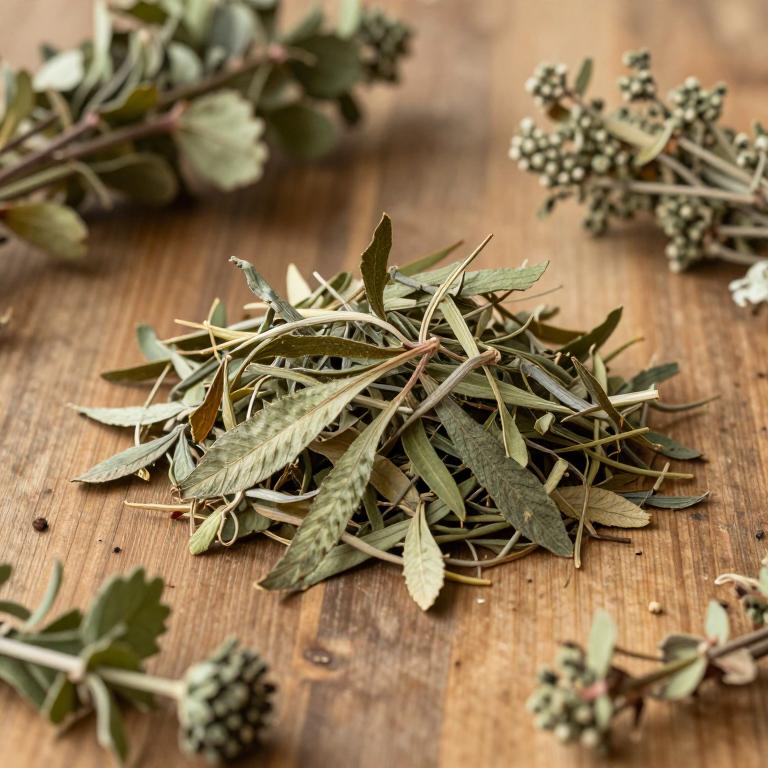
Names and Synonyms
Scientific Names
Accepted name
Acalypha guatemalensisRegional and Traditional Names
French:
- Acalypha gummifera
Sources: Wikidata
Taxonomical Classification
This plant belongs to the kingdom Plantae and the phylum Streptophyta, falling under the class Equisetopsida and subclass Magnoliidae. Within the order Malpighiales, it is classified under the family Euphorbiaceae. Its scientific identity is further defined by its placement in the genus Acalypha.
| Rank | Classification |
|---|---|
| Kingdom | Plantae |
| Phylum | Streptophyta |
| Class | Equisetopsida |
| Subclass | Magnoliidae |
| Order | Malpighiales |
| Family | Euphorbiaceae |
| Genus | Acalypha |
Sources: The World Checklist of Vascular Plants (WCVP)
Distribution
This plant exhibits a specific range across North and Central America. In Mexico, it can be found throughout the Southwest region. Its presence also extends into the Southeast portion of Mexico. Moving into Central America, the species is documented in Guatemala. Additionally, the distribution reaches further south into Honduras.
| Region | Area |
|---|---|
| Mexico | Mexico Southwest |
| Mexico | Mexico Southeast |
| Central America | Guatemala |
| Central America | Honduras |
Sources: The World Checklist of Vascular Plants (WCVP)
Botanical Identification
Life history
The life history of Acalypha guatemalensis is characterized by its specific growth strategy and structural classification within its ecological niche. As a perennial plant, its life cycle is defined by its classification as a hemicryptophyte, a trait that dictates how it survives seasonal variations and environmental stressors. This means that its perennating buds are located at or just below the soil surface, protected by a layer of leaf litter or soil, allowing the plant to regrow from these protected nodes once favorable conditions return. In the broader spectrum of plant life forms, it exhibits characteristics consistent with both the nanophanerophyte and phanerophyte categories, indicating its ability to maintain woody or semi-woody structures that extend above the ground. This combination of being a hemicryptophyte and possessing phanerophytic qualities ensures a robust life history, enabling the plant to maintain a persistent presence in its habitat through both vegetative stability and seasonal regeneration.
- Life form :
- hemicryptophyte
Morphology
The morphology of Acalypha guatemalensis is characterized by a growth form classified as an herb, exhibiting a non-woody structure throughout its development. It functions as an independent organism, neither acting as a parasite nor an epiphyte, as it maintains a primarily terrestrial habit. While its habitat may occasionally overlap with various moisture levels, it is fundamentally categorized within the terrestrial spectrum rather than being strictly aquatic or semiaquatic. In terms of its physical orientation, the plant behaves as a self-supporting entity, lacking the specialized climbing mechanisms required to function as a liana, vine, or obligatory climber.
- Aquatic :
- terrestrial
- Climber :
- self-supporting
- Epiphyte :
- terrestrial
- Growth form :
- herb
- Parasite :
- independent
- Woodiness :
- non-woody
Sources: Global Inventory of Floras and Traits (GIFT)
Activities
Acalypha guatemalensis has 3 reported activities identified across 0 scientific publications and several other databases. The most consistently reported activities include Antimicrobial, Antioxidant, Cytotoxic.
| Activity | Supporting sources | Consensus |
|---|---|---|
| Antimicrobial | 1 supporting sources | ★☆☆☆☆ |
| Antioxidant | 1 supporting sources | ★☆☆☆☆ |
| Cytotoxic | 1 supporting sources | ★☆☆☆☆ |
Antimicrobial
- International journal of oncology
Antioxidant
- International journal of oncology
Cytotoxic
- International journal of oncology
Conditions
Acalypha guatemalensis has 3 reported investigations on conditions identified across 0 scientific publications and several other databases. The most consistently reported conditions include bacteria, fungi, gastrointestinal disorders.
| Condition | Supporting sources | Consensus |
|---|---|---|
| Bacteria | 1 supporting sources | ★☆☆☆☆ |
| Fungi | 1 supporting sources | ★☆☆☆☆ |
| Gastrointestinal disorders | 1 supporting sources | ★☆☆☆☆ |
Bacteria
- Journal of ethnopharmacology
Fungi
- Journal of ethnopharmacology
Gastrointestinal disorders
- Journal of ethnopharmacology
Preparations
Acalypha guatemalensis has 2 reported preparations identified across 0 scientific publications and several other databases. The most consistently reported preparations include Methanol and aqueous extracts, ethanolic extracts.
| Preparation | Supporting sources | Consensus |
|---|---|---|
| Methanol and aqueous extracts | 1 supporting sources | ★☆☆☆☆ |
| Ethanolic extracts | 1 supporting sources | ★☆☆☆☆ |
Methanol and aqueous extracts
- Phytotherapy research : PTR
Ethanolic extracts
- Journal of ethnopharmacology