Acalypha ciliata
Acalypha ciliata · Accepted scientific name
Scientific literature: Very Sparse (1 studies) · ★☆☆☆☆
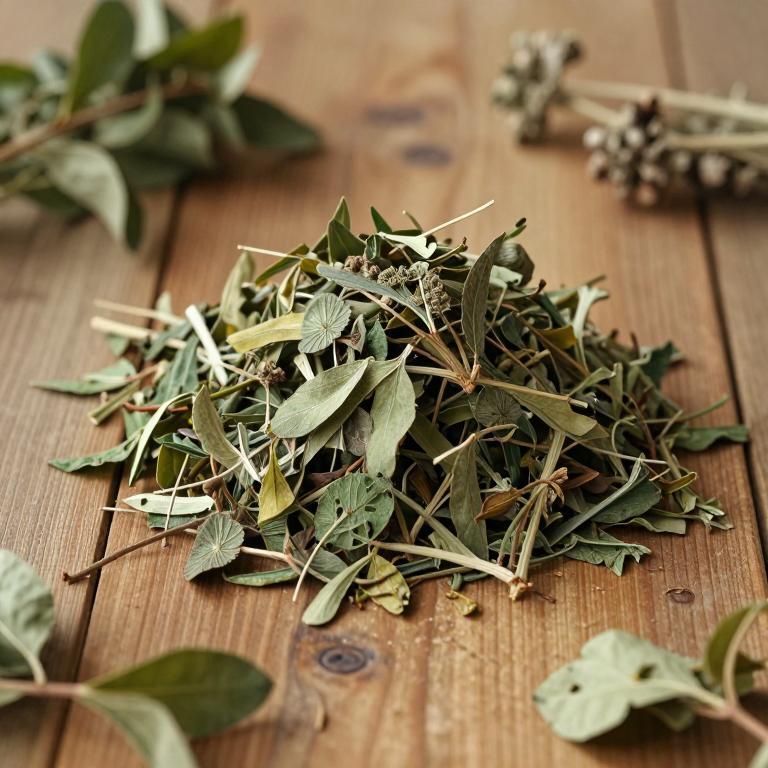
, scientifically known as Acalypha ciliata, is a versatile medicinal herb prized in traditional healing practices. Often found in tropical regions, this plant is renowned for its potent anti-inflammatory, antimicrobial, and antioxidant properties. It is frequently utilized in folk medicine to treat skin ailments, respiratory issues, and various infections.
- Family
- Euphorbiaceae
- Native range
- Africa
- Parts used
- Not available
- Common names
- Not available
- Scientific synonyms
- Acalypha Ciliata Var. Trichophora · Ricinocarpus Ciliatus
Names and Synonyms
Scientific Names
Accepted name
Acalypha ciliataSynonyms
- Acalypha ciliata var. trichophora
- Ricinocarpus ciliatus
Sources: Wikidata
Taxonomical Classification
This plant belongs to the kingdom Plantae and is classified under the phylum Streptophyta within the class Equisetopsida. It falls under the subclass Magnoliidae and the order Malpighiales, specifically being a member of the family Euphorbiaceae. Finally, its taxonomic identity is defined by its placement within the genus Acalypha.
| Rank | Classification |
|---|---|
| Kingdom | Plantae |
| Phylum | Streptophyta |
| Class | Equisetopsida |
| Subclass | Magnoliidae |
| Order | Malpighiales |
| Family | Euphorbiaceae |
| Genus | Acalypha |
Sources: The World Checklist of Vascular Plants (WCVP)
Distribution
This plant exhibits a specific distribution pattern across the West Tropical Africa region. Within this part of the continent, its presence is documented in the country of Benin. It can also be found throughout various territories including Burkina and Gambia. Furthermore, the species extends its range into Ghana. Finally, its geographical footprint includes the coastal nation of Guinea-Bissau.
| Region | Area |
|---|---|
| West Tropical Africa | Benin |
| West Tropical Africa | Burkina |
| West Tropical Africa | Gambia |
| West Tropical Africa | Ghana |
| West Tropical Africa | Guinea-Bissau |
| West Tropical Africa | Guinea |
| West Tropical Africa | Ivory Coast |
| West Tropical Africa | Liberia |
| West Tropical Africa | Mali |
| West Tropical Africa | Mauritania |
Sources: The World Checklist of Vascular Plants (WCVP)
Botanical Identification
Ecology
The ecology of Acalypha ciliata is characterized by its specific adaptation to mid-altitude terrestrial environments, thriving within a defined altitudinal gradient. This species is most frequently documented inhabiting landscapes that fall within an elevational range of 520 m to 960 m AMSL. Within this vertical niche, the plant occupies various microhabitats that support its growth patterns, typically favoring areas where the environmental conditions—such as temperature, humidity, and soil composition—remain consistent with these specific altitudinal constraints. The distribution of Acalypha ciliata is thus closely tied to these topographical parameters, which dictate its ecological presence across its native range.
- Elevational range max:
- 960 m AMSL
- Elevational range min:
- 520 m AMSL
Life history
The life history of Acalypha ciliata is characterized by an annual lifecycle, meaning the plant completes its entire biological progression from germination to seed production within a single growing season. As a therophyte, it survives the unfavorable periods through highly resilient seeds that remain dormant in the soil, allowing the plant to emerge rapidly when environmental conditions become favorable. This life form strategy ensures that the individual plant spends its active phase as a temporary herbaceous entity, focusing its energy on rapid growth and prolific reproduction before the seasonal cycle concludes.
- Life form :
- therophyte
- Lifecycle :
- annual
Morphology
The morphology of Acalypha ciliata is characterized by its growth form as a non-woody herb that functions as a self-supporting plant rather than a climber or vine. It is a terrestrial species that grows independently, lacking any parasitic or epiphytic lifestyle. The plant exhibits significant variability in stature, with a minimum height of 0.4 m and an average height of approximately 0.9 m, though it can reach a maximum height of up to 6.705681541 m depending on environmental conditions.
- Aquatic :
- terrestrial
- Climber :
- self-supporting
- Epiphyte :
- terrestrial
- Growth form :
- herb
- Parasite :
- independent
- Plant height max:
- 6.705681541 m
- Plant height mean:
- 0.9 m
- Plant height min:
- 0.4 m
- Woodiness :
- non-woody
Physiology
The physiology of Acalypha ciliata is characterized by its metabolic processes and nutrient acquisition strategies, specifically regarding its interaction with soil nitrogen. In terms of its symbiotic capabilities, the plant is not a nitrogen fixer, meaning it lacks the specialized root nodules containing nitrogen-fixing bacteria (such as Rhizobium) necessary to convert atmospheric nitrogen into usable forms. Consequently, its physiological development and growth cycles are heavily dependent on the availability of nitrates and ammonium ions within the soil substrate. Its metabolic activity is geared toward efficient resource absorption through its root system to support its rapid growth and reproductive stages, relying on external nitrogenous inputs rather than internal biological fixation to sustain its cellular functions and protein synthesis.
- Nitrogen fixer :
- no
Reproduction
The reproduction of Acalypha ciliata is characterized by the production of specialized seeds that serve as the primary mechanism for propagation and genetic dispersal. Quantitative analysis of its reproductive output reveals a highly consistent seed profile, with the seed mass exhibiting no variation across the observed samples. The seed mass mean, maximum, and minimum are all recorded at a uniform value of 0.00087 g. This absolute uniformity in seed mass suggests a highly regulated developmental process during seed maturation, ensuring that each individual seed possesses a standardized weight of 0.00087 g, which likely plays a critical role in its dispersal efficiency and subsequent germination success within its ecological niche.
- Seed mass mean:
- 0.00087 g
Sources: Global Inventory of Floras and Traits (GIFT)
Activities
Acalypha ciliata has 1 reported activities identified across 0 scientific publications and several other databases. The most consistently reported activities include Antiplasmodial.
| Activity | Supporting sources | Consensus |
|---|---|---|
| Antiplasmodial | 1 supporting sources | ★☆☆☆☆ |
Antiplasmodial
- Evidence-based complementary and alternative medicine : eCAM
Preparations
Acalypha ciliata has 1 reported preparations identified across 0 scientific publications and several other databases. The most consistently reported preparations include methanol.
| Preparation | Supporting sources | Consensus |
|---|---|---|
| Methanol | 1 supporting sources | ★☆☆☆☆ |
Methanol
- Evidence-based complementary and alternative medicine : eCAM